KAAN and the Turkish Aerospace Industry: A Future of Collaboration and Challenges
These past few days, there has been a great stir on social media and in both specialized and non-specialized media regarding the “pum” issues regarding the news published by the newspaper El País about the definitive cancellation of the possible acquisition of the F-35 for both the Navy (the only available option) and the Air Force, so let’s talk about a possible alternative to the American fifth-generation fighter.

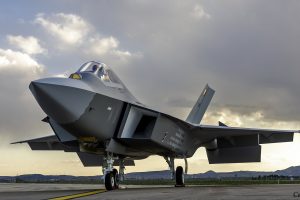
The KAAN: A fifth-generation fighter jet “Made in Turkey”
The KAAN, Turkey’s ambitious fifth-generation fighter, is not just an aircraft; it is the spearhead of a national strategy to achieve full technological autonomy and consolidate the Turkish aerospace industry as a global force. This article delves into the technical details of the KAAN, the growing industry that supports it, and the intriguing scenario of its potential collaboration with Spain, especially in light of the challenges facing the FCAS program and the alternatives for the Spanish Air Force and Navy.
KAAN: An in-depth look at its key capabilities
The development of the KAAN (formerly known as TF-X) is being led by Turkish Aerospace Industries ( TAI ), with the goal of creating a networked, multi-role, stealthy fighter to replace the country’s F-16 fleet from the 2030s. Its design features and expected technologies position it to compete in the niche of the world’s most advanced combat aircraft.
Stealth Design: The KAAN has been designed from the ground up to minimize its radar signature. Its angled structure, internal missile weapons bays, and special radar-absorbent coating are key elements in achieving this low observability. Unlike a fourth-generation fighter, the KAAN is designed to evade detection and launch surprise attacks against well-defended targets.
Sensor Fusion: This is one of the most critical capabilities of a fifth-generation fighter. The KAAN will integrate data from an ASELSAN -developed Active Electronically Scanned Array (AESA) radar , a state-of-the-art electronic warfare system, and infrared sensors. All of this data will be processed and fused into a single, clear image in the cockpit, allowing for unprecedented situational awareness. This fusion is what differentiates these aircraft from their predecessors, which often required the pilot to interpret information from multiple displays.
Powertrain: The Road to Independence: While the first prototypes are flying with General Electric F110 engines (the same as the F-16), Turkey has a clear plan for mass production: a domestic engine. The development of this engine, led by TRMotor , is a high-priority project. Having a domestically designed engine would eliminate dependence on foreign suppliers, ensuring continued production and export without political restrictions.
Connectivity and Combat Network: The KAAN will not operate alone. It is designed to be a central node in a broader combat network, interacting with drones such as the Bayraktar Kızılelma and other unmanned aerial systems. This “manned-unmanned teaming” capability will allow the KAAN to control and direct these drones in combat, multiplying their firepower and reconnaissance capabilities.
Avionics and Flight Control Systems: The cockpit will feature a large-format touchscreen, replacing the multiple dials and buttons of older aircraft. The fly-by-wire flight control system will be managed by advanced software, facilitating supermaneuverability and complex combat maneuvers.
Turkey’s powerful aerospace industry: beyond KAAN
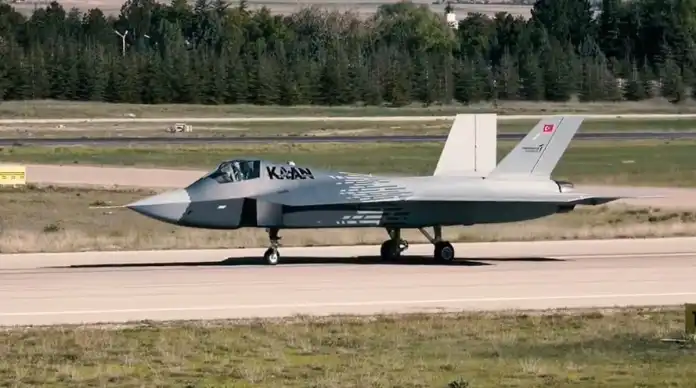
The development of KAAN is a testament to the rise of the Turkish aerospace and defense industry. This growth is not accidental, but the result of strategic investment and a focus on self-sufficiency. Companies such as TAI , ASELSAN , and Roketsan are pillars of this strategy.
TAI (Turkish Aerospace Industries): Prime contractor for the KAAN and the Hürjet advanced trainer aircraft . TAI is also responsible for modernizing existing aircraft and producing helicopters such as the T-129 ATAK.
ASELSAN: Defense electronics giant responsible for the KAAN’s AESA radar, electronic warfare systems, and avionics suite. Its ability to produce critical electronic components has been a key factor in reducing dependence on foreign suppliers.
Roketsan: Leads the development of weapons systems for the KAAN, including long-range air-to-air missiles and smart munitions.
The success of projects like the Bayraktar TB2 drone has demonstrated the industry’s production capabilities and innovation potential to the world, opening the door to new export and collaboration opportunities.
Spain and Türkiye: The strategic dilemma and the KAAN alternative

The defense relationship between Spain and Turkey has strengthened in recent years, with the Hürjet training aircraft project serving as an example of fruitful cooperation. This collaboration, which encompasses software development and systems integration, demonstrates the potential for joint collaboration on complex aeronautical projects and could serve as a model for future initiatives.
In this context, potential Spanish participation in the KAAN program emerges as a strategic option for the future of the Spanish Air Force and Navy, especially considering the current challenges:
1. The uncertainty of the FCAS: The Future Combat Air System (FCAS) , the project developed by Spain, France, and Germany for their sixth-generation fighter, is facing multiple delays and political tensions between its partners. Disagreements over the division of labor and intellectual property have cast doubt on the project’s viability and schedule. If the FCAS is delayed or, in an extreme scenario, canceled, Spain would be forced to find a solution to maintain its cutting-edge air combat capability.
2. Alternative to the F-35: Lockheed Martin’s F -35 Lightning II is the preferred option of the Spanish Air Force to complement its Eurofighters and of the Spanish Navy as the sole replacement for the AV-8B Harrier II. However, its acquisition entails a high economic cost and significant technological and political dependence on the United States. A massive purchase of F-35s could compromise the defense budget in the long term. In any case, and given the latest news, although not officially confirmed but assumed to be the case, both the Spanish Air Force and Navy will not have the American fifth-generation fighter, unless there is a political change and the next government puts the option back on the table.
3. Second aircraft for the Spanish Air Force: The KAAN could not only be an alternative, but also a complement to the Eurofighter, functioning as a second combat aircraft in the Spanish Air Force. This would give Spain a more diverse fighter fleet capable of adapting to different scenarios.
4. The KAAN as a viable alternative: The possibility of joining the KAAN program could offer Spain a path to acquiring a fifth-generation fighter at a potentially lower cost and, more importantly, with greater influence over the aircraft’s design and systems, thus gaining greater strategic autonomy. Collaboration in the KAAN could ensure crucial technology transfer and the participation of Spanish industry, such as Indra or Airbus Spain , in areas such as avionics and systems integration.
The naval version of the KAAN: A solution for the future of the Navy
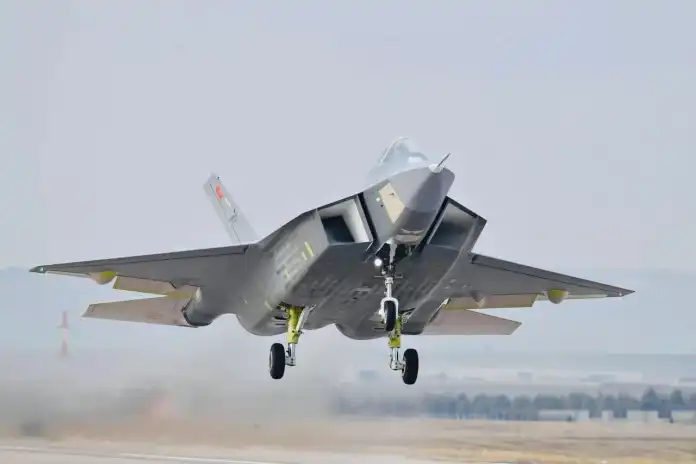
A particularly interesting aspect of a possible collaboration is the potential naval version of the KAAN. Although the initial design is focused on land operations, the possibility of developing a naval variant is a very real scenario.
The Navy’s need: The Navy currently operates the LHD Juan Carlos I, which uses Boeing (McDonnel Douglas) AV-8B Harrier II short-takeoff/vertical-arrest (VTOL/STOVL) aircraft, and could use F-35s with some deck reinforcement duties, given that the US fighter generates much more heat from its nozzle (if its acquisition is reconsidered). However, in the long term, Spain could consider building a future aircraft carrier with catapults and arresting cables ( CATOBAR system ), which would allow for the operation of larger, more powerful aircraft with greater payload capacity.
The KAAN as a carrier-based fighter: In the event of an FCAS cancellation, and if the F-35 is deemed too costly or politically risky, the naval KAAN could be a very attractive option for a future Spanish CATOBAR aircraft carrier. Developing a naval version of the KAAN collaboratively would allow Spain and Turkey to share R&D costs and ensure the aircraft meets the Navy’s specific requirements. This version would require structural reinforcements to the landing gear and airframe, as well as wing folding systems and an arresting hook, modifications that TAI’s engineering teams and Spanish companies could develop jointly.
In an ideal scenario, the KAAN could be not only an alternative but a strategic complement, operating alongside the Eurofighter and, in the future, with the FCAS. This platform diversity could strengthen the autonomy and operational capability of the Spanish Air Force. Spain’s decision, therefore, is not just about choosing an aircraft, but about charting its strategic path in the aerospace industry for the coming decades, even considering the possibility of a naval version that could redefine the Spanish Navy’s power projection capabilities.
Author’s note : This article presents the KAAN as a possible medium-term alternative to the Spanish government’s refusal to acquire the F-35, and as a possible option to maintain capabilities if the FCAS program is discontinued. However, it would not be able to act as a sixth-generation fighter. Furthermore, before attempting to pursue alternatives, it would be ideal to renegotiate the acquisition of the American fighter, which is the only tangible option currently.
Roberto Escámez
defensayseguridad.es