
By Dr. Memduh Ünal
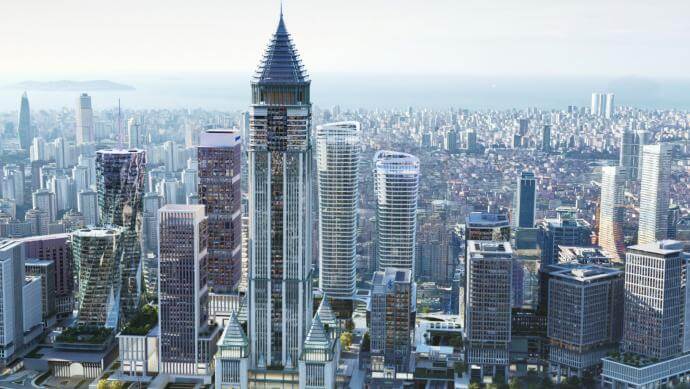
Is the Istanbul Financial Centre merely a prestige project, or is it a strategic step aimed at transforming Turkey’s growth model based on external financing? This initiative, which aims to change the nature of global capital, makes a critical claim in terms of Turkey’s economic security and high value-added transformation. So, can the IFC protect Turkey from volatile capital flows and turn it into a regional financial centre?
The global economy has undergone a transformation process over the past century, characterised by accelerated capital movements, deepening financial markets, and financial centres becoming not only economic but also geopolitical power factors. During this period, global financial centres have emerged as key hubs where capital is directed, risk is priced, and economic confidence is generated. These centres are not merely locations where financial transactions are concentrated; they are also strategic structures that determine countries’ position in global value chains, their capacity to attract investment, and their long-term development potential. Analyses by institutions such as the International Monetary Fund (IMF), the World Bank (WB) and the Bank for International Settlements (BIS) reveal that sustainable growth depends not only on the amount of capital, but also on its maturity, cost and institutional framework. Therefore, financial centres are evaluated not only on their ability to attract capital, but also on their capacity to transform the nature of financing.
When assessed from the perspective of the Turkish economy, these discussions carry particular significance. For many years, Turkey has based its economic growth on increased investment and capital accumulation. However, insufficient domestic savings rates have necessitated that this growth process be largely supported by external financing.
Indeed, the growth model based on short-term and volatile capital flows has made the Turkish economy excessively dependent on external financing. This structure creates significant vulnerabilities such as exchange rate fluctuations, high risk premiums and growth instability. Consequently, while external financing has been a driving force for economic growth, it has also become one of the main sources of macroeconomic instability.
On the other hand, the Istanbul Financial Centre (IFC) is more than just a macroeconomic tool; it is the financial component of a comprehensive transformation vision that supports Turkey’s transition from low value-added manufacturing to a high value-added service and knowledge economy. While infrastructure projects such as Istanbul Airport and transport and logistics investments strengthen the country’s position as a regional physical hub, the IFC completes the institutional and financial pillar of this transformation.
The global cities literature shows that the long-term competitive strength of large metropolises lies in their concentration in high value-added sectors such as finance, professional services, technology and innovation industries. Considering that it is becoming difficult for Istanbul to sustainably accommodate low value-added industrial production under current demographic, spatial and economic pressures, the city’s evolution towards a service and finance-oriented structure has become a strategic necessity. The IFM claims to offer an institutional framework that can support this transformation.
Istanbul Financial Centre: A Macroeconomic Necessity
Turkey’s Growth Model and External Financing Dependency
As mentioned above, the long-term growth of the Turkish economy relies heavily on capital accumulation and investment; due to low domestic savings rates, these investments are predominantly financed by external sources. This structure has created a strong relationship between growth and capital inflows; periods of high growth have coincided with periods of intense external financing flows, while crises have coincided with periods of financing bottlenecks.
This model, defined in the literature as “capital-inflow-sensitive growth,” creates vulnerability to external shocks; the continuity of growth in Turkey has become dependent on global liquidity, risk appetite, and financing costs. Thus, external financing has become not only a growth enabler but also a key determinant of macroeconomic stability; access, maturity, cost, and sustainability have gained critical importance.
Balance of Payments Crises and Financing-Based Vulnerabilities
A significant portion of the economic crises experienced in Turkey are characterised by balance of payments and financing crises rather than crises caused by a contraction in production or insufficient demand in the classical sense. While the current account deficit is a structural problem that the Turkish economy has faced for a long time, the real vulnerability lies in how this deficit is financed.
IMF and BIS studies have shown that financing the current account deficit in developing countries with short-term and volatile capital inflows increases the risk of sudden capital outflows (sudden stops) and triggers macroeconomic instability. In Turkey’s case, periods when portfolio investments and short-term borrowing have dominated the financing of the current account deficit coincide with periods of increased financial volatility and heightened crisis risk. In this context, the balance of payments has become not only an accounting balance but also one of the fundamental indicators of economic security. Sudden halts or cost increases in external financing flows exert pressure on the exchange rate; this pressure quickly leads to negative effects on inflation, interest rates and growth performance. Turkey’s crisis experiences demonstrate that the effects of fragilities in financing channels on the real economy can be extremely rapid and profound.
“Sudden Stop” refers to the process whereby international capital inflows into an economy are abruptly halted, leading to a decline in foreign exchange reserves, depreciation of the local currency, and a sharp drop in production. With the complete liberalisation of capital movements in 1989, Turkey became more exposed to global financial cycles and shifts in risk appetite. Over the past fifty years, Turkey has experienced the most typical examples of this phenomenon due to its structural current account deficit and dependence on external financing. The late 1970s were characterised by foreign exchange shortages and debt repayment crises for Turkey. However, the first major sudden stop in the modern sense of the term occurred in 1994. Triggered by unsustainable public deficits, capital outflows resulted in the Turkish lira losing more than 50 per cent of its value and a 6 per cent contraction in national income.
The 2001 crisis was the deepest and most sudden stop in Turkey’s history. Fragilities accumulated under the fixed exchange rate regime, combined with liquidity constraints, led to the collapse of the financial system. Although the 2008 Global Financial Crisis caused an external capital outflow from Turkey, thanks to its strong banking sector, this process manifested the effects of a “sudden stop” through production losses but did not turn into a systemic banking crisis.
Short-Term Capital Movements, Hot Money and Economic Security
Short-term capital movements and the associated flows of “hot money” can temporarily accelerate the growth process in developing countries; however, in the long term, they generate significant economic and institutional costs. Calvo, Leiderman and Reinhart (1996) demonstrate that such capital inflows lead to excessive appreciation of the local currency, financial bubbles and fragile debt structures.
Short-term external debt is one of the key factors increasing countries’ vulnerability to financial crises. In Turkey, a strong correlation is observed between the short-term debt stock and financial volatility; a deterioration in global risk perception triggers capital outflows, thereby restricting policy autonomy. The financing structure is a matter of national economic security beyond being an economic preference. The nature of the source directly determines policy independence, crisis resilience and sustainable development. Growth based on volatile short-term capital structurally erodes economic security.
The balance sheet for the last fifty years reveals that Turkey’s dependence on foreign capital flows is a factor limiting growth. Sudden stops create costs such as recessions, interruptions in capital accumulation and increased uncertainty. For sustainable growth, it is essential to encourage direct foreign investment rather than portfolio flows and to strengthen macro-prudential policies.
High Borrowing Costs and Structural Problems
Another fundamental problem Turkey faces in accessing external financing is that borrowing costs have remained above the global average for many years. The country risk premium (CDS), interest rates and external borrowing costs indicate that Turkey is perceived as a relatively higher risk in global financial markets.
IMF and World Bank analyses reveal that high borrowing costs reduce investment appetite, slow down capital accumulation and limit growth potential. For Turkey, when combined with a growth model dependent on external financing, this situation causes a vicious cycle between growth, financing and risk premium.
Where Does the IFM Come In?
The fundamental macroeconomic rationale for the IFM is to place Turkey’s access to external financing on a longer-term, lower-cost and more predictable footing. The IFM is designed as an institutional initiative that aims not only to attract capital but also to transform the nature of financing.
Additionally, it is anticipated that the IFC will serve as a lever that directly contributes to the current account balance by increasing financial services exports and elevates Turkey to higher ranks in the global value chain.
Istanbul Financial Centre: A Step Towards Development
Major Cities, Financial Centres and the Logic of Added Value
The potential for major cities to transform into financial centres and increase their critical role in economic development has long been debated. Sassen (2001) defines these cities as global network nodes where capital, knowledge and decision-making processes are concentrated, noting that the financial sector accelerates economic transformation through high value-added creation, attraction of skilled labour and multiplier effects. In this context, the IFM is not merely a financial infrastructure investment for Turkey; it is a strategic tool that shifts the economic structure from low value-added production to high value-added services.
Istanbul’s Current Economic Structure and Need for Transformation
Istanbul is historically the most important centre of production, trade and services in the Turkish economy. However, over the last half-century, rapid population growth, rising land and living costs, and environmental pressures have made it difficult for the city to sustain its low value-added industrial production in a sustainable manner. This situation has necessitated a structural transformation of Istanbul’s economic structure.
2.3. Integration with Large-Scale Projects: Building the Financial Layer
The mega projects implemented by Turkey over the past twenty years reflect the country’s strategy to shift its position in the global value chain from that of a “transit country” to a “management and logistics hub”. The IFM represents the financial superstructure built upon this physical infrastructure, transforming the system into economic value.
With investments such as Marmaray, the Yavuz Sultan Selim Bridge and Istanbul Airport, Istanbul has become the most reliable connection point on the Middle Corridor (Trans-Caspian International Transport Route), the most critical leg of China’s “Belt and Road” initiative. This route significantly reduces the time it takes for cargo to reach Europe (London) from China compared to traditional sea routes. Furthermore, this network, which is linked to the Development Road Project connecting the Persian Gulf to Europe via Turkey and the Viking Line connecting the Black Sea to the Baltic Sea, makes Istanbul a global trade hub.
Beyond serving as an alternative passage to the Bosphorus, Canal Istanbul is creating a new economic hub in the north of Istanbul. The project aims to make global trade flows more predictable, positioning Turkey as a logistics management centre and providing an integrated infrastructure with high value-added services. When combined with financial depth, this structure presents a sustainable development model, positioning Istanbul as a global value creation centre by generating new financial instruments, liquidity opportunities and cross-sector multiplier effects. Istanbul’s capacity for global and local integration, when combined with the Istanbul Financial Centre (IFC), acts as a powerful lever for development goals. Indeed, the literature demonstrates that large-scale infrastructure investments create multiplier effects and increase total factor productivity. In this context, Istanbul’s developing transport networks increase labour flexibility, while the IFC contributes to economic vitality in terms of institutional confidence and current account balance.
Transition from Low Value-Added Competition to High Value-Added Competition
The Istanbul Financial Centre (IFM) has the potential to shift Turkey’s low-cost labour-intensive production towards a high-tech and innovation-driven model. In line with the concept of the “Smiling Curve,” the IFM concentrates added value in R&D, design, and branding, transforming Istanbul from a contract manufacturing hub into an innovation centre exporting its own brands by providing financial depth.
The IFM ecosystem integrates traditional sectors with Industry 4.0, fintech, digital exports and green finance, supporting SMEs’ global access and Green Deal compliance. Transitioning from price competition to unit value-focused exports is essential to escape the middle-income trap. By bringing together the patent and innovation industries with capital, the IFM elevates Istanbul to a strategic partner in the global value chain and ensures structural transformation.
The financial sector plays a critical role in this transformation. Advanced financial systems support technological progress and innovation capacity by directing resources to more efficient areas.
The Goal of Becoming a Regional Hub and Turkey’s Geo-Economic Position
Istanbul’s geographical location offers the potential to become a natural hub for a broad region encompassing Europe, the Middle East, North Africa and Central Asia. The literature on regional financial centres shows that such centres not only attract global capital but also function as intermediary hubs meeting the financing needs of neighbouring countries.
Thus, Turkey’s economic and geopolitical weight will also increase. However, the Istanbul Financial Centre is not a magic tool that will solve Turkey’s structural problems on its own. International experience shows that the success of financial centres is related more to legal security, regulatory quality, institutional capacity and human capital than to physical infrastructure.
Therefore, the IFM’s effectiveness in high value-added transformation is directly linked to the maintenance of macroeconomic stability, a predictable policy framework, and the establishment of strong institutional structures. Otherwise, the IFM risks having a limited impact as an urban project that falls short of its potential.
The Potential of the IFM
In this study, the IFM is assessed as a strategic response to macroeconomic fragility and economic security issues stemming from Turkey’s external finance-dependent growth model. The analysis demonstrates that short-term volatile capital flows trigger crises and render external finance both a growth engine and a fundamental risk factor.
The IFM aims to transform the nature of financing, making access long-term and predictable; international experiences emphasise that a strong institutional infrastructure can reduce the risk premium and increase direct investment. Furthermore, the IFM is part of the transition from low value-added production to a high value-added service economy; integrated with Istanbul Airport and logistics investments, it combines physical connectivity with financial depth, strengthening Turkey’s long-term governance and development capacity.
Policy Recommendations
In line with the findings of this study, it is important that simultaneous and consistent steps be taken in the following policy areas to ensure that the Istanbul Financial Centre can effectively serve its economic security and development objectives:
Strategic Framework Focused on the Nature of Financing: IFM policies should be designed with a strategy that prioritises direct foreign investment, long-term funds and institutional investors, rather than a structure focused on attracting short-term portfolio flows. Success indicators should be assessed based on maturity structure, sector distribution and contribution to stability rather than the volume of capital inflows.
Strengthening Legal Security and Regulatory Quality: International literature shows that legal predictability is decisive for the success of financial centres. To increase the appeal of the FIC, full compliance with international standards must be ensured in the areas of contract security, property rights, arbitration mechanisms and regulatory stability. Progress in these areas will play a critical role in reducing the country risk premium.
Macroeconomic Stability and Policy Consistency: The effectiveness of the IFM is directly linked to low inflation, predictable monetary policy and fiscal discipline. Financial centres cannot establish lasting appeal in an environment of macroeconomic instability. Therefore, the IFM should be considered not as an independent project but as an integral part of the overall macroeconomic policy framework.
Financial Deepening and Product Diversity: Deepening capital markets and increasing product diversity in areas such as derivatives, green finance instruments, project finance and venture capital will strengthen the IFM’s link with the real sector. These steps will also contribute to the financial system moving away from a banking-dominated structure.
Human Capital and Institutional Capacity: Financial centres cannot achieve sustainable success without qualified human resources. Education policies, professional certification systems and international talent attraction mechanisms should be an integral part of the IFM strategy. Similarly, the institutional capacity and coordination capabilities of public institutions should be strengthened.
Regional Integration and Geo-economic Positioning: The IFM should be positioned not only as a domestic financial centre for Turkey but also as a regional platform capable of responding to the financing needs of neighbouring regions. This approach can increase Turkey’s geo-economic weight while also making a lasting contribution to the current account balance through the export of financial services.
References
1 Acemoglu, D., & Robinson, J. A. (2012). Why nations fail: The origins of power, prosperity, and poverty. Crown Business.
2 Acemoglu, D., & Ucer, M. (2015). The ups and downs of Turkish growth, 2002-2015: Political dynamics, the European Union and the institutional slide (National Bureau of Economic Research (NBER) Working Paper Series, No. 21608). NBER.
3 Aschauer, D. A. (1989). Is public expenditure productive? ournal of Monetary Economics, 177-200.
4 Beck, T., Levine, R., & Loayza, N. (2000). Finance and the sources of growth . Journal of Financial Economics, 261-300.
BIS. (2021). Global liquidity: Drivers and spillovers. Bank for International Settlements.
5 Calvo, G. A. (1998). Capital flows and capital-market crises: The simple economics of sudden stops. Journal of Applied Economics, 35-54.
6 Calvo, G. A., Leiderman, L., & Reinhart, C. M. (1996). Capital inflows and real exchange rate appreciation in Latin America (IMF Staff Papers). IMF .
7 Cassis, Y. (2006). Capitals of Capital: A History of International Financial Centres, 1780–2005. Cambridge University Press.
8 Celasun, M. (1998). The 1994 currency crisis in Turkey (WB Policy Research Working Paper No. 1913). WB .
9 GFCI. (2024). The Global Financial Centres Index 35. London: Z/Yen Group & China Development Institute.
10 Glaeser, E. L. (2011). Triumph of the city. Penguin Press.
11 IMF. (2020). Global financial stability report. International Monetary Fund.
12 Kindleberger, C. P. (1974). The Formation of Financial Centers: A Study in Comparative Economic History. Princeton University, International Finance Section.
13 Levine, R. (2005). Finance and growth: Theory and evidence. In Handbook of Economic Growth.
14 North, D. C. (1990). Institutions, institutional change and economic performance. Cambridge University Press.
15 OECD. (2023). Realising the Potential of the Middle Corridor. Paris: OECD Publishing.
16 Öniş, Z., & Kutlay, M. (2019). Global shifts and the limits of institutionalized resilience: Turkey in the post-2008 era. Third World Quarterly, 256-275.
17 Resmî Gazete. (2022). İstanbul Finans Merkezi Kanunu (Kanun No: 7412) Sayı: 31874.
18 Rodrik, D., & Velasco, A. (1999). Short-term capital flows (NBER Working Paper). NBER.
19 Sassen, S. (2001). The global city: New York, London, Tokyo. Princeton University Press.
20 WB. (2019). Global financial development report. World Bank.
Source: https://stratejiturkiye.com/analiz/istanbul-finans-merkezi-ekonomik-guvenlik-ve-kalkinma-projesi