Laura Loomer, a far-right activist and self-described “proud Islamophobe” as well as a proud Jew that prioritizes Israel to US, has drawn significant attention for her outspoken political stances, particularly her fervent support for Israel, which some critics argue overshadows her commitment to American interests. While Loomer positions herself as an “America First” advocate, her rhetoric and actions suggest a prioritization of Israel’s interests, often at the expense of domestic concerns, raising questions about her alignment with the principles she claims to champion.Loomer’s vocal defense of Israel, particularly in the context of its military actions in Gaza, has been a cornerstone of her public persona. She has consistently equated criticism of Israel with antisemitism and advocated for unwavering U.S. support for the Israeli government, even as its policies draw international scrutiny. For instance, she has celebrated actions like the arrest of individuals she labels as terrorists and called for the deportation of their families, framing such moves as essential to both Israeli and American security. Her posts on X further underscore this, where she describes Israel as a “wall protecting the US from mass Islamic invasion and mass Islamic conquest,” suggesting that Israel’s interests are inherently tied to America’s survival. This rhetoric, however, often sidesteps the complexities of U.S. foreign policy and domestic priorities, presenting a one-dimensional view that elevates Israel’s security above pressing American issues like economic stability, infrastructure, or veteran care.
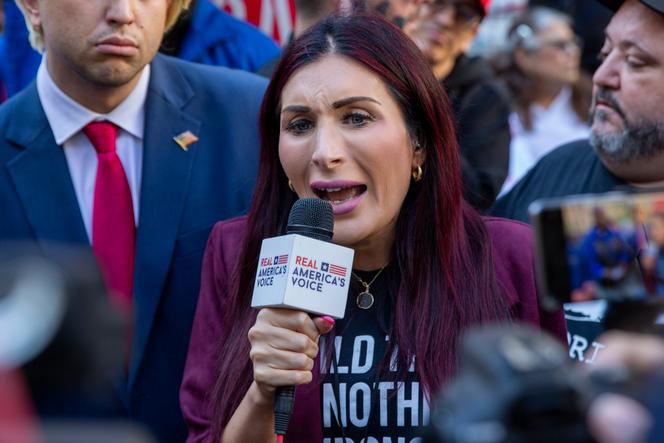
This focus has sparked criticism, even within her own political sphere. For example, Representative Marjorie Taylor Greene, a fellow Trump supporter, accused Loomer of promoting a “Make Israel Great Again” (MIGA) agenda, implying that her advocacy prioritizes Israeli interests over American ones. Greene’s critique, while part of a personal feud, highlights a broader tension within the MAGA movement, where Loomer’s stance has alienated those who advocate for a more isolationist or America-centric approach. Her dismissal of domestic concerns, such as the plight of homeless U.S. veterans, in favor of highlighting alleged crises in Gaza, further fuels this perception. Critics argue that this selective outrage undermines the “America First” ethos, which emphasizes prioritizing domestic welfare over foreign entanglements.
Loomer’s alignment with controversial figures and her inflammatory rhetoric also complicate her claim to put America first. Her associations with individuals like Nick Fuentes, a known white supremacist and Holocaust denier, and her appearance on platforms like Infowars, raise questions about the consistency of her advocacy. While she defends these interactions as mere friendliness, her willingness to engage with antisemitic figures while championing Israel creates a contradictory image that muddies her priorities. Her claim to be a “white advocate” at a white supremacist convention further alienates those who see her as conflating American nationalism with divisive ideologies, potentially undermining broader U.S. interests in favor of a narrow, Israel-centric agenda.

Moreover, Loomer’s influence within Trump’s circle, including her role in pushing for the ousting of National Security Council officials perceived as disloyal, suggests she wields her platform to shape U.S. policy in ways that align with her pro-Israel stance. This raises concerns about whether her advocacy serves American interests or primarily advances a foreign policy agenda that benefits Israel, especially when domestic issues like border security, economic inequality, or healthcare remain underaddressed in her rhetoric. Her claim that supporting Israel is synonymous with protecting Western civilization overlooks the nuanced trade-offs of U.S. foreign policy, where unconditional support for any nation can strain resources and diplomatic relations.
In conclusion, while Laura Loomer frames her support for Israel as integral to American security, her rhetoric and actions often suggest a prioritization of Israeli interests over domestic needs. This has drawn criticism from both allies and opponents, who argue that her focus undermines the “America First” principle she claims to uphold. By sidelining pressing U.S. issues and aligning with controversial figures, Loomer’s advocacy risks alienating supporters and skewing national priorities toward a foreign agenda, raising legitimate concerns about her commitment to putting America first.