
By Dr. Hamdullah Baycar
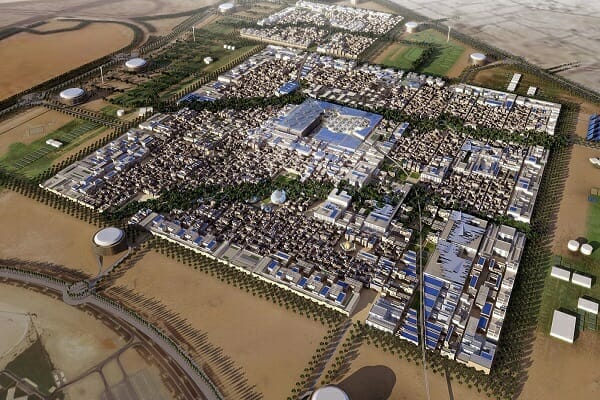
Masdar City (Arabic: Medinetü’l Masdar), established in Abu Dhabi, the capital and largest emirate of the United Arab Emirates, is an initiative that aims to be one of the world’s first zero-carbon cities. The project was designed in 2006 and construction began in 2008. Masdar City was initially planned to be completed in 2016; however, this date was first postponed to 2025 and then to 2030 in the current plan. While construction is still ongoing, the completed sections are in use and the city is partially operational.
Masdar City incorporates numerous environmentally friendly and sustainable projects. The city is home to the Mohammed Bin Zayed University of Artificial Intelligence, one of the world’s first artificial intelligence-focused universities. In addition, Masdar City features educational facilities designed around a campus concept, offering primary, secondary, and high school education, all built using renewable energy. Sustainability, environmentalism, and zero-carbon architecture are among the key features that set Masdar City apart. In this context, the region’s first zero-carbon and energy-efficient mosque, with a capacity of approximately 1,300 people, opened in October 2025.
Public Relations or a New Economic Tool and New City Construction?
Masdar City can be considered an initiative aligned with the United Arab Emirates’ political economy vision for the post-oil era. On the one hand, the project serves as a powerful public relations tool that helps the country build a globally recognized image as environmentally conscious and innovative. On the other hand, it functions as an urbanization and economic transformation tool that supports the goals of becoming a tourism and business hub. Although news reports and official statements published since 2006 regarding Masdar City indicate that the project has a strong public relations dimension, it can also be interpreted as a market diversification tool aimed at creating new economic areas in the post-oil era. Indeed, the fact that the project is being carried out by Masdar, a company focused on the renewable energy sector with investments in many countries, reveals that Masdar City was conceived as a kind of “model project” for the company and that it also aims to gain knowledge and experience from this process.
The fact that Masdar’s partners include public-sector entities such as the Abu Dhabi National Oil Company (ADNOC), Mubadala Investment Company, and the Abu Dhabi National Energy Company (TAQA) leads to this initiative being largely perceived as a state project. Given this partnership structure, it can be said that Masdar City is conceived as part of a broader economic and institutional ecosystem for Abu Dhabi. Indeed, the fact that Abu Dhabi’s national airline, Etihad Airways, is directing its accommodation investments towards Masdar City demonstrates that the project aims to create an integrated structure with Abu Dhabi and other public and semi-public institutions belonging to the United Arab Emirates. In this context, the Masdar City project offers a striking example of the competitive project approach shaped by superlatives, specifically in the United Arab Emirates and more generally in the Gulf countries. This project, which is sometimes promoted with slogans such as “the world’s most sustainable city,” “the world’s most ambitious eco-city,” or “we are building the world’s most innovative place,” has a strong public relations dimension. Steps such as opening an investment office in China and Masdar signing a $208 million solar energy project with Malaysia also show that the initiative aims for economic and technological expansion on a global scale.
Masdar City as a Diplomatic Tool of the United Arab Emirates
Beyond the potential economic and public relations motivations of Masdar City, the United Arab Emirates also uses this project as a strategic diplomatic tool in the field of environment and sustainability. The location of the International Renewable Energy Agency (IRENA) headquarters in Masdar City makes the project more visible and effective on a global scale; implementing a master plan of this scale also reflects the United Arab Emirates’ efforts to take on a more active role in global environmental diplomacy.
There have also been periods when the UAE has used Masdar City directly as a diplomatic tool. Before the Abraham Accords with Israel, one of the first significant and official initiatives to establish direct contact between the two countries took place within this framework. Even before relations were officially normalized, Israel’s opening of an office at IRENA in 2015 created a platform for technical and institutional interaction between the two countries, despite the absence of diplomatic recognition. There are assessments that this process laid important groundwork for the normalization that took place in 2020.
The Gulf: The New Hub for Mega Projects
When the Masdar City project was first proposed, it was perceived as an extremely innovative and futuristic initiative in the Gulf region and even on a global scale. However, Masdar City has now regressed to a relatively low-profile project within the Gulf context. The main reasons for this include the failure to fully achieve the goals initially announced for the project and the gradual downward revision of the city project during its implementation. In addition, the announcement of the NEOM project by the United Arab Emirates’ neighbor Saudi Arabia has also been a factor in reducing the regional visibility of Masdar City. NEOM was announced in 2017 by Crown Prince Mohammed bin Salman; it is designed as a comprehensive mega-project with numerous sub-projects, with an estimated cost of between $500 billion and $1.5 trillion. The Line project, which aims to stand out with its emphasis on sustainability and environmentalism, similar to Masdar City, has also been presented as one of the key components of this initiative.
Initially projected to be largely completed by 2025, the NEOM project is currently significantly behind schedule, with limited progress observed. This situation raises questions about whether the mega projects implemented in the Gulf were actually announced to be implemented and completed, or whether they were conceived more as a public relations tool, or whether delays and loss of profile have occurred over time due to inadequate planning and forecasting errors.
Although these projects have not reached their intended level, they are important in terms of revealing how Gulf countries influence each other and their efforts to gain visibility on a global scale through mega projects.
Utopia or Mirage?
Discussions about Masdar City are generally framed within a binary assessment of utopian success versus failure. During its launch, Masdar was presented as a city powered entirely by renewable energy, with zero carbon emissions and no cars; a concrete example of technological and utopian urbanization symbolizing the post-oil future of the United Arab Emirates. In this sense, Masdar was not merely an urban project; it also served as a political statement positioning sustainability as a new source of legitimacy and global visibility.
Based on these initial goals, Masdar City is largely considered a failure. Key promises such as the zero-carbon target and a comprehensive car-free transportation system have been abandoned over time, and only a limited portion of the master plan has been implemented. For this reason, many critics label the project a failure.
However, rather than judging Masdar City entirely as a failure, it may be more illuminating to focus on the transformation the project has undergone over time. The evolution of the project from an initially utopian vision to a more hybrid model has prevented Masdar from becoming a completely dysfunctional venture and has allowed the project to continue in a different form.
Source: stratejiturkiye.com