
A massive indictment against İBB and Ekrem İmamoğlu—spanning 402 suspects, severe organized-crime charges, and allegations against the CHP—has evolved into a high-stakes political confrontation that could reshape Türkiye’s political trajectory.
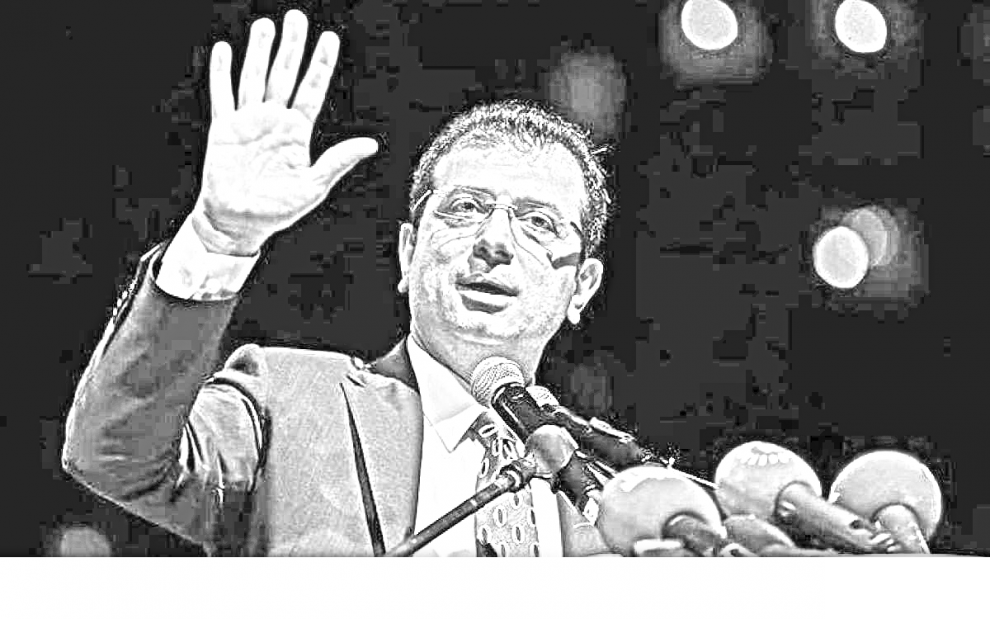
The accepted indictment in the İBB investigation targets 402 suspects—including Mayor Ekrem İmamoğlu, labeled the “leader of an organization”—and demands up to 2,430 years of imprisonment. Covering crimes from bribery and money laundering to large-scale public-loss allegations, the case extends beyond municipal operations into accusations against the CHP and several journalists. With 105 suspects jailed, claims of massive financial damage, and a possible party-closure trajectory, the case has quickly transformed into a defining political battle ahead of the 2026 elections, raising critical debates about the judiciary, media independence, and Türkiye’s democratic structure.
A major turning point has been reached in the long-running investigation into the Istanbul Metropolitan Municipality (İBB), one of Türkiye’s most polarizing political topics. The comprehensive indictment prepared against 402 suspects—including municipal executives, bureaucrats, company representatives, and journalists—has been accepted by the 40th High Criminal Court of Istanbul. 105 of these suspects remain in pre-trial detention, while the court has not yet scheduled a hearing.
The scale of the investigation, the diversity of charges, the classification of İBB Mayor Ekrem İmamoğlu as the “leader of a criminal organization,” and the allegations directed at the CHP have transformed this case from a routine corruption file into a state–politics–judiciary confrontation capable of reshaping Türkiye’s political balance.
Political and Legal Weight of the Indictment
Submitted on November 11, the indictment labels İmamoğlu as the “founder and leader of the organization,” one of the gravest descriptions in Turkish criminal law.
According to Anadolu Agency, the prosecution demands up to 2,430 years in prison based on the upper limits of the alleged crimes—one of the heaviest sentences ever sought for a metropolitan mayor in Türkiye.
İmamoğlu denies all accusations. The CHP describes the process as a political operation, “an engineered judicial design,” and “an example of the judiciary being weaponized.”
CHP leader Özgür Özel called the indictment “not a legal document, but a memorandum against politics.”
Detention and Arrest
İmamoğlu was detained on March 19 and formally arrested on March 23.
On the same day, during CHP’s internal primary, he was chosen as the party’s presidential candidate, turning the investigation into a matter that directly affects Türkiye’s electoral and political equilibrium.
Analysis of the Charges Against İmamoğlu
The indictment lists 142 separate acts attributed to İmamoğlu. The range of accusations—many unrelated to each other—forms the basis of the prosecution’s argument that a broad, hierarchical, and organized structure was established.
Key alleged offenses include:
- Bribery (12 counts)
- Money laundering (7 counts)
- Fraud causing public financial loss (46 counts in total)
- Recording and disseminating personal data (4 counts)
- Concealing criminal evidence (4 counts)
- Obstruction of communications
- Damage to public property
- Receiving bribes (47 counts)
- Spreading misleading information, embezzlement/irtikap (9 counts)
- Laundering criminal proceeds (4 counts)
- Bid rigging (70 counts)
- Environmental violations, breaches of the Tax Procedure Law, Forestry Law, and Mining Law
Because prosecutors claim İmamoğlu is the “leader,” he is held responsible for all crimes alleged against other suspects—a structure reminiscent of indictments in cases involving FETÖ, PKK, and Hizbullah, though focused here on municipal governance.
Individuals Labeled as “Organization Executives”
Along with İmamoğlu, the indictment names the following as “executive members”:
- Fatih Keleş
- Murat Ongun
- Ertan Yıldız
- Murat Gülibrahimoğlu
- Adem Soytekin
- Hüseyin Gün
Prosecutors claim these individuals coordinated activities involving public tenders, media operations, municipal subsidiaries, and IT structures.
The indictment alleges a total public loss of 160 billion TL and 24 million USD—the highest figure ever claimed in a municipal case in Türkiye.
Political Dimensions: Charges Directed at the CHP
The indictment also targets the CHP, accusing the party of illegally using personal data for political purposes.
Citing Constitutional Articles 68 and 69 and the Political Parties Law, prosecutors say the file will be submitted to the Court of Cassation’s Chief Public Prosecutor’s Office.
Though prosecutors deny an active “closure request,” jurists argue the indictment lays groundwork for a potential party-closure trajectory.
Another striking claim is that the CHP Istanbul Provincial Headquarters was purchased using illicit funds, leading to a request for the building’s confiscation—already a flashpoint within the party amid internal disputes.
Prosecution of Journalists
Another contentious section targets journalists Ruşen Çakır, Yavuz Oğhan, Şaban Sevinç, and Soner Yalçın.
The indictment alleges they received money from detainee Murat Ongun through an intermediary.
All four journalists firmly deny the allegations, stressing their independence and the absence of any financial relationship.
This angle broadens the trial’s significance into a debate over press freedom and journalistic ethics in Türkiye.
Detained İBB Administrators
Among the 105 individuals in custody are several key municipal figures:
- Murat Ongun — Media AŞ Chair, senior advisor
- Gürkan Akgün — Deputy Secretary-General
- Buğra Gökçe — Head of Istanbul Planning Agency
- Ramazan Gülten — Head of Zoning and Urban Planning
- Elçin Karaoğlu — Boğaziçi Zoning Director
- Onur Aldı — Deputy General Manager, Kültür AŞ
- Erdinç Çolak — Deputy General Manager, Kültür AŞ
- Melih Geçek — General Manager, İSTTELKOM
- Naim Erol Özgüner — Director of IT Department
Several senior figures, including Murat Abbas, Ertan Yıldız, Burak Korzay, Ali Nuhoğlu, and Ziya Gökmen Togay, have testified under “effective remorse,” providing statements seen as foundational to the indictment’s structural narrative.
The Debate Over Broadcasting the Trial Live
CHP called for the proceedings to be broadcast live, a proposal unexpectedly supported by MHP leader Devlet Bahçeli.
President Erdoğan also viewed the suggestion positively, while CHP leader Özel insisted the entire trial, not selective portions, must be broadcast.
If approved, this would become the first large-scale politically charged trial broadcast live in Türkiye’s history.
Overall Assessment
The İBB case is no longer merely a criminal trial.
It has become a central axis where municipal governance, party-closure debates, media-state relations, and the road to the 2026 elections intersect.
With the indictment accepted, Türkiye enters a new phase—one in which the courtroom may become the arena that shapes the country’s