
Turkey’s diplomatic missions and TİKA are essential tools of humanitarian engagement and regional stability, and calls to restrict them undermine diplomacy, international law, and peace efforts.
This article argues that Turkey’s diplomatic presence in Jerusalem and Tel Aviv, along with TİKA’s global development work, plays a vital role in regional stability, humanitarian assistance, and dialogue. It counters claims that these institutions serve hostile political agendas, emphasizing their documented contributions to diplomacy, international law, and sustainable development. Closing Turkey’s consulates or restricting TİKA would obstruct crisis communication, hinder aid delivery, and increase geopolitical polarization. Instead, the international community should recognize Turkey’s role as a constructive mediator committed to peace and humanitarian responsibility.
Introduction
In a region marked by protracted conflict and geopolitical fragmentation, diplomatic channels are not a mere formality, but essential lifelines. Turkey, due to its unique geography, historical legacy, and commitment to humanitarian principles, remains a pivotal actor in promoting stability and constructive dialogue. Its diplomatic missions in Jerusalem and Tel Aviv, together with the Turkish Cooperation and Coordination Agency (TİKA), serve as tangible instruments of its foreign policy rooted in development cooperation and global solidarity.
Recent calls to shutter Turkey’s consulates or to ban TİKA misrepresent the real mission behind these institutions and risk undermining both international law and humanitarian efforts.
The Strategic Importance of Turkey’s Diplomatic Missions
Diplomacy is most needed when tensions are highest. Turkey’s consulate in Jerusalem, for instance, has historical depth: it dates back to 1925, and now holds jurisdiction over East and West Jerusalem, the West Bank, and Gaza. (jerusalem-cg.mfa.gov.tr)
This mission is not symbolic — it is a functioning diplomatic channel, vital for:
- Protecting Turkish citizens and interests in the Palestinian territories.
- Acting as a bridge for dialogue during crises.
- Enabling humanitarian and development cooperation.
- Preserving Turkey’s historical and diplomatic legacy in Jerusalem.
Shutting down such missions would not only violate diplomatic norms, but practically hinder communication and cooperation during volatile moments.
TİKA’s Role: Development, Humanitarianism, and Soft Power
TİKA is not a covert intelligence entity — it is Turkey’s foremost development cooperation agency, with a clear and transparent mandate. (OECD)
Key points about TİKA:
- Global Reach & Transparency
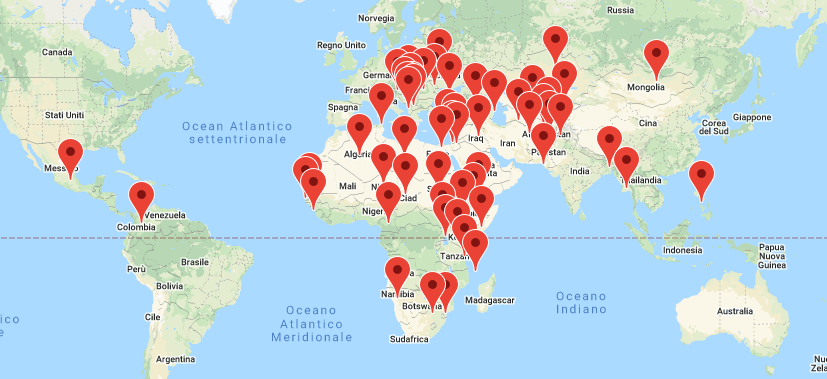
- It operates in more than 170 countries. (tika.gov.tr)
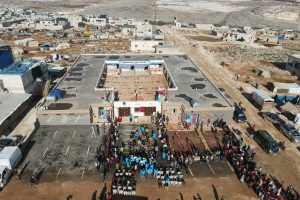
- In 2023 alone, it carried out 1,326 projects, spanning education, health, infrastructure, cultural restoration, water and sanitation, and more. (tika.gov.tr)
- TİKA reports regularly on its activities and finances.
- Humanitarian & Sustainability Focus
- Many projects target vulnerable populations: orphans, war victims, low-income communities, women, and people with disabilities. (tika.gov.tr)
- It supports capacity building (institutional and human capital), not just infrastructure. (tika.gov.tr)
- Cultural heritage preservation is also a priority (e.g., restoration of monuments). (tika.gov.tr)
- Credible Development Actor
These facts strongly counter the narrative that TİKA is a “political sabotage” tool — it is instead a genuine development cooperation organization grounded in soft power, humanitarian principles, and transparency.
Turkey’s Regional Policy: Law, Responsibility & Mediation
Turkey’s foreign policy in the region is founded on several principled pillars:
- Humanitarian Diplomacy
Turkey promotes civilian protection and the continuity of humanitarian aid in conflict zones. It frames its regional engagement not around power politics alone, but also moral responsibility. - Respect for International Law & Two-State Solution
Ankara consistently supports a just and lasting resolution to the Israeli-Palestinian conflict based on internationally recognized parameters, including a sovereign Palestinian state and East Jerusalem as its capital. - Balanced Approach to Terrorism
Turkey reiterates that its counter-terrorism policy is not selective — it opposes all terrorist organizations, while simultaneously advocating for political solutions and human rights protection.
Through this framework, Turkey positions itself not as an adversary, but as a mediator and guarantor of dialogue — a stabilizing force in a volatile region.
Risks of Closing Diplomatic Channels
Calls to shut down Turkey’s diplomatic missions or cripple TİKA carry serious consequences:
- Curtailing Diplomacy
Closing consulates means losing direct channels for crisis communication, which can escalate misunderstandings into conflict. - Hindering Humanitarian Aid
Without Turkish diplomatic presence, aid coordination in critical zones becomes far more difficult. - Undermining International Law
Diplomacy is not optional. Diplomatic closures threaten the predictability and rules-based order that undergird international relations. - Fueling Polarization
Attacking Turkey’s institutions risks deepening regional divides, transforming diplomatic competition into zero-sum confrontation.
Conclusion
Turkey and TİKA are mischaracterized by some as hostile actors, but the evidence does not support such claims. TİKA’s work is overwhelmingly development-oriented, transparent, and globally engaged. Meanwhile, Turkey’s diplomatic missions in Jerusalem and Tel Aviv are not instruments of aggression — they are strategically vital for dialogue and stability.
Rather than shutting these down, the international community should acknowledge them as tools for peace, humanitarian outreach, and constructive engagement. Turkey’s role is not that of an adversary, but of a partner committed to development, diplomacy, and long-term regional stability.
Sources
- TİKA’s official “Our Activities” page. (tika.gov.tr)
- TİKA’s 2023 project statistics. (tika.gov.tr)
- OECD Development Co-operation Profile on Türkiye. (OECD)
- TİKA history and mission (Turkish). (tika.gov.tr)
- Analysis of TİKA’s development model. (FAOHome)
- Turkish Consulate General in Jerusalem – Ministry of Foreign Affairs. (jerusalem-cg.mfa.gov.tr)
- Interview / statement from TİKA head about global outreach. (tika.gov.tr)