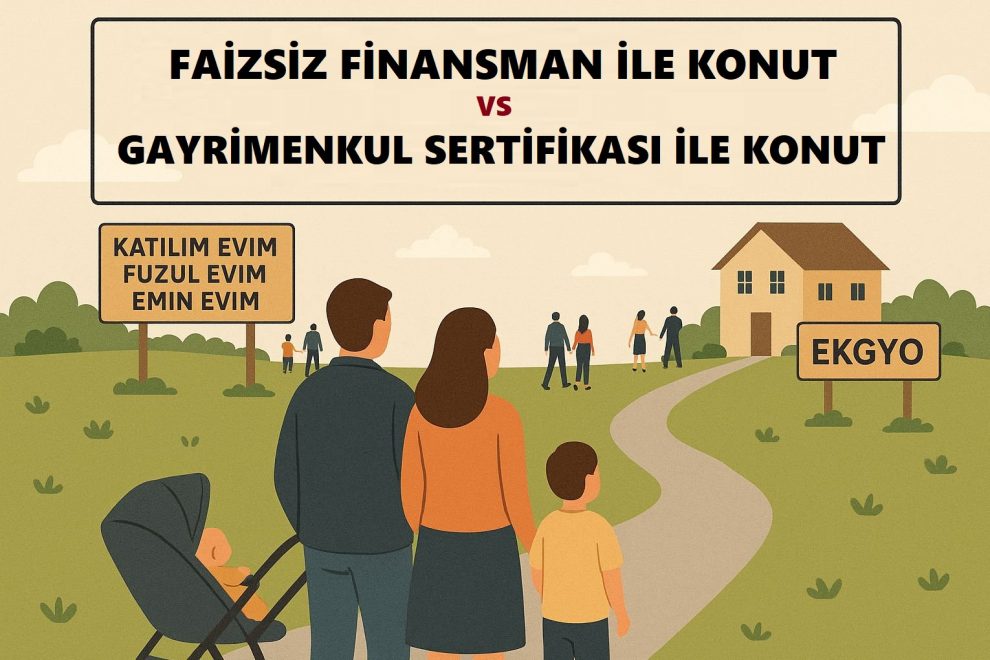

Istanbul, August 15, 2025 — In the face of rising interest rates and stricter banking conditions, Turkish consumers are increasingly turning to an alternative financial model for home and vehicle ownership: interest-free savings-based financing. Companies like Eminevim, Katılım Evim, Birevim Fuzul Evim, and Sinpaş Yapı Tasarruf Sandığı are leading this growing sector, offering a compelling option for those who wish to avoid conventional loans.
How the Savings-Based Model Works
Under this model, participants commit to fixed monthly contributions into a pooled fund. Over the course of the contract—typically spanning several years—they accumulate savings, often with an additional service fee of around 7–10%, which is not classified as traditional interest. Members can then receive the funds either through scheduled allocation or via lotteries held by the company, enabling them to purchase their chosen home or vehicle roughly halfway through the term.
Key Players in the Market
- Eminevim, established in 2005, now operates more than 128 branches across Turkey and has assisted over 160,000 customers in acquiring homes and vehicles through its “Elbirliği System.”
- Fuzul Evim, a longstanding name in the sector since the 1990s, has significantly expanded and recently absorbed contracts from several other firms, including Hedefevim and Doğruevim, following regulatory transfers coordinated by financial authorities.
- Sinpaş Yapı Tasarruf Sandığı offers both interest-free and collateral-free ownership plans for homes, cars, and commercial properties. Available payment formats include standard installments, lottery-based allocations, and early delivery options starting from just five months in some cases.
Regulation and Sector Growth
Historically operating in a largely unregulated environment, the sector received a major boost when Turkey’s Parliament approved formal regulation of interest-free funding systems in early 2021. This reform endowed these schemes with legal legitimacy and accountability, making them safer and more attractive to consumers.
Since regulation, the number of active savings-finance companies has surged from approximately 5 in 2018 to nearly 40 by 2020.
Advantages: Why Consumers Are Choosing This Path
- Ethical and Sharia-compliant: The model aligns with Islamic finance principles, avoiding interest (riba), making it a popular choice for religiously observant customers.
- Resilience to High Interest Rates: With conventional mortgage rates climbing—reaching around 17%—the savings-based model offers a more manageable and predictable payment structure.
- Accessibility and Flexibility: Users can enter the system without collateral or formal banking credit, benefiting from relatively early delivery of the financed item through either scheduled plans or draws.
- Mass Appeal: Young, upwardly mobile Turks, frustrated by soaring property prices and borrowing costs, see this as a viable route to ownership.
Academic and Market Insights
A 2021 academic study mapped the mechanics of savings-based finance (SBF), noting its roots in global rotating savings and credit associations (ROSCAs). In Turkey, demand for financing durable goods—especially housing—has surged, with housing demand outpacing vehicle finance by over twofold. Moreover, success in one segment, such as housing, has driven increased demand in others like automotive finance.
What Lies Ahead
With mounting domestic demand and a regulatory framework now in place, the savings-based financing sector is poised to play an even larger role. Despite this growth, consumer awareness remains mixed. Regulatory oversight aims to guard against potential risks, yet continued vigilance and education are needed to maintain transparency and trust.