
Translation of the article (İbrahim Karagül, Yeni Şafak, 26 November 2026)
Is it a signal, a message, or a threat? Why was the attack on the Russian ship in Libya? How did the power map started from Indonesia reach Libya? A hundred years ago we were writing about collapse. Today we are writing about reconstruction. Let’s lift our heads and take a look…
The fund investigation and the intense domestic pace keep us from looking up and seeing what is happening outside, what kind of chain of regional alliances Turkey is building, and what steps it is taking in preparation for the future of the world.
There is a Turkey that is squeezed inside but opening outward, and truly historic steps of a scale that will build geography are being taken. The internal storms will pass, but the permanent, history-making steps will be these.
Nations are long-lived; they cannot be confined to narrow spaces. We must know how to appreciate today’s great steps…
Whether what is happening inside is aimed at overshadowing or darkening the steps taken outside is a separate matter, but unfortunately public attention has shifted to that area.
Steps of a scale that will determine the addresses of wars and peaces on a global and regional level are therefore not being fully explained to the domestic public.
So we must insistently keep what is being done in this field on the agenda and explain it. We must follow every step, know how to appreciate everything that is done, and correctly read and narrate these days in which Turkey’s tomorrows are being built.
Nations and countries are long-lived; they cannot be imprisoned in a narrow slice of history. Therefore we must avoid confining our interest and attention to narrow areas and blinding our eyes.
The steps taken today are not the subject of those narrow areas. They are part of the long historical march of nations. At least some people must bring these issues into the open.
A Russian warship was hit — look at what has emerged.
On Tuesday, a Russian warship was hit by unmanned sea vehicles in Libya’s Benghazi Port. Immediately afterward, a Russian cargo ship loaded with weapons was hit off Benghazi. What would normally be perceived as a “terrorist attack” was said to have been carried out by Ukraine, with the sea vehicles launched from Albania. That was the official explanation.
But the Russia-Ukraine war was a Russian-British war. It later turned into a Russia-Europe war. It was supposed to happen in the Baltic Sea but was started in the Black Sea. With this attack it was being carried from the Black Sea to the Mediterranean.
Perhaps in the next step we will see examples of the same war in the Red Sea, the Persian Gulf, and the Indian Ocean. Perhaps we will see similar things in the North Pacific.
Wars no longer have borders or defined fronts… There are no superpowers in wars…
Wars no longer have physical borders. They have no defined fronts. They are not limited to conventional armies. Even the smallest country can carry out intercontinental attacks. There are no longer superpowers in wars.
Companies as much as states, and engineers as much as soldiers, are conducting this war. The world has become very small, technology has reached mind-boggling levels, and a history of war has begun in which civilians will lose far more than armies.
Therefore the unmanned sea vehicles were ostensibly a Ukrainian attack, but in essence they were part of the Russia-Europe war. So we are not seeing only Ukraine here; we are seeing all parties of both fronts. Powers other than Ukraine could also have been involved.
Why was this attack carried out in Libya?
The attack was carried out in Libya. Why was Libya specifically chosen, with sea vehicles sent from hundreds of kilometers away, instead of an easier and closer target?
It is clear that the matter is related to Libya as much as to Russia and Ukraine. Could the reasons not be punishing Russia via Libya, turning Libya into a battlefield, or pitting Turkey and Russia against each other in Libya? And this at a time when Turkey is precisely trying to unite Libya’s east and west…
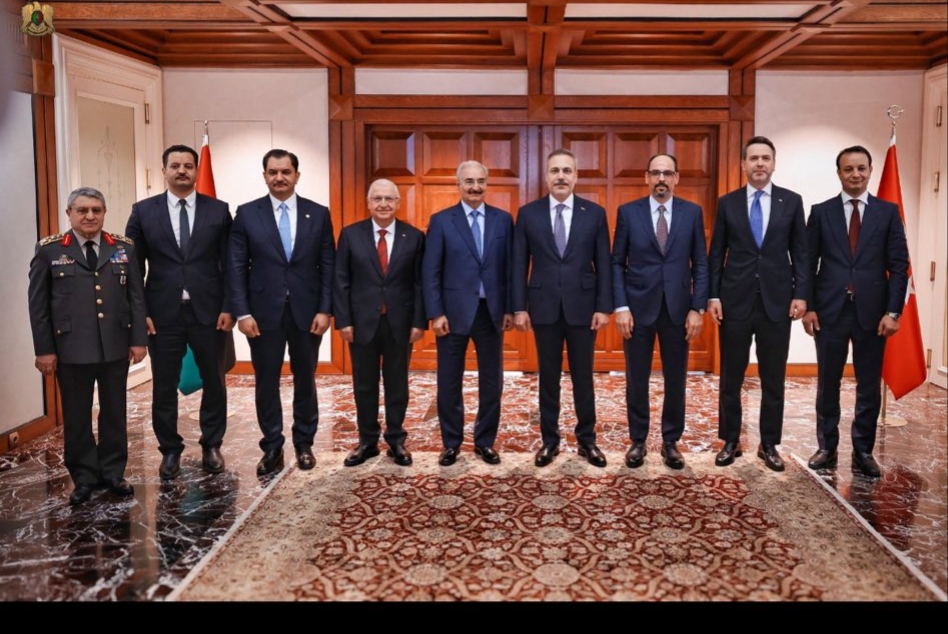
One day after the attack Haftar came to Turkey. One delegation went to Qatar, another to Egypt.
There must be such serious developments that, one day after the attack, the leader of the Benghazi administration, Khalifa Haftar, came to Turkey.
Saddam Haftar went to Qatar/Doha for military and defense agreements. Intelligence chief Bilqasim Haftar went to Egypt/Cairo to meet with Egyptian intelligence.
In normal times these would be defined as stages of the talks to unite Libya. But such a traffic of visits immediately after the attack indicates more urgent developments.
Perhaps someone is taking the first steps of a new war centered on Libya or another scenario, and Libyan officials are trying to get ahead with these contacts.
If there is an urgent situation, the dimensions of the attack change.
If there is such an urgent situation, then the attack on the Russian ship means something far beyond the Ukrainian dimension. That is where the matter transforms and becomes more serious.
Turkey’s unification of Libya as a power at the center of all these developments emerges as a far more priority precaution.
Whatever they do, whatever scenario they try, what Turkey and its partners say will happen in Libya. Europe, Ukraine, and the Israel-UAE axis have neither the opportunity nor the power to prevent this. The recent visits are the latest indicator of this.
After this attack against Russia, the Haftar administration first showed a very harsh reaction to Ukraine and then contacted Turkey and its partners through all channels and accelerated the process of rapprochement.
Turkey is the only country that “unites the map”! This is Turkey’s fundamental axis, and it is now happening in every country.
The unification of Benghazi and Tripoli is a Turkish project. No other country is investing in the unification of these two powers and sides.
Every country is busy calculating Libya’s fragmentation and the share that will fall to them. With Egypt and Russia approaching the Turkish theses, the end of this fragmentation map has also been approached.
Here is how: Until now Turkey has opposed “map fragmentation” in every country. All its military operations and defense relations have proceeded on this basis. This is how it happened in Syria and the Syrian map was reunited. It happened in Azerbaijan with the Karabakh war; the map was united.
Right now a strong state and army are being built in Somalia and work is being done to achieve full control over the Somali map. In the Sudanese civil war, efforts are being made for the central and legitimate Khartoum administration to regain sovereignty over the entire country; here too the map is being united.
A first in a hundred years… A “map of geographical partnerships” is being built.
We have reached the end of the fragmentation maps with which the West shredded the entire geography after the First World War. Now supra-national regional partnerships are being established and strong foundations are being laid to prevent Western invasion and Israeli expansion.
Turkey’s theses in this direction are the greatest challenge and reconstruction attempt stemming from the region’s power after the dissolution of the Ottoman Empire.
Everything is being conducted through a great “map.” If you look only at the alliances and defense agreements made in the recent period, this “partnerships map” becomes clear. These efforts aimed at uniting the Middle Belt world and placing it under a common defense shield are the preliminary initiatives of a new leap within centuries.
Now let’s look carefully at that “map.” What do the signatures mean?
Let’s look: First the Mecca Alliance was signed. Turkey, Saudi Arabia, and Pakistan agreed that an attack on one country would mean an attack on all three, and entered into a major defense investment.
Then Turkey, Indonesia, Pakistan, and Qatar made another defense agreement. It opened the doors to large investments for joint war technology.
Subsequently, Turkey-Saudi Arabia and Turkey-Qatar separately made defense agreements. Full defense integration was established, including “sending troops” in case of war.
Turkey and Pakistan already have a persistent and continuously renewed defense partnership. A similar relationship continues between Turkey and Malaysia.
A new power is being built from the Pacific to the Mediterranean. Look at Libya with this eye too.
I am sure similar agreements will be made with Egypt, Algeria, and other countries. Existing military relations will be raised to the highest level.
Turkey has similar agreements with many countries in Africa. As Somalia strengthens and when the Sudanese map is united, much larger military partnerships will be established on the Red Sea coast and in the Indian Ocean.
Now let’s show this on the map. Indonesia in Southeast Asia, Pakistan in South Asia, Qatar in the Persian Gulf, Saudi Arabia that will be effective across the entire Middle East, Somalia and Sudan in the Red Sea. Syria at the easternmost part of the Mediterranean, then Lebanon. Libya in the middle of the Mediterranean…
Open the world map in front of you and look once more. It will tell you everything.
Tomorrow this will be Egypt, and in the west of the Mediterranean it will be Algeria. When the map is also united, a completely different power will concentrate here.
Let’s also bring Turkey’s partnership relations with Central Asia and the Turkic Republics here. So what kind of partnerships map is taking shape?
Does the Haftar administration read this map?
I think this is the greatest reconstruction, partnership, or unification after the dissolution of the Ottoman Empire, and it is happening for the first time. Previous bilateral and multilateral partnerships were entirely aimed at consolidating the West’s control over the geography. But this can be remembered as the first independent power construction aimed at this geography building its own existence.
Libya is one of the centers of all these great projects. Every development—the Libyan civil war, which country supports which side, the hitting of a Russian warship in Benghazi—concerns this great “power map.”
The Haftar administration, by uniting with the Tripoli administration, can become an important part of the geography of powers stretching from Indonesia to the Atlantic Ocean, and it is clear that it wants to. I think they are making this reading too.
Libya becomes the defense shield of the Mediterranean, the gate opening to the depths of Africa.
Libya is also the most important gate of the Mediterranean opening to the depths of Africa. There were efforts in this direction during the Gaddafi period; Gaddafi was probably punished for this! But those punishing countries no longer have such power, and the new power is growing on this side.
Therefore the unification of Libya can turn Libya into an effective power as far as the south of the Sahara. This can also form a fundamental ground in the great geography and common defense shield project led by Turkey.
Without becoming a victim of the game scenarios of Western and regional powers aimed at map fragmentation, every country, including Libya, must open the ways of building power.
The hitting of a Russian warship in Benghazi Port is not just a Ukrainian attack. Look at what kind of power map exists and what kind of power struggle is taking place on this map. Therefore every “isolated” event is part of a struggle in a much wider area, and we must understand it that way.
A hundred years ago we were writing about collapse. Today we are writing about reconstruction. We are following excitement instead of pain.
Haftar’s contacts in Ankara are very important. Libya must be turned into a strong defense fortress in the Mediterranean and must become one. Libyans must make this decision urgently and start preparations. Turkey and Libya want the same thing.
For now the map starting from Indonesia has reached Libya. Let’s see where else it will reach. Those who note the history of this period must be realizing how exciting the developments are.
The great pains we experienced a hundred years ago when the geography was being fragmented must turn into excitement and joy a hundred years later when the geography unites as a map of partnerships.
But most importantly, it is to be able to grasp the steps taken, the tables established, the power maps drawn, and Turkey’s wisdom, its skill in building history and formatting geography.
It is to be able to develop the language and tools that can correctly and effectively explain this to the domestic public.
Source: Yeni Şafak – İbrahim Karagül column