
Türkiye strongly rejects the newly re-signed Lebanon–GCASC EEZ agreement, arguing that it violates the equal rights of Turkish Cypriots and undermines legitimate maritime authority and regional stability.
Türkiye sharply criticized the renewed Lebanon–GCASC EEZ delimitation agreement, asserting that GCASC has no authority to conclude deals binding the entire island, as it ignores the equal founding rights of Turkish Cypriots. Ankara argues that while the agreement does not overlap with Türkiye’s registered continental shelf, it constitutes a unilateral action that undermines the Cyprus settlement process and threatens regional stability. Türkiye warns the international community not to support such initiatives and reaffirms that it will continue to protect Turkish Cypriot rights together with the TRNC.
A Renewed Flashpoint in a Crowded Geopolitical Arena
On 26 November, the Eastern Mediterranean—already a dense web of energy competition, overlapping maritime claims, shifting alliances, and unresolved political disputes—entered a new phase of tension. Lebanon and the Greek Cypriot Administration of Southern Cyprus (GCASC) re-signed their 2007 Exclusive Economic Zone (EEZ) delimitation agreement after nearly two decades of political stagnation.
Ankara’s reaction was immediate and uncompromising. Foreign Ministry Spokesperson Öncü Keçeli stated that Türkiye does not and will not recognize the agreement, arguing that it ignores the equal rights of Turkish Cypriots and undermines efforts toward a comprehensive settlement on the island.
GCASC’s EEZ Strategy Since 2003: Building an Energy-Centered Diplomacy
1.1. Claiming Island-Wide Authority
Since the early 2000s, GCASC has pursued a proactive maritime policy, signing EEZ agreements with:
- Egypt (2003)
- Lebanon (2007)
- Israel (2010)
Each deal was negotiated under the assertion that the Republic of Cyprus represents the entire island.
However, the 1960 Treaties of Establishment, Guarantee, and Alliance defined Cyprus as a partnership state composed of two co-founding peoples—Greek Cypriots and Turkish Cypriots.
Key legal complications:
- The partnership collapsed after the 1963 constitutional crisis, excluding Turkish Cypriots from government.
- GCASC has never regained joint administration or consent from Turkish Cypriots.
- Legally, therefore, GCASC’s unilateral agreements remain contested in legitimacy and scope.
1.2. The Strategy: Create Maritime Facts on the Ground
GCASC’s long-term objective has been to:
- Establish internationally recognized maritime zones,
- Attract multinational energy companies,
- Lock in political recognition through commercial partnerships,
- Embedding energy into diplomacy with the EU, Israel, Egypt, and Greece.
This strategy seeks to place the TRNC and Türkiye in a position where they must respond to pre-constructed realities.
Why the Lebanon–GCASC EEZ Agreement Returned Now
2.1. Lebanon’s Political Shifts and Strategic Calculus
The 2007 agreement was frozen primarily due to:
- Hezbollah’s opposition,
- Fear of antagonizing Türkiye,
- Domestic political instability.
What changed in 2024–2025?
- Growing energy urgency after Lebanon’s economic collapse,
- Increased U.S. and EU engagement in EastMed energy restructuring,
- GCASC–Israel cooperation intensifying, especially post–regional realignments,
- Renewed push for offshore drilling to attract investment.
2.2. The Regional Energy Chessboard
Lebanon’s decision is influenced by broader dynamics:
- The EastMed Gas Forum (EMGF) increasingly marginalizes Türkiye,
- Italy, France, and U.S. energy firms (ENI, TotalEnergies, ExxonMobil) expanding operations,
- Israel’s desire for stable maritime links following its deals with Cyprus.
Lebanon therefore sees alignment with GCASC as a pathway to economic gains and political legitimacy—despite the geopolitical risks.
Türkiye’s Legal and Political Position: “Geography and Equality Must Prevail”
Türkiye’s reaction to the Lebanon–GCASC EEZ agreement must be understood within the broader framework of maritime law, Cyprus’s unresolved constitutional status, and Ankara’s long-standing policies in the Eastern Mediterranean. While the agreement does not technically violate Türkiye’s declared continental shelf limits, Ankara interprets it as part of a long-term strategic pattern by GCASC to redefine maritime realities in the region without the consent of Turkish Cypriots.
3.1. No Overlap With Türkiye’s Continental Shelf — But Significant Symbolic and Political Weight
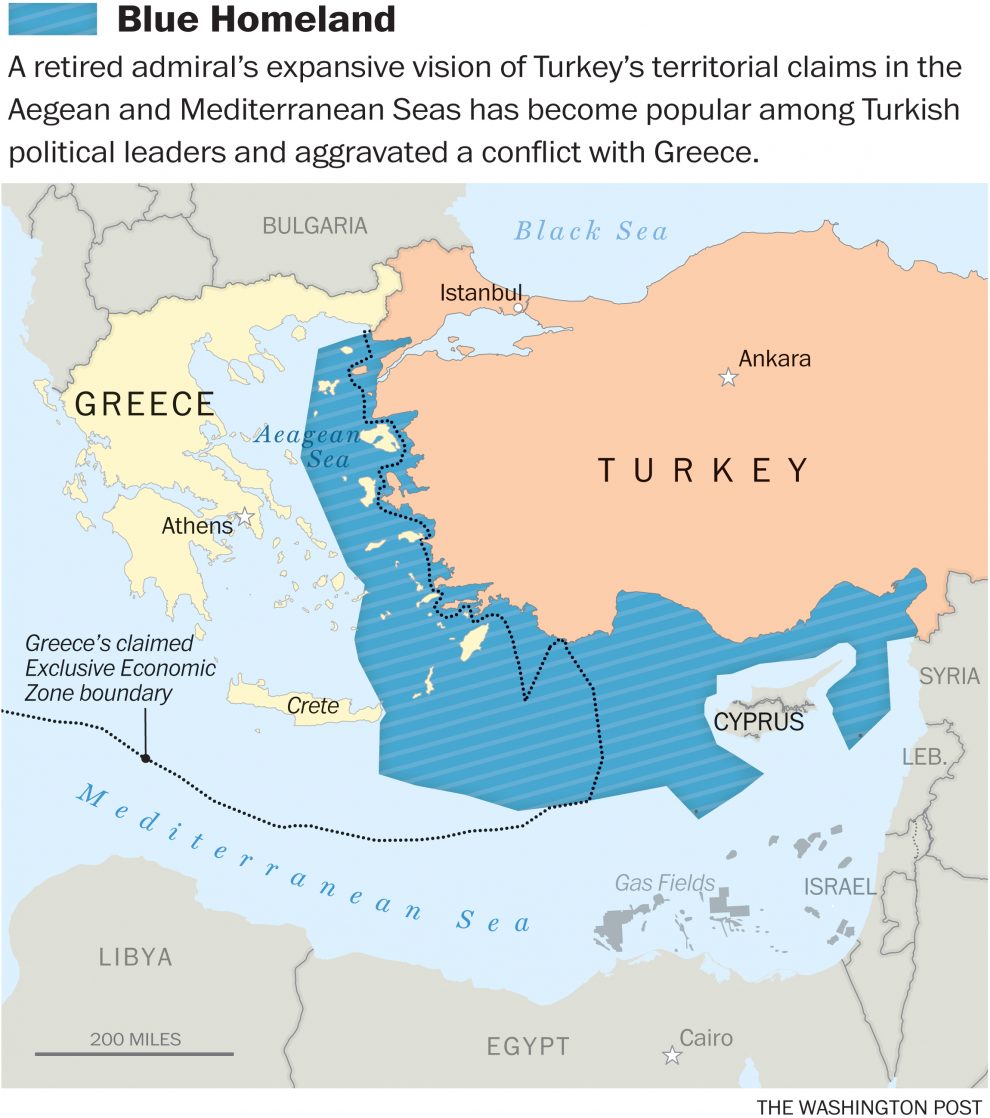
Although the newly re-signed Lebanon–GCASC EEZ agreement does not physically intersect with Türkiye’s 18 March 2020 UN-registered continental shelf coordinates, Ankara argues that its importance goes far beyond geography.
3.1.1. The Symbolic Dimension: Setting a Precedent Without Turkish Cypriots
From Türkiye’s viewpoint, every EEZ agreement the GCASC signs—whether or not it touches Türkiye’s maritime areas—establishes a precedent:
- GCASC presents itself to the international community as the sole authority over Cyprus,
- Turkish Cypriot rights become incrementally marginalized,
- The island’s political equality—a founding principle of the 1960 Republic of Cyprus—is eroded.
Türkiye sees these acts as steps toward entrenching a unilateral status quo.
3.1.2. The Diplomatic Dimension: Strengthening Anti-Türkiye Coalitions
Even if the agreement is geographically distant from Türkiye’s shelf:
- It strengthens GCASC’s energy partnerships with regional states,
- Encourages alignment with Israel, Greece, the EU, and now Lebanon,
- Builds a diplomatic “energy bloc” from which Türkiye and the TRNC are excluded.
3.1.3. The Negotiation Dimension: Undermining UN-Led Talks
GCASC’s agreements—signed without Turkish Cypriot input—are seen as:
- Attempts to weaponize international law,
- Moves designed to pressure Türkiye and the TRNC at the negotiating table,
- Efforts to claim rights before any settlement is reached.
Türkiye argues that this erodes trust and complicates future peace processes.
3.2. The Core Principle: Turkish Cypriots Cannot Be Excluded From Decisions on Natural Resources
For Türkiye, the Cyprus issue is not merely a territorial or diplomatic dispute; it is a matter of political equality, co-ownership, and sovereign rights.
3.2.1. Turkish Cypriots as Co-Founders of the Island’s Governance
Türkiye emphasizes that:
- Turkish Cypriots are founding partners, not a minority,
- Both communities jointly own the island’s natural resources,
- Any international agreement must receive bicommunal approval.
This position aligns with the original constitutional framework of the 1960 Republic of Cyprus.
3.2.2. GCASC Cannot Represent Turkish Cypriots
Ankara rejects the GCASC’s claim to represent the entire island on several grounds:
- Turkish Cypriots have been excluded from state institutions since 1963,
- The partnership state collapsed, leaving GCASC in control of only the southern part,
- International recognition does not grant unilateral authority to make decisions affecting the other community.
Therefore, any EEZ agreement concluded by GCASC is, in Türkiye’s view, non-binding for Turkish Cypriots and illegitimate in relation to the island as a whole.
3.2.3. The TRNC’s Proposal for a Joint Energy Committee
Türkiye repeatedly cites the TRNC’s proposals for:
- A Joint Energy Committee to share resources and manage exploration/drilling,
- A cooperative EEZ framework involving both communities.
GCASC has consistently rejected these proposals, which Türkiye sees as evidence of unilateralism and unwillingness to share power.
3.3. GCASC’s Actions Viewed as “Sabotaging Negotiations”
From Ankara’s perspective, the reactivated Lebanon–GCASC agreement is part of a deliberate strategy that undermines efforts to achieve a fair and lasting Cyprus settlement.
3.3.1. Creating Faits Accomplis (De Facto Realities)
Türkiye argues that GCASC:
- Signs agreements unilaterally to create irreversible maritime borders,
- Uses international recognition to consolidate EEZ claims,
- Attempts to isolate the TRNC diplomatically.
These faits accomplis, once established, become difficult to challenge.
3.3.2. Seeking EU-Backed Maritime Legitimacy
GCASC is a member of the European Union; Türkiye and the TRNC are not.
Thus:
- GCASC leverages EU political and legal structures,
- Presents itself as the “legal” party in disputes,
- Uses EU institutions to pressure Türkiye in the Eastern Mediterranean.
Türkiye sees this as an attempt to internationalize the dispute in favor of one side.
3.3.3. Using Energy Cooperation to Avoid Power-Sharing
According to Ankara:
- GCASC aligns with regional states and energy companies to bypass negotiations,
- Stronger external partnerships reduce GCASC’s incentive to compromise,
- Energy revenues—if unilaterally acquired—would permanently tip the balance of power.
This dynamic, Türkiye warns, undermines UN-led reunification talks.
3.3.4. Deepening the Island’s Division, Not Promoting Settlement
Far from facilitating peace, Türkiye argues that GCASC’s unilateral EEZ strategy:
- Entrenches the status quo,
- Politically isolates Turkish Cypriots,
- Reduces the likelihood of a mutually agreed political framework.
In short, energy politics become a mechanism to freeze the conflict, rather than resolve it.
Broader Regional Implications: A New Cycle of Tension?
4.1. Türkiye–Lebanon Relations at a Delicate Crossroads
Lebanon has historically tried to avoid taking sides.
This agreement may push it toward the Greece–GCASC axis, complicating:
- Trade ties,
- Security cooperation,
- Humanitarian coordination.
4.2. Energy Companies Caught in the Middle
GCASC blocks overlap with areas claimed by the TRNC.
Multinational firms like ENI, TotalEnergies, ExxonMobil, Noble Energy risk:
- Becoming part of the geopolitical contest,
- Facing operational disruptions,
- Entering legal gray zones if they work in disputed areas.
4.3. Expanding Israel–GCASC Energy Integration
Key projects strengthening this alignment include:
- EastMed Pipeline (concept revived after recent regional reshuffles),
- EuroAsia Interconnector (EU-funded),
- Joint offshore block operations.
These moves shift the regional balance and reinforce GCASC’s maritime claims.
Türkiye’s Message to the International Community
Keçeli reiterated a warning:
“GCASC does not represent the whole island and has no authority to take actions binding the entire island.”
Türkiye directs this message toward:
- United Nations bodies,
- The European Union,
- Neighboring littoral states,
- Private energy firms and consortia.
Türkiye urges a regional framework based on:
- Joint decision-making,
- Equitable sharing of resources,
- Respect for the political equality of Turkish Cypriots.
A Clear, Firm, and Consistent Turkish Stance
Türkiye and the TRNC will continue to prioritize:
- Protection of maritime rights,
- Diplomatic and legal resistance to unilateral EEZ claims,
- Promotion of negotiated solutions based on equality,
- Coordinated activity in the Eastern Mediterranean.
Keçeli’s final message encapsulates Ankara’s unwavering approach:
“Türkiye, together with the TRNC, will resolutely protect the rights and interests of Turkish Cypriots.”
As energy, sovereignty, and diplomacy intertwine, the Eastern Mediterranean appears headed into another intense period of geopolitical maneuvering.
- United Nations Convention on the Law of the Sea (UNCLOS), 1982.
- European Parliament Research Service (EPRS), The Cyprus Problem and EU Policy, 2023.
- International Crisis Group, Bridging the Cyprus Divide, Report No. 229.
- U.S. Energy Information Administration (EIA), Eastern Mediterranean Energy Overview, 2024.
- Chatzistavrou, F. & Tsardanidis, C., Energy Geopolitics in the Eastern Mediterranean, Journal of Balkan and Near Eastern Studies, 2022.
- Kourtelis, C., The EU and the Cyprus Gas Issue: Competing Interests and Regional Dynamics, Mediterranean Politics, 2021.
- Antoniades, A. & Tziarras, Z., Gas, Geopolitics and Identity in Cyprus, PRIO Cyprus Centre Report, 2020.
- EastMed Gas Forum (EMGF) official statements and communiqués, 2019–2025.