
In the high-stakes world of commercial aviation, where reliability is non-negotiable, a persistent engine defect has grounded hundreds of Airbus aircraft worldwide, disrupting airline operations and costing billions in compensation. At the center of this storm is Pratt & Whitney’s PW1100G geared turbofan (GTF) engine—often abbreviated as PWG in industry shorthand—which powers the popular Airbus A321neo and has now spread its troubles to the efficient A220 family. What began as a targeted manufacturing flaw in the A320neo series has escalated into a fleet-wide recall, forcing airlines to park planes for months at a time and scramble for alternatives.
The Root of the Problem: A Manufacturing Defect in the PWG Engine
The PW1100G is part of Pratt & Whitney’s innovative PW1000G family, designed to slash fuel consumption by up to 20% through a geared turbofan architecture. Introduced in the mid-2010s, it became a cornerstone for Airbus’ narrowbody lineup, particularly the A320neo family, including the stretched A321neo variant favored for its long-range capabilities. However, in July 2023, RTX (Pratt & Whitney’s parent company) disclosed a critical issue: microscopic cracks in the high-pressure turbine and compressor components of engines produced between 2015 and 2021.These defects, stemming from a powder metallurgy process flaw during manufacturing, could lead to premature engine failure if unaddressed. Aviation regulators like the FAA and EASA swiftly mandated inspections, accelerating the removal of up to 1,200 engines globally. The process isn’t quick—overhauls can take 8-12 months due to supply chain bottlenecks, leaving airlines with fewer spares than needed.
Pratt & Whitney has committed over $2 billion in remediation efforts, including compensation to operators, but the fallout continues to ripple through the industry.
Impact on the A321neo: The Initial Grounding Wave
The crisis hit hardest on the A321neo, where the PW1100G is one of two engine options (alongside CFM’s LEAP-1A). Airlines that opted for the PWG for its efficiency gains found themselves sidelined. Vietnam Airlines, for instance, grounded all 20 of its A321-200N aircraft in September 2024, idling 20% of its domestic fleet for up to 300 days amid doubled maintenance timelines. Turkish Airlines followed suit, parking up to 12 A320neo/A321neo jets by year’s end, adding to nine already grounded.In the U.S., low-cost carriers bore the brunt. Spirit Airlines, a heavy PWG user, reported 39 of its 91 A320neo-family jets grounded as of mid-2025, crippling its recovery from bankruptcy. JetBlue and Delta each sidelined four A321neos, while Hawaiian Airlines, Volaris, and Wizz Air faced similar shortages, leading to deferred Airbus deliveries and scaled-back growth plans. Globally, by October 2024, 584 PWG-powered A320neo/A321neo aircraft—35% of the 1,658-strong fleet—were idle.Air Transat’s long-range A321LRs, prized for transatlantic hops, were next in line; the carrier projected grounding a third of its 15 PWG-equipped jets throughout 2024, resorting to A330 reallocations and lease extensions. These disruptions not only inflated operating costs but also strained passenger confidence, with some routes canceled outright.
Spreading to the A220: A New Front in the Engine Saga
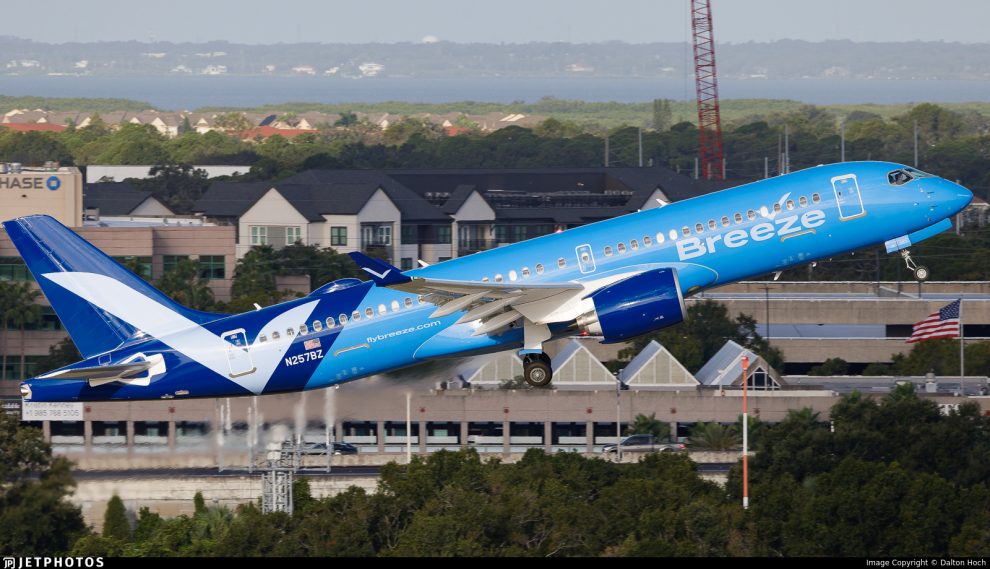
Initially confined to the larger A321neo, the PWG defect soon engulfed the smaller A220 (formerly Bombardier CSeries), which relies exclusively on the PW1500G—a close sibling in the PW1000G family sharing the same geared architecture and manufacturing vulnerabilities. Launched as a regional workhorse with exceptional efficiency, the A220’s troubles began emerging in 2022, with in-flight shutdowns prompting FAA airworthiness directives.By May 2023, supply chain woes had grounded swaths of A220s. Swiss International Air Lines parked one-third of its 30-jet fleet, leasing substitutes from Air Baltic. EgyptAir idled seven of 12, Iraqi Airways its entire four-plane order, and Air Baltic wet-leased A320s to plug gaps from nearly a dozen grounded A220-300s. Air Tanzania flagged issues as early as November 2022, canceling flights on its PW1524G-3-equipped A220-300s.U.S. operators weren’t spared: Delta had one of 60 A220s down long-term by early 2023, while JetBlue projected 2-4 grounded annually through 2024. Fast-forward to mid-2025, and the tally stands at 79 of 367 global A220s idle—22% of the fleet—exacerbated by the phased recall. Air Canada, Air France, and EgyptAir each report 8-11 aircraft sidelined, turning what should be a fleet highlight into a logistical nightmare.