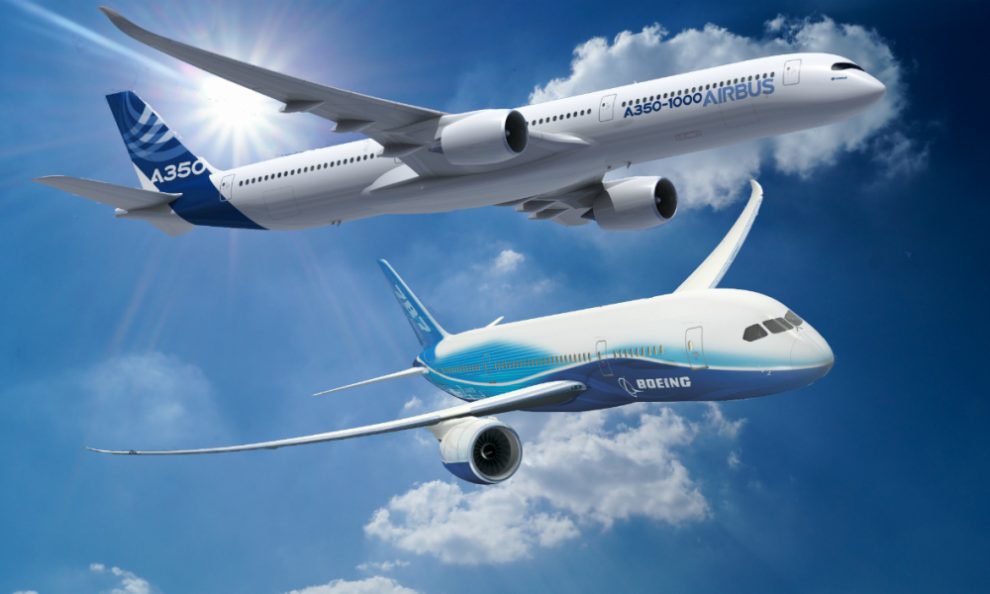

For decades, Boeing and Airbus have been locked in a fierce competition for dominance in the global aviation market. Today, Airbus has taken the lead, thanks to the commercial success of its A320neo family and the long-haul efficiency of the A350. Boeing, meanwhile, has faced setbacks with the 737 MAX crisis, delays in the 777X program, and uncertainty surrounding a new mid-market aircraft. But Boeing still has an opportunity to regain momentum — and it may lie in reimagining the past.
The Case for a 757 Revival
The Boeing 757 was once a workhorse for airlines, offering a unique combination of range, capacity, and performance. Retired in 2004, it has since become something of a legend, with many carriers and pilots praising its power and versatility. The market gap it left behind has been partially filled by the Airbus A321XLR, which has emerged as a favorite for transatlantic and long narrowbody routes.
A modernized 757, built with composite materials, advanced aerodynamics, and next-generation engines, could allow Boeing to reclaim this segment. Airlines continue to demand aircraft capable of efficiently serving “long and thin” routes — city pairs that don’t justify a widebody but require more capability than most narrowbodies can offer.
Why the 767 Still Matters
Similarly, the Boeing 767, introduced in the early 1980s, has proven remarkably resilient. It remains popular as a freighter and in military applications, with many passenger versions still flying. However, its commercial replacement has never fully materialized. The 787 Dreamliner is more advanced but often too large and expensive for certain airlines and routes.
A re-engineered 767, outfitted with composite wings, lighter fuselage materials, and efficient new-generation turbofans, could bridge the gap between the A321XLR and A330neo, giving Boeing a versatile mid-market competitor.
A Market Waiting for Disruption
The aviation industry is in flux. Airlines are demanding fuel efficiency, environmental responsibility, and operational flexibility. Airbus currently dominates the middle-of-the-market category, particularly with the A321XLR. Boeing’s lack of a direct competitor has been glaring. By reintroducing the 757 and 767 in modernized forms, Boeing could accelerate development time compared to launching an entirely new aircraft program, while still addressing critical gaps in its portfolio.
Challenges Ahead
Of course, such a strategy would not be without challenges. Certification hurdles, production costs, and the risk of splitting focus from ongoing projects like the 777X could weigh heavily. Boeing must also rebuild confidence with regulators, airlines, and the flying public after recent crises. Still, leveraging proven designs with modern technology might strike the balance between innovation and reliability that the market demands.
Airbus has the upper hand today, but Boeing has the heritage and technical foundation to fight back. By reviving and reinventing the iconic 757 and 767, Boeing could not only fill the gaps in its product line but also reclaim its reputation as the world’s aviation pioneer. Sometimes, the path to the future runs through the past — and Boeing may need to look back in order to leap forward.