
Prof. Dr. Oğuzhan Bilgin
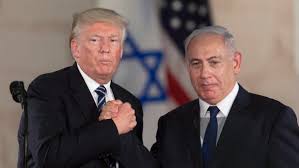
Readers of this column and those who follow my television commentary know that from day one, I have objected to those who try to view Trump as just another US president. Despite all his problems, his aggressive and rude behavior, and his very disturbing words and attitudes, Trump was someone outside the line of the American establishment (led by the Pentagon), which is controlled by globalists and forms an organic whole with Israel. That is why he was the target of assassination attempts, faced lawsuits, and was blackmailed over the Epstein videos.
So, why am I using the past tense? Because the Zionists in Israel and the US managed to take Trump down. How? Let me explain…
Although Trump had a Christian Zionist voter base, primarily consisting of Evangelicals, and although he himself viewed Israel with sympathy, and even recognized Jerusalem as Israel’s capital during his first term, there were two characteristics that distinguished him from other US presidents on the issue of Israel. The first was Trump’s power struggle, which could be described as “I am the president of the United States, I run this place.” The second, as I analyzed in this column last week, was that Trump believed that dealing with the world’s problems, especially those in the Middle East, cost the US money, time, and lives, was contrary to its interests, and accelerated the US’s loss of hegemony. For this reason, he wanted to withdraw troops from Syria during his first term, but they did not allow him to do so. During his second term, who wouldn’t want the US to withdraw its forces from the Middle East and shift its focus away from the region, as he talked about Greenland, Canada, Panama, and, more importantly, competing with China in the Pacific, strategically targeting this? Israel. And, of course, along with Israel, its extension within the US, the Pentagon.
After the Syrian Revolution, there was a Trump who publicly humiliated Netanyahu—who had rushed to the White House in a panic and demanded that Trump not recognize Sharar, not lift sanctions, not withdraw support for the PKK-SDG, and not hinder Turkish influence in the New Syria—by telling him to “be reasonable.”
There was a Trump who, three months ago, spoke of a ceasefire in Gaza within one or two weeks and held talks with Hamas. When Israel attacked Iran, striking its nuclear facilities, and then shouted, “The nuclear facilities are gone, Israel should withdraw its planes,” and then withdrew the planes, saying, “I am even more angry with Israel,” and when he made a ceasefire with the Houthis and met with Ahmed Shara, it was debated whether he had strayed from Israel’s line.
During this process, Trump’s key man here, Tom Barrack, made statements that were unprecedented for a US official: “The Sykes-Picot era is over,” “SDG = PKK,” and “SDG must lay down its arms and integrate into Syria.”
For all these reasons, operations carried out through Pentagon leaks targeting Trump, the Charlie Kirk assassination, attacks disguised as ‘ISIS attacks’, warnings issued through certain street incidents, and, most importantly, blackmail using the Epstein videos that have been the main focus of the US media for weeks, created enormous pressure on Trump, and it is clear that Trump ultimately surrendered.
Therefore, we now have a Trump who cannot even speak out against the attack on Qatar, which has just received hundreds of billions of dollars, and who has been involved in the process from the very beginning.
Those who say Trump has always been like this are mistaken. For example, is the attack on Qatar in line with the interests of the US, and specifically Trump, or is it contrary to them? Of course it is contrary. So, what did Trump, who has become so powerless that he cannot say a word about the attack on Qatar, which is clearly contrary to his interests, and all of Israel’s other actions, say last week?
“In the past, the US was run by the Israel lobbies; they were very powerful, but they are no longer that powerful.” Why did Trump feel the need to make such a statement out of the blue? Because he surrendered to Israel, and this needed to be concealed in some way.
Source: https://www.aksam.com.tr/yazarlar/oguzhan-bilgin/israil-trumpi-nasil-teslim-aldi/haber-1602847