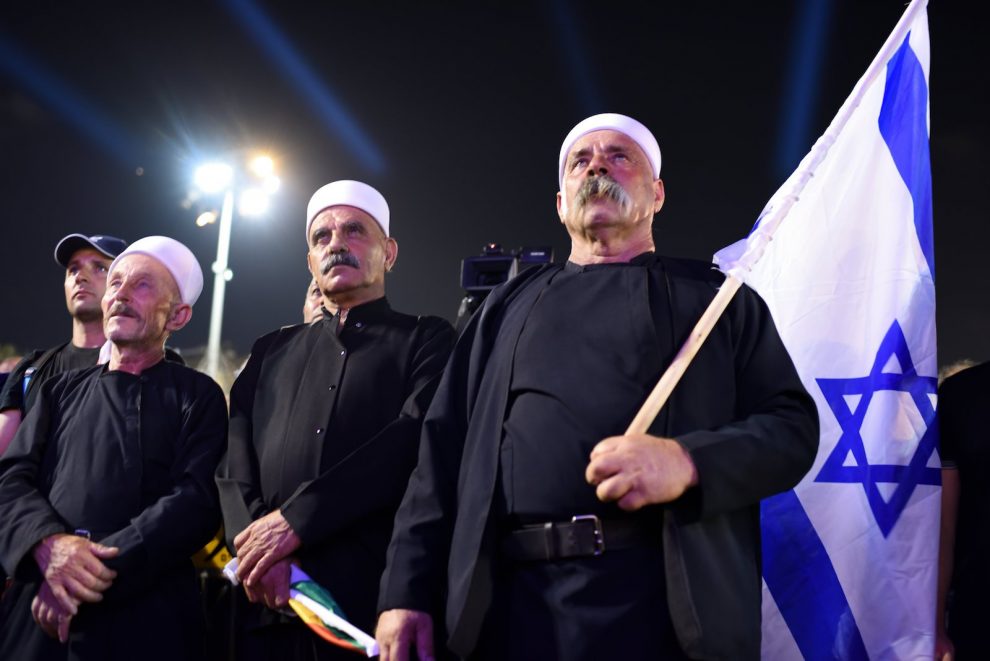

Israel’s Druze community, numbering around 150,000, or roughly 2% of the population, occupies a complex and often contradictory position in Israeli society. As a distinct religious and ethnic group, the Druze are Arab by heritage but practice a unique monotheistic faith that diverged from Islam centuries ago. While Israel often touts the Druze as a model of integration—pointing to their mandatory military service alongside Jewish citizens and their loyalty to the state—significant evidence suggests systemic discrimination in areas like land rights, education, employment, and political representation. This article explores the multifaceted challenges faced by Druze citizens, drawing on historical context, policy analysis, and recent developments.
Historical Context and Identity
The Druze in Israel primarily reside in northern villages like Daliyat al-Karmel, Yarka, and Maghar. Unlike other Arab communities, the Druze were designated as a separate religious group by the Israeli government in 1957, a move that distanced them from the broader Palestinian Arab population. This classification, combined with mandatory conscription into the Israel Defense Forces (IDF) since 1956, has shaped their unique status. Many Druze embrace their Israeli identity, often citing pride in their military service. However, this loyalty has not translated into equal treatment, and many Druze feel caught between their Arab heritage and their role in a state that often marginalizes non-Jewish communities.
Land and Housing Discrimination
One of the most glaring areas of discrimination is land allocation and housing. Druze villages face severe restrictions on expansion due to zoning laws and bureaucratic hurdles. Unlike Jewish settlements, which often receive state support for development, Druze communities struggle with limited land for new housing, leading to overcrowding and illegal construction. For example, in 2018, the Israeli government approved a plan to build new Jewish settlements in the Galilee, while Druze villages like Beit Jann faced demolitions of homes deemed “unauthorized.” According to a 2020 report by the NGO Adalah, Druze municipalities receive significantly less funding for infrastructure than Jewish ones, exacerbating disparities in living conditions.The 2018 Nation-State Law, which declared Israel as the “nation-state of the Jewish people,” further alienated the Druze. The law prioritized Jewish settlement and downgraded Arabic as an official language, sending a message that non-Jewish citizens, including the Druze, are second-class. Druze leaders, including spiritual leader Sheikh Mowafaq Tarif, publicly criticized the law, arguing it undermined their contributions to the state.
Economic and Educational Disparities
Economic inequality is another persistent issue. Druze unemployment rates are higher than those of Jewish citizens, with many Druze confined to low-wage sectors like construction or security. A 2019 study by the Israel Democracy Institute found that Druze workers earn, on average, 20% less than their Jewish counterparts with similar qualifications. This gap is partly due to limited access to higher education and professional networks. Druze schools, while teaching in Arabic, often receive less funding than Jewish schools, leading to outdated facilities and fewer advanced programs. For instance, only 10% of Druze students pursue STEM fields at university, compared to 25% of Jewish students, according to a 2021 Ministry of Education report.Military service, often framed as a pathway to integration, does not always yield economic benefits. While Druze veterans are entitled to benefits like housing subsidies, bureaucratic delays and discriminatory practices often limit access. A 2022 petition by Druze activists to the Supreme Court highlighted cases where veterans were denied land plots in Jewish-majority areas, despite eligibility.
Political Marginalization
Politically, the Druze are underrepresented. No Druze-led political party has gained significant traction, and Druze candidates often run within Zionist parties, limiting their ability to advocate for community-specific issues. In the Knesset, Druze representation is minimal, with only one or two members in recent sessions, often aligned with right-wing coalitions that prioritize Jewish interests. This lack of independent political power restricts the community’s ability to address systemic issues like discriminatory budgeting or land policies.
Social and Cultural Tensions
Socially, the Druze face prejudice from both Jewish and Arab communities. Some Jewish Israelis view them as “Arabs” despite their loyalty, while some Palestinian Arabs see them as complicit in Israel’s policies due to their military service. This dual alienation was evident in 2023, when protests erupted in Druze villages over a proposed wind farm project on communal land in the Golan Heights. The project, backed by the government, was seen as disregarding Druze cultural and environmental concerns, sparking rare public demonstrations.
Recent Developments and Resistance
In recent years, a growing number of Druze youth have resisted mandatory conscription, citing unequal treatment. The “Refuse—Your People Will Protect You” campaign, launched in 2019, encourages Druze to reject military service until the state addresses systemic discrimination. While the movement remains small, it reflects a shift among younger Druze who feel disillusioned by unfulfilled promises of equality.The Israeli government has occasionally acknowledged these issues. In 2021, a five-year plan was announced to invest 1 billion ILS (approximately $300 million) in Druze and Circassian communities, focusing on infrastructure and education. However, implementation has been slow, and critics argue the plan is more symbolic than transformative.
In conclusion, Israel’s Druze citizens navigate a precarious existence, lauded for their loyalty yet marginalized by policies that prioritize Jewish citizens. From land restrictions to economic disparities and political exclusion, the Druze face systemic barriers that belie the state’s narrative of integration. While their military service distinguishes them from other Arab communities, it has not secured equal rights. As the Druze increasingly voice their grievances—through protests, legal challenges, and conscientious objection—their struggle highlights broader questions about equality and inclusion in Israel. Addressing these issues requires not just symbolic gestures but concrete policy changes to ensure the Druze are treated as full and equal citizens.