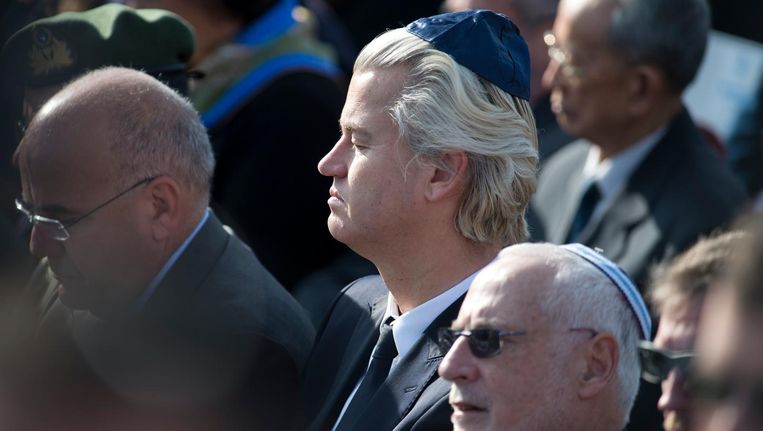

In the early elections in the Netherlands, the Freedom Party (PVV) led by the racist Geert Wilders suffered a major defeat. Wilders, known not only for his Islamophobia but also for his support of Israel and Zionism, saw his vote share drop from 23.5% to 16%. The big surprise was the liberal D66 party coming in first, which is also a supporter of Palestine, showing how “Gaza” and “genocide” are shaping global politics.The parliamentary elections held on October 29 in the Netherlands revealed a picture that shook the balance in European politics. While the Freedom Party (PVV) under Geert Wilders, known for pro-Israel and anti-Islam rhetoric, lost a significant number of votes, the liberal-leaning center-left party Democrats 66 (D66) surprisingly took first place. The results indicate a weakening of Zionist and far-right influence in the Netherlands. These results also represent a blow to Israel, which seeks to influence European politics through far-right parties and to prevent the rise of pro-Palestinian politics.
Big Surprise from D66:
According to preliminary data, D66 and PVV were neck and neck with 16.7% of the vote each, winning 26 seats each. However, this marked a sharp decline for PVV, as Wilders’ party lost 11 seats compared to the 2023 elections. Meanwhile, D66 increased its vote share by more than 10 percentage points, marking one of the biggest leaps in its history. In a parliamentary session before the election, D66 MP Jan Paternotte’s remarks on Gaza, saying, “One day we will question how it is possible that people are dying of hunger,” are seen as evidence of an Israel-critical approach becoming central in Dutch politics.
Signal of a New Era in Foreign Policy:
The results also indicate a change in the Netherlands’ Israel-Palestine policy. Many parties in parliament support the official recognition of Palestine. The coalition government to be formed is expected to take a firmer stance within the European Union against Israel’s actions in Gaza. Wilders’ unconditional support for Israel and defense of alleged genocide in Gaza received widespread backlash. A Pew Research Center poll published in spring 2025 showed that 78% of the Dutch hold a negative view of Israeli Prime Minister Netanyahu. In this atmosphere, D66’s balanced stance on human rights and Palestine has attracted voter interest.
Opposition Also Supports Palestine:
The main opposition party, Green Left – Labour Party (GL-PvdA), won 20 seats, becoming the fourth-largest party. Many parties in parliament, including GL-PvdA, advocate for the official recognition of Palestine, signaling a stronger Dutch political stance against Israel’s occupation policies. Before the election, in the last major televised debate, leaders of D66 and GL-PvdA declared their support for recognizing a Palestinian state.
Far-Right Isolation:
In coalition formations after the election, inclusion of PVV seems nearly impossible. Actors in the center-right like VVD and the Christian Democratic Party (CDA) had already announced they would not cooperate with Wilders. Thus, even though PVV is represented in parliament, it will be excluded from government formation processes. This means the far-right is becoming isolated, and the political influence of the Zionist line is diminishing in the Netherlands.This article highlights a significant political shift in the Netherlands, especially in relation to Israel and Palestine politics at the European level.
Source: Yeni Şafak