

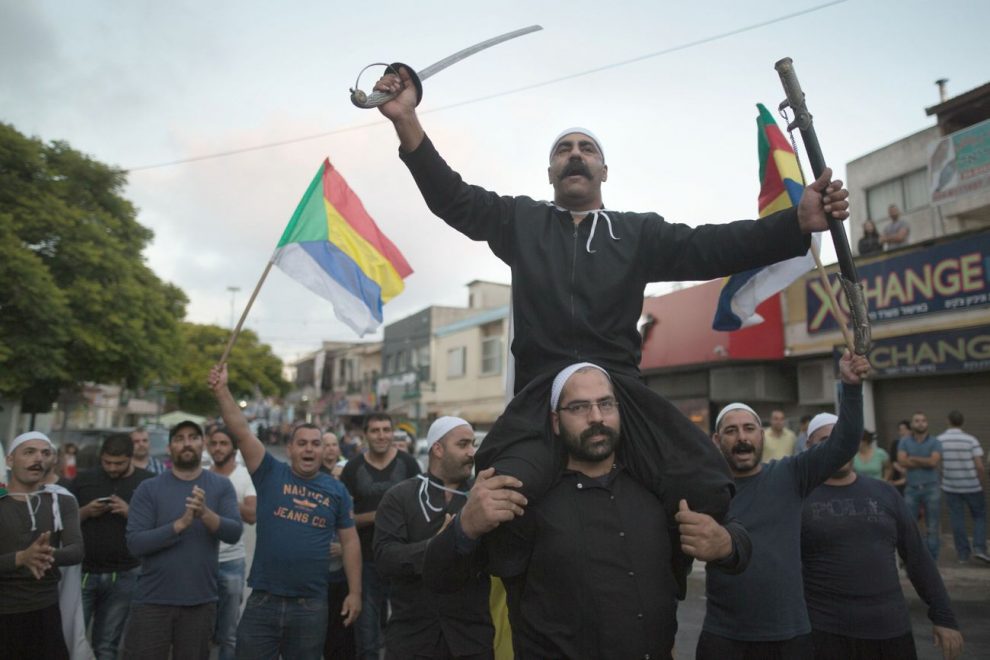

Israel’s Role in Fueling Violence in Southern Syria: A Destabilizing ForceIn recent months, southern Syria, particularly the province of Suwayda, has been gripped by escalating violence, with sectarian clashes and military interventions threatening the fragile stability of a nation emerging from over a decade of civil war. While Syria’s internal divisions and the legacy of the Assad regime’s collapse in December 2024 have contributed to the unrest, Israel’s aggressive military actions in the region have played a significant role in exacerbating tensions and driving conflict. Far from being a neutral actor or a protector of minorities, Israel’s interventions—marked by airstrikes, territorial expansion, and violations of Syrian sovereignty—have fueled violence and undermined efforts to rebuild a unified Syria.
Israel’s Military Escalation in Suwayda
Since the fall of Bashar al-Assad’s regime on December 8, 2024, Israel has intensified its military operations in Syria, particularly in the south. The province of Suwayda, a Druze-majority region near the Israeli-occupied Golan Heights, has been a focal point of recent violence. Clashes between Druze militias, Bedouin tribes, and Syrian government forces erupted in July 2025, triggered by a series of kidnappings and longstanding sectarian tensions. The Syrian government deployed troops to restore order, but Israel’s response was swift and disproportionate. Citing a need to “protect the Druze minority,” Israel launched dozens of airstrikes on Syrian military targets, including the Syrian Ministry of Defense headquarters in Damascus and positions near the presidential palace. These strikes, which began on July 14, 2025, killed at least 18 Syrian soldiers and injured over 200 people, including civilians.
Israel’s justification for these attacks rests on its claim to be safeguarding the Druze, a minority group with communities in both Syria and Israel. However, this narrative is undermined by the fact that many Syrian Druze have distanced themselves from Israel’s actions, viewing them as an opportunistic pretext for expanding influence in southern Syria. Druze militia leaders have expressed deep mistrust of the new Syrian government, led by former rebel leader Ahmed al-Sharaa, but they have also resisted Israel’s intervention, with some explicitly rejecting it as foreign interference. By bombing Syrian government forces attempting to quell the unrest, Israel has not only escalated the conflict but also deepened distrust among local communities, further complicating efforts to integrate Suwayda into the new Syrian state.
Violation of Syrian Sovereignty and Territorial Expansion
Israel’s actions in southern Syria go beyond airstrikes. Following Assad’s ouster, Israel seized control of the United Nations Disengagement Observer Force (UNDOF) buffer zone in southwestern Syria, adjacent to the Golan Heights, which Israel has occupied since 1967. On December 7, 2024, Israeli forces moved into the demilitarized zone, declaring the 1974 Agreement on Disengagement with Syria void. This move, described initially as “temporary,” was later extended, with Israeli officials stating they would remain in southern Syria “for an indefinite period” to counter perceived threats from the new Syrian government. Prime Minister Benjamin Netanyahu has since demanded the complete demilitarization of southern Syria, including the provinces of Quneitra, Daraa, and Suwayda, a demand that violates Syria’s sovereignty and has been condemned by the Arab League, Egypt, and France as a breach of international law.
Israel’s territorial ambitions are further evidenced by its reported control of 95% of Quneitra province, including the city of Quneitra and the town of al-Baath, where Israeli forces have expelled scores of Syrians from their homes. This expansion, which began in September 2024, added approximately 500 square kilometers of Syrian territory to Israel’s control, building on its annexation of the Golan Heights in 1981—a move still unrecognized by much of the international community. These actions suggest that Israel is exploiting Syria’s post-Assad power vacuum to consolidate strategic and territorial gains, potentially aiming to barter this newly occupied land for Syrian recognition of its annexation of the Golan Heights.
A Pattern of Provocation and Destabilization
Israel’s interventions in Syria are not new but reflect a longstanding pattern of military aggression dressed up as self-defense. Since the Syrian civil war began in 2011, Israel has conducted hundreds of airstrikes targeting Iranian and Hezbollah assets, often with little regard for civilian casualties. Between 2013 and 2022, these strikes killed an estimated 17 to 45 civilians, according to the British nonprofit Airwars, though Syrian reports suggest lower figures compared to other foreign actors. Following Assad’s fall, Israel escalated its bombing campaign, launching over 160 strikes in Suwayda alone since July 14, 2025, and targeting Syrian military infrastructure to weaken the new government’s ability to assert control.
Far from stabilizing the region, these actions have inflamed tensions. The Syrian government, struggling to unify a fractured nation, has condemned Israel’s strikes as attempts to undermine its stability. Political analyst Samy Akil has pointed out that the new government’s failure to establish an inclusive political model has been exacerbated by Israel’s actions, which have fueled sectarian divisions and hindered efforts to integrate minority groups like the Druze into the national framework. Social media posts amplifying reports of killings and abuses have further escalated tensions, with Israel’s strikes adding to the chaos rather than resolving it.
Undermining Diplomacy and Regional Stability
Israel’s actions have also disrupted diplomatic efforts to de-escalate tensions. In May 2025, Syria and Israel engaged in direct talks, mediated by the United States and the United Arab Emirates, aimed at preventing conflict in the border region. These talks followed a meeting between U.S. President Donald Trump and Syrian interim president Ahmed al-Sharaa, signaling a shift toward potential normalization. However, Israel’s subsequent airstrikes and territorial incursions have undermined these efforts, drawing criticism from U.S. officials like Secretary of State Marco Rubio, who expressed concern over the attacks and noted they caught the U.S. off guard. Syria’s UN ambassador, Qusay al-Dahhak, has called on the UN Security Council to compel Israel to withdraw to the 1974 ceasefire line, arguing that its actions violate international law and threaten regional stability.
Moreover, Israel’s claim to be protecting the Druze is seen by many as a pretext for broader geopolitical goals. Reports on X suggest that Israel may be seeking to establish buffer zones in southern Syria or even negotiate a deal involving the Golan Heights, with some claiming Syrian acquiescence to Israeli control in exchange for normalization—a claim that remains unverified and controversial. Such moves, if true, would further destabilize Syria by legitimizing foreign occupation and eroding the new government’s authority.A Call for AccountabilityIsrael’s military interventions in southern Syria, particularly in Suwayda, have not only escalated violence but also deepened the suffering of a nation already ravaged by years of war. By targeting Syrian government forces, expanding its territorial control, and violating international agreements, Israel has acted as a destabilizing force, undermining Syria’s fragile transition to a post-Assad era. The international community, including the United Nations and regional powers, must hold Israel accountable for its actions and demand an immediate withdrawal from Syrian territory. Only through respect for Syria’s sovereignty and a commitment to inclusive diplomacy can the cycle of violence in southern Syria be broken, allowing the country to move toward peace and reconstruction.



