By Dr. Cengiz Topel Mermer
Is China’s invisible trump card merely minerals, or is it the most critical geopolitical weapon of the 21st century? China’s unbreakable monopoly on rare earth elements becomes a tool for political pressure in every crisis. So will this strategic dependency drag the world into a new resource war, or into new alliances?
The world realized in the first decade of the 21st century that certain minerals were indispensable in technological production, but it also noticed that China had monopolized this sector. Since 2008, China has monopolized the production of Rare Earth Elements (REE), the strategic raw material source of our era, and in the following period, it began to use REE as a tool of pressure in global politics. The US and other countries, while trying to break their dependence on China, have faced the reality that achieving self-sufficiency in REE production requires at least a 20-year process.
The Place of Critical Minerals in Today’s Technology
Today, it is impossible to produce technological tools without using REEs. The production of parts resistant to extreme heat, wear, and corrosion, metallurgy, technological glass (optical) and technological ceramics production, the petrochemical industry, nuclear technology, electrical and electronic technology, cryogenic cooling (necessary in missile and space technology), solar panels, wind turbines, electric cars, missiles and advanced technology weapon systems and defense vehicles, jewelry processing technology, and many other areas cannot be achieved without tools that use these elements.
Over 160 minerals worldwide contain these elements, but their recoverability rate is very low. The majority of NTE production comes from three main minerals: bastnasite, monazite, and xenotime. Apart from these primary minerals, magnets, fluorescent lamps, catalysts, and rechargeable batteries are also secondary sources containing NTE. NTE generally also contains radioactive elements such as thorium and uranium, and the NTE distillation process poses a radioactive risk as well as a waste problem. Minerals such as nickel, copper, cobalt, platinum, and lithium are not NTE. However, these minerals are considered critical minerals because they are used in technological production alongside NTE.
The word “rare” in the definition of NTE does not stem from the scarcity of these elements on our planet. The main reason for this definition is the technical difficulty and high cost of obtaining these elements, which occur in nature in compound form, and the small number of countries that have achieved the capability to produce and refine these materials. The technology used to refine these elements has a significant negative impact on the environment, and environmental organizations in Western countries are putting serious pressure on governments. The production of one ton of NTE generates approximately 60,000 m3 of (toxic) waste gas, 200 m3 of (acidic) waste water, and over one ton of radioactive waste. For this reason, NTE production has been halted in Greenland, which has significant reserves.
China’s Monopolization of NTE Production
The share of NTE production, known since the late 18th century, increased in the mid-1960s with its introduction in color televisions. Before color television, the major NTE producers were Brazil, India, and South Africa, but with color television, the US rose to become the main producer. China entered this sector in 1985 and began to gain influence worldwide in 1995. China’s increase in low-cost NTE production in the 1990s caused some mining companies in capitalist countries such as the US to struggle with competition and subsequently close down. China’s progress in the NTE field was not solely due to its rich reserves. China managed to monopolize the market by purchasing raw materials from countries with reserves and processing them domestically.
China’s success in this area is the result of strategic planning carried out 40-50 years ago. China has managed to reduce costs by establishing an integrated system that regulates the discovery of NTE resources and the refining of reserves found and minerals purchased from other countries. With this advantage, it has gradually phased out rival companies and become the world’s NTE production center. China’s strategic mind achieved today’s success by weaving this strategy thread by thread and exploiting the weakness of the West’s liberal logic stemming from its greed for profit. For example, the “Mountain Pass Mine” in California, the main NTE production center in the US, closed in 2002. The US liberal system found it more attractive to source NTE from China due to the environmental damage caused by NTE processing and the low price advantage. After achieving a monopoly in this field, China then took steps to reduce the environmental damage caused by the NTE sector.

As a result of this long-term strategy, China succeeded in becoming the world’s most important NTE producer in the first decade of the new century. China’s deposits in Inner Mongolia are considered the world’s largest reserves. China meets 70 percent of its production from here. Significant NTE reserves are also found in Shandong and Sichuan. After China, Brazil, the Russian Federation, the USA, India, Australia, Malaysia, Vietnam, South Africa, and Canada follow in NTE production. In Turkey, NTE reserves are present in the Eskişehir-Beylikova and Burdur-Çanaklı regions. The bastnasite-fluorite-barite reserve in Kızılcaören-Eskişehir and the Malatya-Kuluncak region are important source centers. NTE deposits have also been identified in Sivas and Burdur.
The World Confronting China’s Monopoly, Search for Solutions, and Global Competition
The world realized China’s monopoly in this field after it imposed an embargo on Japan in 2010. Following a crisis over the Senkaku Islands dispute between the two countries, China forced Japan to back down by imposing a two-month NTE embargo. After China used its NTE card as a means of political pressure, the world realized its dependence on China for NTE. This crisis sounded alarm bells and increased the search for solutions, but the world was shaken once again upon realizing that it would take at least 20 years to break China’s monopoly.
The US first decided to reopen the Mountain Pass Mine in California, which had been closed in 2002 on the grounds that it was inefficient, and then, together with Japan and European countries, complained to the World Trade Organization (WTO) about China. Brazil, South Africa, Malaysia, Russia, India, Thailand, and Vietnam increased their NTE production, while Sri Lanka and Myanmar also entered NTE production. Following the WTO’s 2014 ruling, China was forced to partially lift its export quotas in 2015. However, it continued to exert its NTE leverage by implementing regulations aimed at addressing environmental issues and reducing production.
China’s policy has led to global competition for access to NTE reserves. Japan found significant resources on Minamitori Island in the southeast of the country, while the US, the UK, France, Australia, and New Zealand entered the race to find resources on Pacific Ocean islands. The US and Western countries also began competing for a share in African territories. China, meanwhile, has acquired NTE production rights in Greenland, gained control over most of the mines in the Democratic Republic of Congo, which has the world’s richest cobalt reserves, and secured similar rights in Chile’s copper mines. China’s investment in other minerals used alongside NTE in technological production has strengthened its monopoly on critical minerals.
The US has launched intensive efforts to reduce its dependence on China for critical minerals. Amid these developments, it has emerged that minerals extracted from California’s “Mountain Pass Mine,” which resumed production in 2017, were sent to China for processing. The fact that there are no facilities in the US to process these minerals has sparked debate among the American public and accelerated the search for solutions. Continuing the steps taken by the Trump administration on this issue, the Biden administration signed an agreement in 2021 with the Australian company Lynas, a global leader in NTE production. Under this agreement, it was decided that Lynas would bring the NTE it extracts in Australia and Malaysia to the processing facilities built in Rio Hondo, Texas, USA, instead of China.
The issue of reducing dependence on China for NTE has become a bipartisan issue in the US and is viewed as a national security concern. In this context, in June 2021, the US Senate passed a bill regulating the development of the supply chain for critical minerals. Subsequently, in January 2022, another bill submitted to the Senate was accepted by both parties. This bill dictates that companies operating in the US defense industry must end their purchases of NTE from China by 2026 and complete their stocks with purchases made until that time. The US plans to make local production sufficient by 2026 and has decided to explore every option, including producing NTE from secondary sources and through recycling.
China’s dominance in NTE has also spurred India into action, and India has identified new reserves within its territory. Indian authorities have also begun collaborating with Western countries, Australia, and Japan on this matter. India currently ranks third in the world in terms of NTE reserves. Japan, highly motivated, has begun diversifying its resources and extracting NTE from the ocean floor within its own economic zone. Japan has also entered into cooperation with the governments of Australia, South Korea, and India. The European Union (EU), meanwhile, has prioritized obtaining NTE through recycling in the short term to find a solution to its scarce resources, while continuing to seek cooperation with the US, Japan, India, Australia, and Canada.
Despite all their efforts, the US and its allies have been unable to break China’s dominance in this sector. This is because dismantling China’s monopoly on the production of NTE and other critical minerals requires time, expertise, and an integrated system. Even Japan, which made significant investments in this sector after being subjected to a Chinese embargo, found important resources, established partnerships with the Australian company Lynas, and participated in US investments, has not yet been able to overcome this problem. Japan’s goal of reducing its dependence on China for NTE to below 50% by 2025 still seems unattainable. The US and Western Bloc countries are currently cooperating within the framework of the G-7 and QUAD Cooperation mechanisms to break China’s monopoly, while also encouraging the private sector to develop this cooperation.
It has been observed that the US prioritized its goal of obtaining critical mineral concessions in the peace talks it brokered in 2025. Indeed, the US reduced its pressure on Ukraine after reaching an agreement with Ukraine on this issue. It is also noteworthy that the US guaranteed access to critical mineral resources in its role in securing peace between the Democratic Republic of Congo and Rwanda. In addition, the US has insisted on obtaining critical mineral concessions in its trade agreement negotiations with Pakistan and Indonesia. One of the important reasons behind the US’s rhetoric of annexing Greenland is the region’s wealth of critical mineral resources.
China’s Efforts to Protect Its Critical Mineral Monopoly
China has continued to invest in NTE sources in South America and Southeast Asia, as well as in copper, nickel, lithium, and cobalt mines—key raw materials for electric vehicle batteries—across different regions. In this direction, China made significant gains in copper, nickel, and lithium mines in South America in 2021. China has also succeeded in directing Myanmar’s NTE production to its own country. In addition to all this, China has become a major player in the cobalt mines of the Democratic Republic of Congo, which has the world’s most important cobalt reserves.
China has introduced new regulations on domestic production and external supply to maintain its global dominance in critical minerals. China’s semi-official media outlets have claimed that these regulations guarantee the country’s leadership in NTE for another decade. Indeed, despite approximately 15 years of efforts by Western Bloc countries, China’s dominant position in critical mineral production has remained unchallenged. Today, China ranks first in NTE production with 70%, distillation with 90%, lithium production with 60%, and cobalt production with 62%. China also has a monopoly on magnets, which are indispensable components in many industries, particularly electric car motors and wind turbines.
Critical Minerals in Trade Wars
Following the trade wars initiated by US President Trump in 2018, China has once again brought NTE into play. While competition between the US and China continues on different fronts, the world has been greatly affected by rising prices and supply shortages. The US’s use of the chip industry as a balancing instrument against China, which leveraged its dominance in NTE, prevented China from taking harsh measures, while the world was stunned by the rise in both chip and NTE prices. European manufacturers, which began transitioning to hybrid and electric vehicle production due to environmental concerns, also suffered significant losses during this process.
With the restrictions imposed by the coronavirus pandemic on production added to the trade dispute between the US and China, NTE prices rose in 2020 and 2021. With NTE demand also experiencing an average annual increase of 22%, accelerating price increases became inevitable. Indeed, prices doubled by the end of 2021 and rose by 10% in January 2022.
As trade wars raged on, the Russia-Ukraine war began, and when sanctions against Russia were subsequently implemented, nickel prices on the London Metal Exchange hit record highs on March 8, 2022, and trading was suspended for a period. Following this development, global metal markets struggled with price increases in nickel, copper, cobalt, platinum, and lithium. Russia’s position as the world’s second-largest exporter of cobalt and platinum and third-largest exporter of nickel contributed to these difficulties.
After the coronavirus pandemic, the US imposed restrictions on chip exports to Chinese companies and pressured its allies to take parallel steps. In retaliation, China disrupted Western supply chains by imposing restrictions on the export of certain NTE and NTE-heavy products in July 2023 and December 2024. Subsequently, in response to the high tariffs imposed on China by US President Trump, China imposed restrictions on the export of NTE and related products in April 2025, bringing the automotive industry in Japan, South Korea, Europe, and the US to a standstill. As many production sectors, including the US arms industry, were seriously affected, the US administration backed down, removed the high tariffs, and sought an agreement with China.
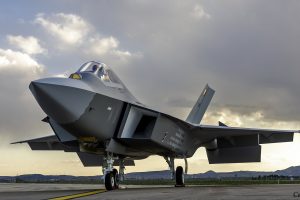
The production of one of the fifth-generation stealth fighter jets F-35, manufactured by the US, requires 417 kg of NTE. NTE magnets and certain special alloys are also essential in the production of many weapon systems. In addition, NTE magnets are indispensable components in electric car motors. Furthermore, considering that the US defense industry uses approximately ten percent of the NTE consumed in the country, it is not difficult to understand why the US took a step back.
Conclusion and Evaluation
Today, indispensable communication tools in human life (mobile phones, computers, TVs, etc.), rechargeable batteries (NiMH batteries), imaging devices in health technology (such as MRI machines), wind turbines, catalytic converters, engines (aircraft, electric car engines), the optical and technological ceramics industry, the oil production industry, solar panels, the defense industry, and electric vehicles. The shift towards electric vehicles due to global warming, the necessity for these minerals in automotive technology, electronic devices, communication tools, and health technology, and the arms race driven by the global situation further highlight the strategic importance of these minerals.
In such an environment, while achieving self-sufficiency in critical minerals has emerged as a strategic necessity, the difficulty of overcoming China’s monopoly is a bitter reality facing the entire world. Despite approximately 15 years of effort by global and regional actors, including the US, the reality is that they have been unable to overcome China’s monopoly on critical minerals. Although the countries in question have set 2030 as their target date for achieving self-sufficiency in their strategic planning, it seems difficult for them to meet this target. This is because critical mineral production requires subsidies with the support of state intelligence through an integrated system, while also having to overcome environmental issues. For this reason, Western countries are seeking joint production within mechanisms such as QUAD and G-7. Considering China’s efforts to maintain its advantageous position in the sector, it is unlikely that China’s monopoly on critical minerals will be broken before the mid-2030s.
The architect of China’s economic development, former President Deng Xiaoping, stated as early as 1987, when China was still new to the sector, that “If the Middle East has oil, we have NTE.” This statement is the clearest summary of China’s long-term strategy in this regard. The world should not forget Deng Xiaoping’s words and should carefully study the reasons behind the current situation. Countries around the world, including our own, should draw lessons for the future by making this assessment. When making this assessment, it should not be forgotten that strategic production cannot be achieved without strategic thinking and state intelligence.
Source: https://stratejiturkiye.com/analiz/jeopolitik-rekabette-nadir-elementler