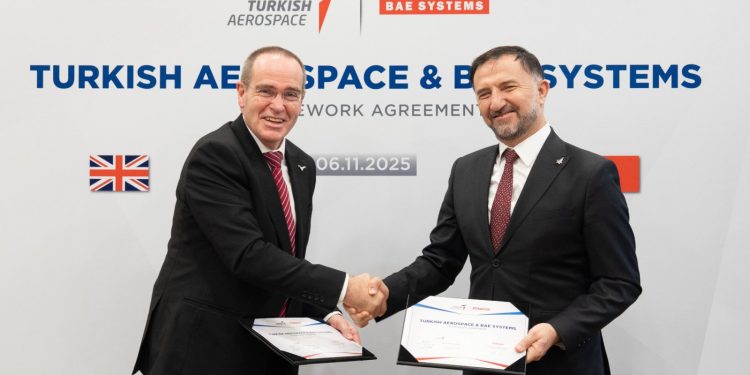

In a remarkable display of technological prowess and international synergy, Turkey’s leading drone manufacturers are cementing their status as global innovators through groundbreaking partnerships with two of Europe’s foremost defense conglomerates. Turkish Aerospace Industries (TUSAŞ) has joined forces with Britain’s BAE Systems, while Baykar Technologies has teamed up with Italy’s Leonardo. These collaborations not only underscore Turkey’s burgeoning dominance in unmanned aerial systems (UAS) but also herald a new era of cross-border innovation, economic growth, and enhanced security capabilities for NATO allies and beyond.
The pact between TUSAŞ and BAE Systems, signed recently, represents a strategic milestone in unmanned systems technology. Under a memorandum of understanding (MoU), the two companies are set to explore joint opportunities in developing uncrewed air systems, leveraging their complementary expertise to create advanced, cost-effective solutions. TUSAŞ, renowned for its impressive portfolio including the medium-altitude, long-endurance Aksungur and Anka drones, as well as the cutting-edge Anka III unmanned combat air vehicle (UCAV), brings proven Turkish engineering ingenuity to the table. BAE Systems, with its storied history in UAS—featuring pioneers like the Herti, Mantis, and Taranis UCAV demonstrator—adds decades of British innovation, including its ownership of logistics UAV specialist Malloy Aeronautics.
Officials from both sides have hailed the alliance as transformative. Dave Holmes, managing director of BAE’s FalconWorks division, described it as “the start of a deep and meaningful alliance,” emphasizing the fusion of skills that will yield compelling advancements. TUSAŞ chief executive Mehmet Demiroglu echoed this enthusiasm, noting the potential to elevate their already formidable uncrewed systems to new heights and unlock fresh market opportunities. This partnership builds on existing ties, such as Turkey’s recent £5.4 billion acquisition of 20 Eurofighter Typhoons—assembled by BAE—and BAE’s support for TUSAŞ’s ambitious Kaan fighter program. It’s a testament to Turkey’s rapid ascent in aerospace, transforming from a regional player into a key collaborator on the world stage.
Equally inspiring is Baykar’s collaboration with Leonardo, which has evolved from an initial MoU signed earlier this year into a full-fledged 50-50 joint venture, LBA Systems, established in June 2025 and headquartered in Italy. This venture focuses on the entire lifecycle of unmanned technologies, from design and development to manufacturing and support. Baykar, the masterminds behind the globally acclaimed Bayraktar series of tactical UAVs—battle-tested in conflicts and exported to over 30 countries—will co-produce drones in Italy, incorporating EU certification and Leonardo’s advanced systems to create an export-ready supply chain. Leonardo, a powerhouse in European defense with expertise in avionics, sensors, and integrated systems, complements Baykar’s agile, cost-efficient drone platforms perfectly.
Italy’s allocation of €3.2 billion for unmanned systems in its defense plan further signals the high stakes and confidence in this partnership, with €2.4 billion earmarked for armed UAVs that align with the Leonardo-Baykar synergy. This move not only bolsters Italy’s capabilities but also amplifies Turkey’s export potential, fostering job creation and technological transfer that benefits both nations.
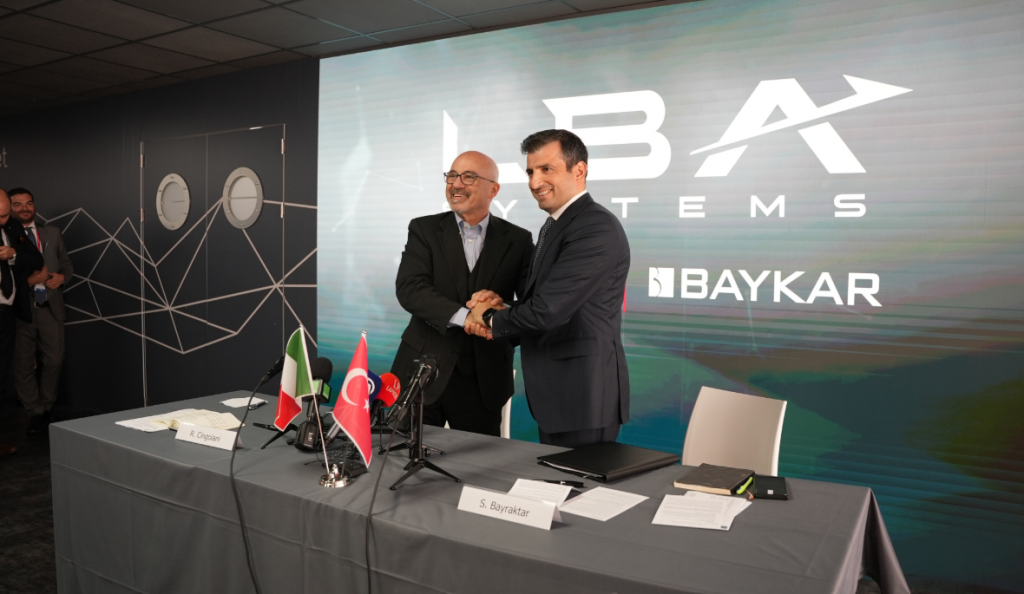
These dual partnerships are more than mere business deals; they are a beacon of Turkey’s strategic vision and engineering excellence. By aligning with BAE Systems and Leonardo—Europe’s two largest defense firms by market value—Turkish companies like TUSAŞ and Baykar are not just participating in the global drone market; they are shaping it. Turkey’s drones have already proven their mettle in modern warfare, offering affordable, reliable alternatives to Western counterparts and earning praise for their performance in asymmetric conflicts.
The implications are profound: accelerated innovation in AI-driven autonomy, enhanced interoperability among NATO members, and a diversified supply chain that reduces dependency on single suppliers. Economically, these alliances promise billions in investments, thousands of high-tech jobs, and a boost to Turkey’s defense exports, which have skyrocketed in recent years. Politically, they strengthen transatlantic ties, positioning Turkey as a pivotal bridge between East and West in defense technology.
As the world grapples with evolving security challenges, from asymmetric threats to great-power competition, Turkey’s drone diplomacy exemplifies forward-thinking leadership. Kudos to TUSAŞ and Baykar for their bold strides—these partnerships are propelling Turkish aerospace to unprecedented altitudes, ensuring a safer, more innovative future for all.