

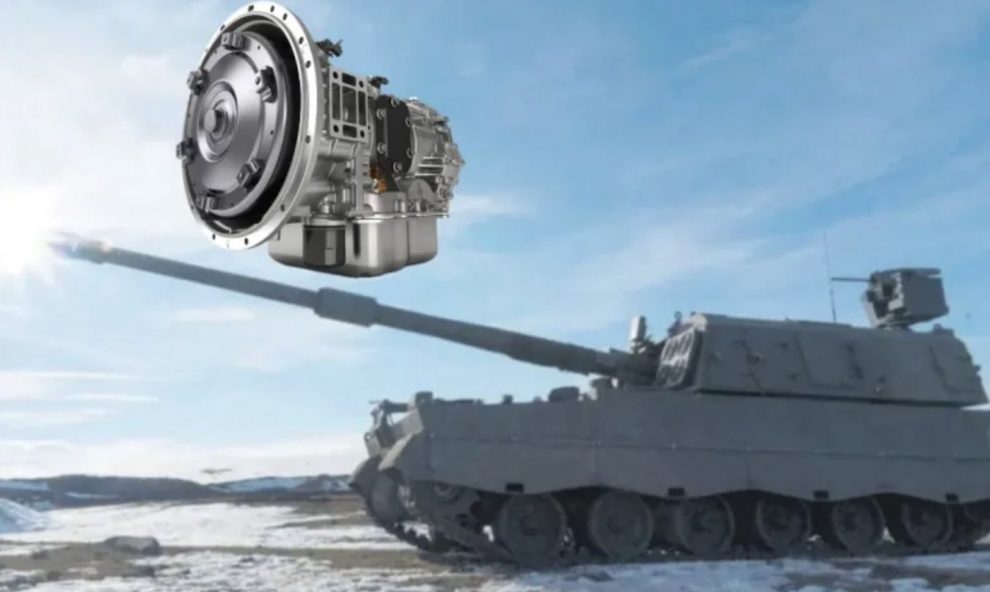

The FIRTINA howitzers, which hold an important role in the pinpoint strikes of the Land Forces, continue their production process rapidly for the new version. The issues experienced in previous years, especially with the engine, are starting to be overcome. First commissioned in 1995, these howitzers have great significance for both MKE and BMC with the new technology.
In recent years, BMC Defense has taken responsibility for serial production of the New Generation FIRTINA (FIRTINA-II) project, and with MKE’s innovative works, the howitzers have evolved even further.
Production and delivery speed up
Within the scope of the “New Generation T-155 Self-Propelled FIRTINA Howitzer Procurement Project” conducted collaboratively by BMC Defense, ASELSAN, MKE, and ASFAT, a total of 140 howitzers will be produced. The project started with a contract signed in 2018 and will span over a 10-year schedule.
The new generation howitzers, also known as FIRTINA-II, include significant improvements compared to the original FIRTINA.
What are the innovations
These include a fully automatic ammunition loading system, a propellant conditioning unit, climate control compartments, a servo-controlled electric turret drive system, an improved fire control system (developed by ASELSAN), increased firing rate, and over 40 km effective range.
Additionally, the SARP remote-controlled weapon system (RCWS) was integrated for close defense. The howitzer can reach speeds of 65 km/h, overcome trenches 2.8 meters wide, and pass through water 1.5 meters deep, increasing mobility on the battlefield.
Important project detail: BATU
After delivering the first 10 howitzers, BMC will produce 2 more units using existing German MTU power packs (from spare stocks). The real milestone occurred this year.
The locally developed UTKU Power Pack (1000 hp diesel engine and transmission) by BMC Power began to be integrated. With this, the howitzer will become fully local and national, removing export barriers (license issues).
In previous years, Azerbaijan showed close interest in the FIRTINA, but sales could not proceed due to export permission issues concerning the engine.
Hybrid system from MKE
As the original developer of the FIRTINA howitzers, MKE plays a critical role in both modernizing the existing inventory and new variants. Starting in 1995, MKE ensured the 52-caliber monobloc barrel, automatic shell loading system, and NATO standard 155 mm ammunition compatibility. The project is called GÜRHAN.
MKE’s recent developments are future-oriented and noteworthy. The innovations include:
E-FIRTINA Project (Hybrid Drive)
To overcome export barriers, a hybrid power system is being integrated. This project with ANZATSAN Engineering replaces the diesel engine with a hybrid drive, offering thermal stealth, silent movement, and lower fuel consumption. Test firing was successfully completed in August 2024 at Karapınar, Konya. The E-FIRTINA GÜRHAN variant, showcased at the EFES 2024 exercise, has 1300 hp power, 4-hour charging capability, and can accelerate to 30 km/h. Maintenance costs will decrease by 50%, and range will increase to 400 km. MKE aims to start serial production in the first quarter of 2025. **Ammunition and range enhancements:** MKE has started investments increasing the 155 mm howitzer ammunition capacity (part of a total $818 million investment). The MOD 274 explosive shell reaches 40 km range, but efforts to achieve the “crazy” 72 km range have accelerated. Guided long-range ammunition (e.g., SOM integration) is being developed with Roketsan. The Spectral Heat Shell project provides protection against infrared-guided shells. **Supply role to BMC:** At the IDEF Fair in July 2025, MKE signed a contract to supply 118 units of 155 mm FIRTINA barrels and weapon systems to BMC. In October 2025, a new batch of equipment was delivered. This cooperation is accelerating production and highlighting MKE’s barrel production capacity (Kırıkkale facilities).
Source: https://tolgaozbek.com/savunma/firtina-obuslerinde-yuzde-yuz-yerlilige-dogru/



