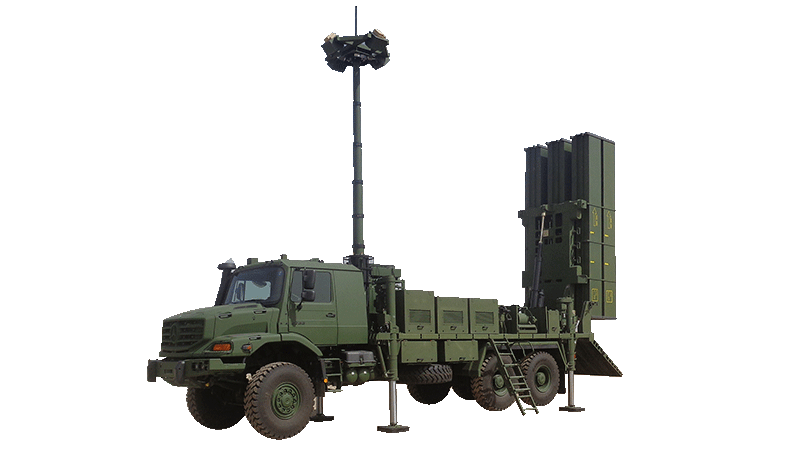

Ankara’s advanced Hisar-O+ and Siper surface-to-air missile systems poised to transform Bangladesh’s air defence network, signalling a new era of strategic cooperation between two Muslim-majority nations and shifting the Indo-Pacific balance of power.
The move, emerging from high-level talks in Ankara and Dhaka, signals a decisive step in Bangladesh’s ambition to modernize its national air defence architecture while positioning Turkey as a new and increasingly influential arms supplier in the region.
The proposed transfer of these advanced air defence systems underscores both nations’ deepening military ties and Ankara’s determination to expand its defence export footprint beyond traditional markets in the Middle East and North Africa.
For Bangladesh, a country long reliant on a patchwork of Chinese, Russian, and European air defence assets, the acquisition of the Turkish Hisar-O+ and Siper systems would represent a generational leap in capability — enabling the creation of a multi-layered defensive shield capable of detecting, tracking, and intercepting a wide spectrum of airborne threats.
The deal, still in its advanced negotiation phase, is believed to include not only missile systems but also radar, command, and control infrastructure, as well as training and maintenance packages essential for long-term operational sustainability.
While final delivery schedules remain undisclosed, sources close to the discussions suggest that the first Hisar-O+ batteries could arrive as early as late 2026, followed by Siper systems for Bangladesh’s Air Force by 2027 or 2028.
This development marks an inflection point for both Dhaka and Ankara.
For Bangladesh, it represents a long-awaited move toward a robust, indigenous-capable air defence network — an essential deterrent in an increasingly volatile Indo-Pacific security environment marked by rapid technological militarization and regional arms races.
For Turkey, it reinforces its role as a rising global defence exporter capable of delivering affordable, ITAR-free systems that compete with Russian and Western equivalents without political restrictions.
Deepening Turkey-Bangladesh Defence Relations
Over the past decade, Turkey and Bangladesh have quietly cultivated a multi-dimensional defence relationship rooted in shared strategic interests, Islamic cultural affinity, and mutual goals of self-reliant defence modernization.
Ankara’s emergence as a reliable supplier for Dhaka follows years of consistent engagement, including training exchanges, industrial cooperation, and joint exploration of unmanned and missile technologies.
Bangladesh, under its Forces Goal 2030 modernization plan, has sought to diversify its defence partnerships to mitigate overreliance on Chinese and Russian systems while ensuring interoperability with Western equipment.
Turkey’s offering of the Hisar-O+ and Siper systems aligns perfectly with this ambition.
In October 2025, Bangladesh Air Force Chief Air Chief Marshal Hasan Mahmood Khan made a high-profile visit to Turkey, where he toured Turkish Aerospace Industries (TAI), Aselsan, and Roketsan — the key industrial players behind Turkey’s growing missile defence ecosystem.
During the visit, Khan discussed multiple acquisition programs, including Baykar’s Bayraktar TB2 and Akinci drones, alongside the Hisar and Siper systems.
These discussions signal Bangladesh’s broader intent to integrate a layered air defence system that combines ground-based interceptors, UAV reconnaissance, and command integration under a unified national network.
According to defence sources in Dhaka, Bangladesh is particularly interested in Turkey’s “turnkey” approach — offering complete operational ecosystems that include radars, communication links, and command posts, rather than isolated platforms.
This model mirrors Turkey’s own “Steel Dome” initiative, which integrates multi-tier missile defences from short-range to long-range systems under a common command structure.