
For decades, the image of an AK-47 rifle in the hands of militants, rebel fighters or weakly equipped armies symbolized the global reach of Soviet and later Russian weapon exports. Today, however, that landscape is rapidly shifting. Chinese small arms and light weapon systems have begun to eclipse Russian products in many conflict zones, reshaping the arsenals of small states and non-state armed groups from Africa to the Middle East and Southeast Asia.
China’s growing footprint is driven by three factors: price, availability and political flexibility. State-backed manufacturers such as Norinco have flooded the market with low-cost rifles, machine guns, grenade launchers, drones and armored vehicles. Unlike Russia—which faces sanctions, export restrictions and logistical constraints due to the war in Ukraine—China maintains a far more accessible supply chain. Beijing also applies fewer political conditions when dealing with governments under sanctions or regimes with weak international recognition.
Africa Leads the Shift
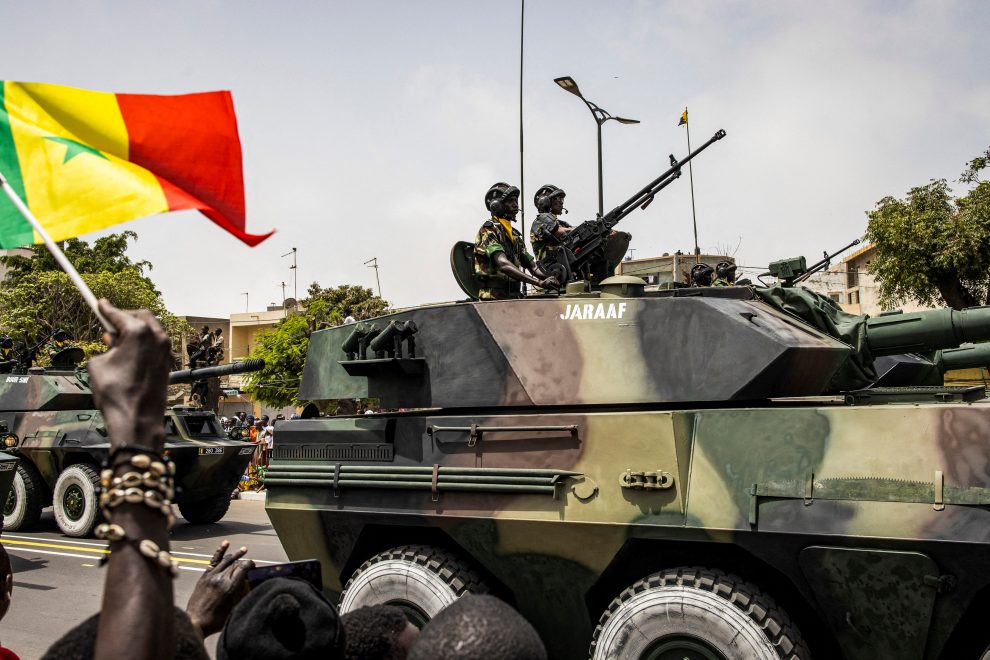
African militaries and paramilitary forces have become major customers for Chinese small arms. Countries such as Nigeria, Ethiopia, Tanzania, Sudan and the Democratic Republic of Congo have sourced Chinese rifles, ammunition, armored vehicles and increasingly unmanned aerial systems. For many governments with strained budgets, Chinese weapons offer affordability and rapid delivery that Russian suppliers can no longer guarantee.
Local conflicts show the same trend. Arms monitoring groups have documented Chinese-made Type-56 rifles, QLZ-87 grenade launchers and various Norinco pistols in the hands of militias and non-state armed groups in the Sahel, the Horn of Africa, Libya and Central Africa. While Russian AK-pattern rifles remain widely used, new shipments increasingly originate from Chinese factories rather than Russian ones.
Beyond Rifles: Drones and Pistols
While the Kalashnikov family of rifles remains iconic, China has aggressively expanded into markets where Russia was traditionally less dominant. Chinese pistols, shotguns and precision rifles have become common among police forces and irregular groups in Africa, Latin America and Southeast Asia. Even more consequential is China’s rise as the leading exporter of armed drones. Systems like the Wing Loong and CH-4 have been acquired by dozens of countries unable to purchase similar U.S. or European platforms.
This diversification has given China an edge over Russia, whose export catalog heavily relies on legacy small arms and conventional heavy systems.
Sanctions and the Ukraine War Accelerate the Shift
Russia’s invasion of Ukraine has restricted its ability to supply foreign clients. Production capacity is increasingly directed toward Moscow’s own war effort, while sanctions have limited financial transactions and shipping. Many long-time customers—such as African militaries that once depended on Russian rifles, ammunition and helicopters—have turned to China to fill the gap.
China, meanwhile, has remained neutral enough to trade with all sides, offering a mix of commercial pragmatism and geopolitical leverage.
Implications for Global Security
The dominance of Chinese weapons among non-state actors raises concerns for arms-control experts. China’s export oversight remains opaque, and weapons often reach conflict zones through third-party transfers or gray-market intermediaries. Analysts warn that the widespread availability of inexpensive Chinese rifles and drones may empower insurgent movements and prolong regional conflicts.
At the same time, China’s influence over the security sectors of developing countries is expanding, giving Beijing new diplomatic and strategic tools.
The Kalashnikov will remain a symbol of global conflict for years to come. But the battlefield is changing. From the Sahel to Southeast Asia, Chinese small arms and drones are steadily replacing Russian weapons in the hands of both state and non-state actors. Affordability, accessibility and geopolitical conditions have positioned China as the new dominant supplier in the world’s most volatile regions.