
Calling Hamas a “terror group” denies Palestinians’ internationally recognized right to resist occupation. Gaza remains under siege, and Hamas is its main organized force. CHP’s stance clashes with Turkey’s historic position, echoed by Erdoğan’s comparison to the National Forces.
CHP leader Özgür Özel’s recent speech in the Turkish Parliament reignited debate over Hamas, yet failed to address why the movement should not be labeled a terrorist organization. Despite Western pressure, international law clearly recognizes the right of occupied peoples, including Palestinians, to resist—armed struggle included—through UN resolutions, Geneva Conventions, and the International Court of Justice. Gaza remains under occupation despite Israel’s 2005 withdrawal, making resistance both legal and legitimate. Hamas, as the main organized force of this resistance, cannot simply be dismissed as terrorism without denying Palestinians’ internationally affirmed rights. This is why CHP’s stance contradicts Turkey’s long-standing official position, reinforced by President Erdoğan’s comparison of Hamas to Turkey’s National Forces.
Why Labeling Hamas a Terrorist Organization Is Illogical – Where CHP and the World Go Wrong
Özel’s Speech and CHP’s Blind Spot
CHP Chairman Özgür Özel’s fiery speech in the Turkish Parliament drew wide attention. He touched on many issues, yet once again skipped over the most critical point. He failed to explain why he does not consider Hamas a terrorist organization—or why he opposes such a designation. In fact, judging from his earlier statements, CHP has repeatedly chosen to side with the international mainstream, describing Hamas as a terrorist group. Their hesitation is clear: taking the opposite stance might anger their “allies” in the European Union and the United States.
The Legal Reality Ignored
Even under international law, Hamas does not fit the definition of a terrorist organization. No matter what Washington says—even when it goes so far as to revoke visas to block Palestinian delegates from addressing the UN General Assembly—this fundamental reality does not change.
International Law on Resistance
International law firmly recognizes the right of peoples under occupation to self-determination.
- The UN’s 1960 Resolution 1514 framed decolonization as a basic right.
- Resolution 2625 in 1970 emphasized the legitimacy of resisting foreign occupation.
- Resolution 3236 in 1974 explicitly affirmed this right for the Palestinian people—including the right to armed struggle.
- The 1977 Additional Protocol I to the Geneva Conventions incorporated struggles against colonialism, occupation, and racist regimes into binding international law.
- In 2004, the International Court of Justice reinforced this principle, ruling the Israeli occupation illegitimate and affirming the Palestinians’ right to resist.
Gaza’s Status Under Occupation
Within this framework, Gaza’s status is unambiguous. Although Israel pulled out its soldiers in 2005, the territory remains under total land, sea, and air blockade—still “occupied territory” in the eyes of international law. As long as that occupation endures, so too does the right to resist it.
Hamas as the Face of Resistance
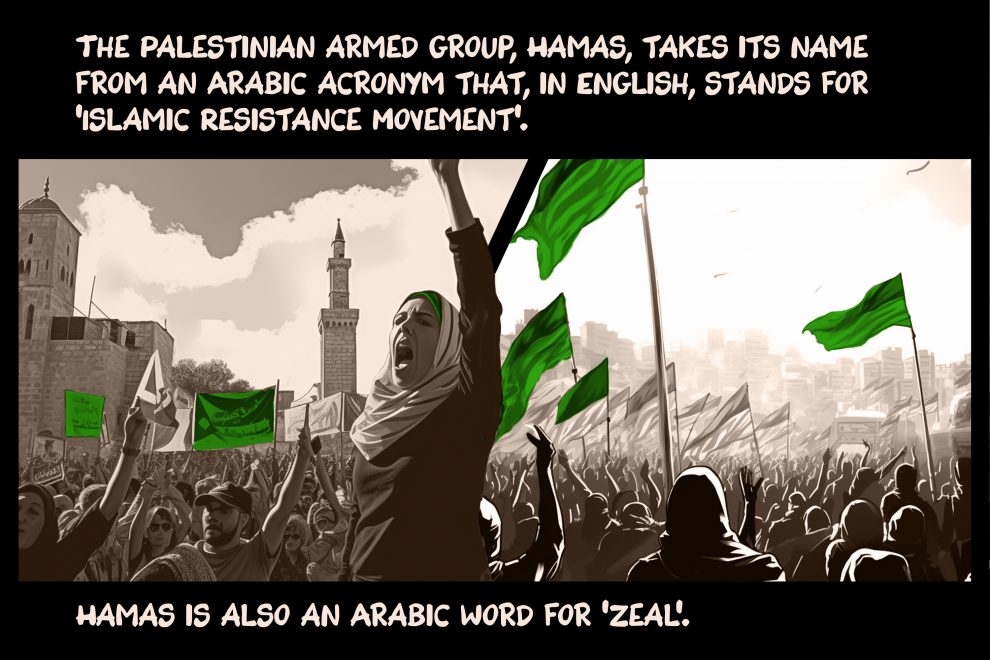
The bearer of that resistance today is the Palestinian people, and on the ground, their organized force is Hamas. In the West Bank, Mahmoud Abbas’s administration exists largely on paper, while the actual resistance continues in Gaza. If Palestine is to survive, the role of this movement cannot be ignored.
The Problem With the “Terror” Label
Labeling Hamas a “terrorist organization,” therefore, is not only misleading—it effectively denies the Palestinian people the very right granted to them under international law. Such rhetoric obscures the reality of occupation and plays directly into the hands of Israel’s far right. The international community’s core decisions on Palestine all recognize resistance to occupation as legitimate. Today, Hamas embodies that resistance.
Turkey’s Position vs. CHP’s Stance
Seen in this light, CHP’s position stands in stark contradiction to the stance historically taken by the Republic of Turkey. President Erdoğan, by likening Hamas to Turkey’s National Forces (Kuvâ-yi Milliye), has recognized the legitimate struggle of an occupied people and defended this view on international platforms. Unless CHP adopts a similar clarity, its calls—whether for ceasefire or humanitarian aid—will remain fruitless. Because the truth of Palestine lies in the occupation—and in the resistance to it.