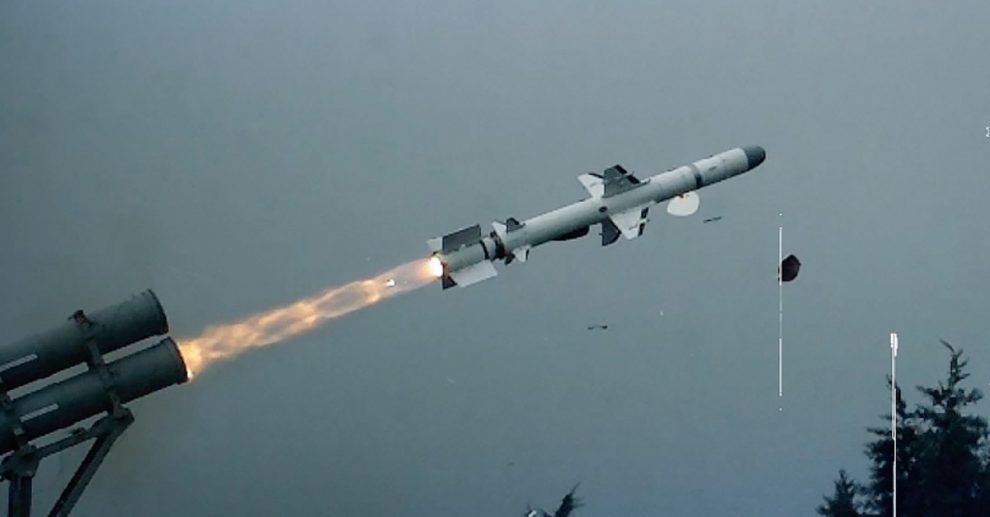

The Defence Ministry has identified Türkiye’s Roketsan Atmaca anti-ship missile as its preferred replacement for the Norwegian Naval Strike Missile (NSM) intended for the Royal Malaysian Navy’s (RMN) Littoral Combat Ships (LCS).
Defence Minister Datuk Seri Mohamed Khaled Nordin said Türkiye was selected after the ministry evaluated proposals from three countries — Türkiye, France and Italy.
He said the ministry would begin negotiations with the Turkish side before finalising the procurement.
“We have reached the stage of determining which country would be the best source of an alternative to replace our missiles. That country is Türkiye.
“In terms of price, delivery timeline and the initial costs we would have to incur, we have decided that the missile from Türkiye is the best option for us to consider as a replacement for the NSM missiles from Norway,” he said at a press conference after the ministry’s Innovation Day celebration today.
He said Türkiye was now the only country with which Malaysia would negotiate over the replacement missiles.
Khaled said the proposed missile, which has a range of 250km, had been assured of compatibility with the ships’ existing combat management system (CMS).
“We have already been given assurances regarding compatibility, integration and related matters. We will examine these aspects in greater detail and begin negotiations with the Turkish company,” he said.
Khaled said the replacement missiles could be delivered as early as 2029 because Malaysia had already placed an order for the same missile system for its Littoral Mission Ship Batch 2 (LMS B2).
“A fresh procurement, without the existing LMS order, would take about 30 months, potentially pushing delivery to 2029.
“However, because we have already ordered them for our LMS vessels, we will receive them earlier, as some of the missiles can be supplied ahead of schedule. Perhaps by 2029. So, it will not be 2035,” he said.
On the financial implications, Khaled said Malaysia would not have to bear the full cost of procuring an entirely new missile system, as the missiles had already been paid for under the LMS contract.
Instead, additional expenditure would likely cover the launchers and integration with the LCS combat system.
He said a completely new missile procurement could cost between RM700 million and RM900 million, but Malaysia would not need to spend that amount for the replacement.
On the Norwegian NSM contract, Khaled said Malaysia had accepted that it would not receive the missiles despite having paid for them, and was pursuing the contractual dispute resolution process.
He said the first stage, involving negotiations towards an amicable settlement, had ended without an agreement.
The ministry would now proceed with the second stage by establishing a dispute resolution committee involving both parties.
“If no resolution is reached at this stage, we will move to the third stage,” he said, referring to arbitration.
Khaled said the contract allowed arbitration to be conducted in Kuala Lumpur, but cautioned that the entire process would take time and there was no certainty that the company would comply with an eventual arbitration decision.
He also said the government would not wait for the outcome of the dispute or the return of its money before pursuing an alternative missile system for the ships.
Source: Bernama