
Recently, U.S. President Donald Trump has continuously threatened Iran with airstrikes and regime change. To bolster his position, he sent an aircraft carrier to the Arabian Sea. It is uncertain whether Trump is bluffing to bring Iran to the negotiating table to secure significant concessions or if he is serious about striking Iran. However, the former seems more likely, as he talks a lot but takes no action. He might surprise everyone and attack Iran, but that seems less likely. According to Turkish Foreign Minister Hakan Fidan, Israel is more likely to attack Iran, and he is not alone in this view. An American official told Axios, “It’s really the Israelis who want a strike.”
Just a few weeks ago, Trump used the execution of Iranian protesters as an excuse to attack Iran. That excuse suddenly disappeared, and now he’s talking about Iran’s nuclear program. However, this is not the real reason, either. Iran is not in a position to further enrich uranium and produce a nuclear bomb. Neither the U.S. nor Israel fears this at the moment. Therefore, ongoing preparations for a strike are not aimed at destroying Iran’s nuclear facilities, as Trump claimed were destroyed during last year’s 12-day war.
The purpose of the latest threats is Iran’s hypersonic missiles, which can fly at speeds of up to 17 Mach. During the 12-day war, Israel suffered from Iran’s unstoppable missiles and had to stop attacking Iran. This is why it is called the 12-day war: they could not fight any longer due to the continuous barrage of Iranian missiles on Israeli cities. Tel Aviv knows that another war with Iran is unsustainable, and achieving an absolute victory is nearly impossible. It would be an expensive victory that the Israelis could not bear.
Ending Iran’s missile program
Thus, the solution is to end Iran’s missile program without going to war. However, Israel cannot do it alone, so they turned to the U.S., as usual. Although America is threatening Iran, Israel is attempting to destroy Iran’s military capabilities behind the scenes. Iran is clearly not a threat to the U.S., particularly with regard to missiles, which don’t pose a threat to U.S. territories or military bases in the region. Tehran also lacks the courage to attack American targets. Therefore, Washington is acting as Israel’s proxy to eliminate Iran’s power.
Iran is more vulnerable than ever in the current circumstances, but not because of its military strength. Many of its weapons were destroyed by Israeli attacks, yet it still has thousands of missiles, and new ones have been produced. Recently, military cargo planes bound for Iran from Russia and China were reported.
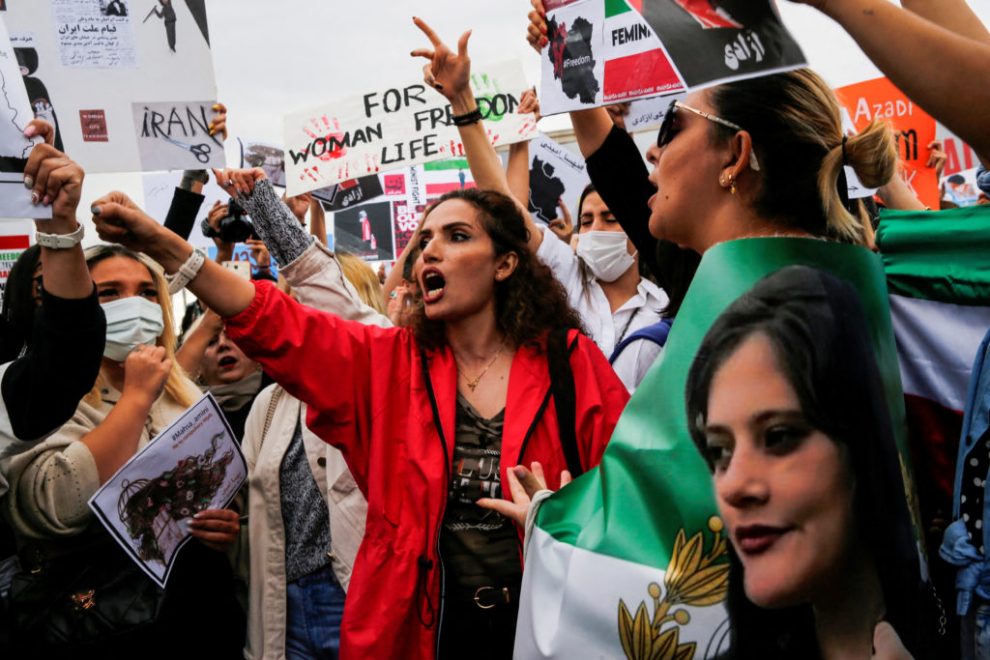
However, the main problem with the Iranian regime is its rift with the Iranian people. More Iranians than before are taking to the streets to protest living costs. The latest protests, which were violently suppressed, threatened to end the 46-year-old regime in Iran. The death toll from the latest wave of protests was higher than from previous ones. Furthermore, people do not seem discouraged by the crackdown of the security forces, so new anti-regime upheavals are likely.
Increasing living costs in Iran
Many believe that the Iranian government’s ongoing disputes with regional and global actors have led to its isolation from the world. U.S.-led sanctions have also deprived the Iranian people of their basic necessities. It is impossible to purchase home appliances, mobile phones, or even a pair of pants from abroad because they are all sanctioned. Available foreign-made goods enter the country through sanctions violations or smuggling. Living conditions are so poor that even oil, a resource Iran has in abundance, is expensive. People blame the regime and want a change in either their conditions or their government. Since the former is unlikely under the current administration, a regime change is their only viable solution.
However, if the U.S. or Israel strikes, the Iranian regime may not collapse. Iran’s military power cannot be weakened unless the country is occupied by boots on the ground. Diplomatic negotiations could also constrain Iran, but this is not what Israel wants.
The only option the U.S. and Israel have is to further weaken the regime so an organized popular uprising can succeed. The latest uprising probably gave Washington and Tel Aviv hope, so they seem optimistic about new waves of protests. If the regime does fall, Iran will be fragmented, and Israel will quickly destroy the regime’s military apparatus, as it did in Syria. Therefore, regime change followed by strikes would permanently remove Iran from the stage.
To this end, a new and decisive popular uprising is necessary, and Israel believes that a new strike on Iran could spark it. Although the Netanyahu government would prefer to subcontract this task to the Americans, the Israelis are prepared to take on this role if necessary.
Iran’s real threat does not come from foreign powers, but rather from the Iranian people themselves. Attacks on Iranian targets will have limited effect; however, an uprising instigated by strikes could be more effective. Tehran’s only choice is to abandon its stubborn stance against its people and rebuild relations with them. Iran is already divided between the regime and the population, a situation that weakens the former. As long as this disunity continues, collapse from within, supported by external attacks, is inevitable.