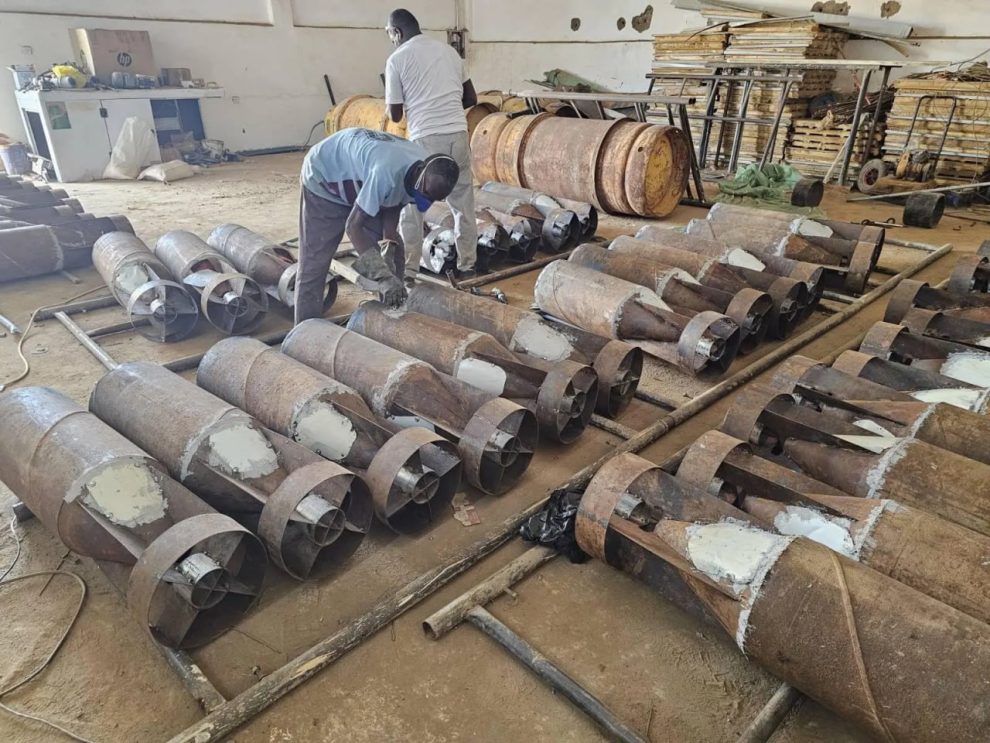

WASHINGTON/NEW YORK — A new wave of allegations that Sudan’s military developed and used chemical weapons has intensified the international pressure on Khartoum, while raising questions over the provenance of the intelligence behind the claims and the role of regional actors in the country’s devastating civil war.The New York Times and Washington Post have published reports based on intelligence and documentary material alleging that the Sudanese Armed Forces (SAF) developed a clandestine chemical-weapons capability during the war against the Rapid Support Forces (RSF).
The reports have appeared amid international discussions over whether the existing United Nations arms embargo on Darfur should be expanded to cover the whole of Sudan.The Washington Post reported on September 5 that it had reviewed a large collection of documents indicating that Sudan’s alleged chemical-weapons program involved the diversion of chlorine shipments intended for water purification, the concealment of production sites on military bases, weapons testing in remote desert areas and preparations for targeting areas where toxic gas could penetrate enemy defenses.The allegations are not entirely new.
In January 2025, the New York Times reported, citing senior U.S. officials, that Sudan’s military had used chemical weapons on at least two occasions in remote areas during the conflict. U.S. officials reportedly believed chlorine gas may have been involved. Washington subsequently determined that the Sudanese government had used chemical weapons during 2024 and announced sanctions against Sudan.
The latest reports, however, appear to go beyond allegations of battlefield use and provide material purporting to document the existence and organization of a chemical-weapons program.Intelligence source under scrutinyOne of the most politically sensitive aspects of the reporting is the origin of the intelligence. According to information cited in the reports, some of the material was supplied through a Middle Eastern intelligence service.That has prompted questions among Sudan-focused analysts and social-media researchers about whether the intelligence should be examined not only for its contents but also for the interests of the actor that supplied it.
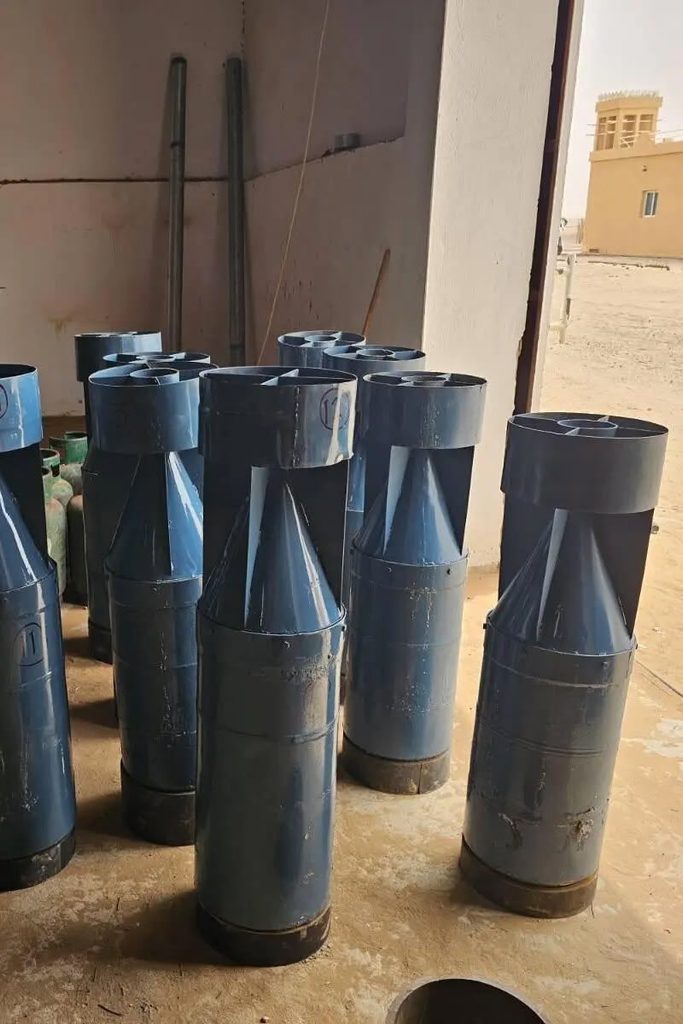
Some social-media users have attempted to geolocate photographs associated with the allegations, claiming that elements visible in the images may indicate that they were taken in the United Arab Emirates rather than Sudan. Those claims, however, have not been independently established by major international investigators and should therefore be treated as unverified open-source allegations rather than evidence of fabrication.The distinction is particularly important because the UAE has repeatedly been accused by Sudanese authorities and outside investigators of supporting the RSF, allegations Abu Dhabi strongly denies.UAE accused of backing the RSF.
The UAE’s alleged role in the Sudanese conflict has become one of the most contentious international issues surrounding the war.Amnesty International has previously identified sophisticated Chinese weapons that it said were re-exported through the UAE and subsequently found in RSF hands, describing this as evidence of violations of the existing Darfur arms embargo.
The Washington Post has likewise reported that weapons recovered from RSF positions included equipment whose packaging indicated links to the UAE. Its reporting has also described an alleged network involving the UAE, Chad and other regional locations through which weapons and other military assistance reached the RSF.
Abu Dhabi has repeatedly rejected accusations that it provides military support to either side.More recently, a United Nations fact-finding mission reported that foreign military assistance was helping sustain the Sudanese war. The investigation identified networks involving the UAE, Chad, Libya and Somalia and said advanced weapons, drones and foreign personnel were reaching the RSF, while also finding evidence of foreign support to the Sudanese military.
The UAE has denied supporting the RSF.The conflict has increasingly developed into a regionalized war involving competing foreign powers and supply networks. The Financial Times reported in August that Colombian fighters recruited through a UAE-based security company had been deployed to support the RSF, while other reporting has documented foreign weapons and logistics networks extending through neighboring countries.
Could chemical-weapons allegations influence the UN debate?The timing of the latest allegations is particularly significant because the United Nations is considering whether to broaden the existing arms embargo beyond Darfur.The UN Security Council has maintained an arms embargo on Darfur since 2004. Human-rights organizations have increasingly called for the embargo to be expanded to the entire country as the war has spread. Amnesty International recently urged the Security Council to extend the embargo across Sudan.
The United States has also been advocating stronger UN sanctions against the parties to the conflict. Washington has proposed expanding the existing embargo to cover the whole of Sudan, including drones and related technologies.Against this background, allegations that Sudan’s army possesses or has used chemical weapons could substantially strengthen the political argument for international restrictions on the Sudanese military.This is the basis for a theory circulating among some Sudanese commentators and social-media users: that intelligence linked to the UAE may have been deliberately promoted or amplified shortly before the UN decision in order to create a political and legal justification for an arms embargo affecting Sudan’s military.
There is currently no independently verified evidence establishing that the UAE intelligence service fabricated the chemical-weapons allegations or orchestrated the media reports. The claim remains an allegation that would require substantially stronger evidence, including verification of the photographs’ original metadata, identification of the intelligence source, independent examination of the alleged chemical facilities and corroboration by UN or Organisation for the Prohibition of Chemical Weapons investigators.
A complicated evidentiary pictureThe controversy is further complicated by the fact that allegations against the Sudanese military do not exist in isolation.Both the SAF and RSF have been accused of serious violations of international humanitarian law. The United States has determined that RSF forces and allied militias committed genocide, while the Sudanese military has also faced sanctions and accusations concerning attacks on civilians and the alleged use of chemical weapons.
The UN’s latest investigation has likewise warned that foreign military assistance is prolonging the conflict and contributing to civilian deaths. More than 1,000 people were reportedly killed in drone attacks during the first half of 2026 alone, according to the UN fact-finding mission.The war, which began in April 2023 as a power struggle between the SAF and RSF, has displaced roughly 13–15 million people and produced one of the world’s worst humanitarian crises.
The dispute over the chemical-weapons allegations therefore extends beyond the question of whether Sudan’s military possessed or used prohibited weapons. It also raises a broader question about how intelligence is generated, selectively released and politically weaponized during an international conflict.If the allegations are independently verified, they could provide powerful grounds for further international action against Sudan’s military leadership. If significant parts of the evidence are subsequently shown to have been manipulated or misrepresented, however, questions would inevitably arise over who supplied the intelligence, why it was released at that particular moment and whether geopolitical interests influenced the information campaign.
For now, the evidence available publicly establishes that serious chemical-weapons allegations against the Sudanese military exist and that Washington has previously made an official determination of chemical-weapons use. It does not, on the evidence currently available, establish the more consequential allegation that the UAE fabricated the latest evidence as part of an effort to secure a UN arms embargo against Sudan.I can also turn this into a , with a stronger headline and a structure emphasizing the alleged UAE intelligence operation, while keeping the wording legally safer.more investigative/controversial newspaper story