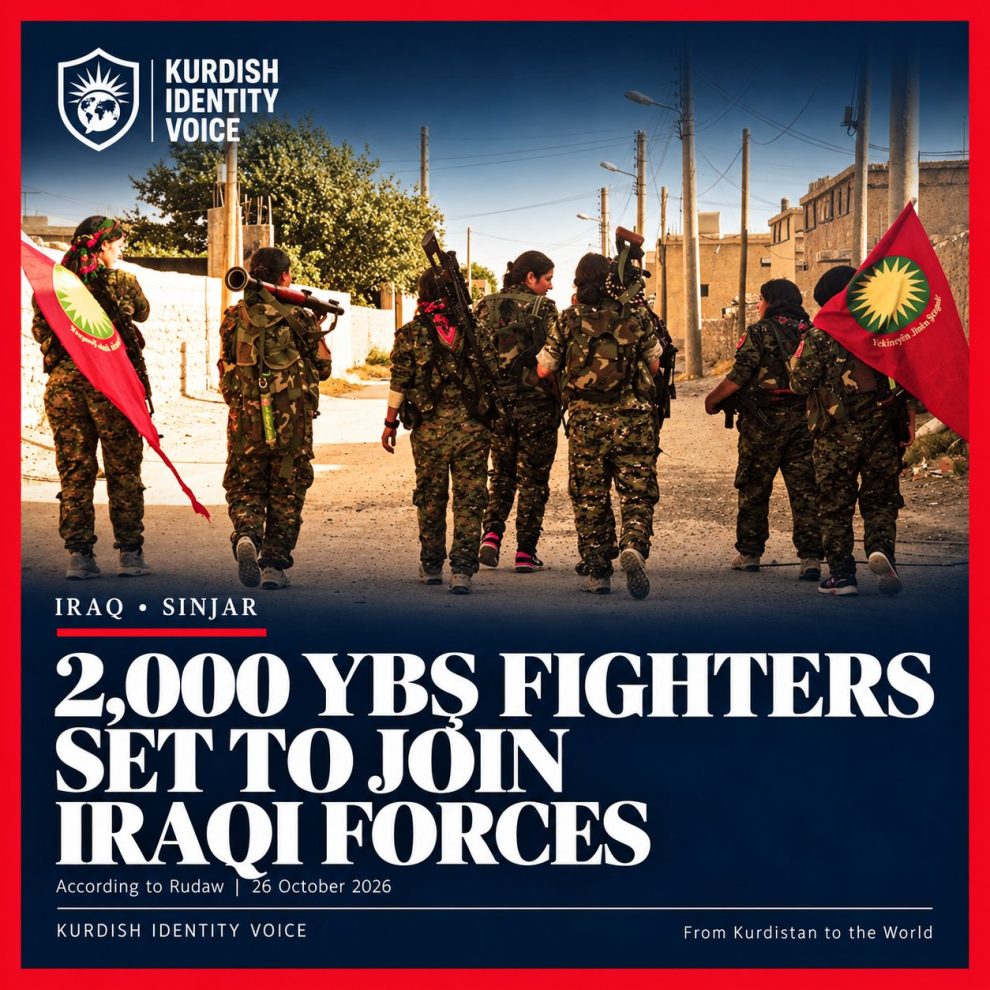

ANKARA / BAGHDAD: About 4,000 members of the Yazidi armed group known as the Sinjar Resistance Units (YBŞ) are joining the Iraqi army and handing their barracks to Iraqi troops. Straturka reports the move as part of the wider Turkish-PKK peace process.
The deal grew out of an announcement by Baghdad last month. On September 11, Prime Minister Ali al-Zaidi told Yazidi representatives that the YBŞ would begin handing over its weapons. The Prime Minister’s office presented the step as part of building a state of institutions and ending multiple centers of security decision-making. Iraq’s ground forces commander has since said all non-Iraqi armed groups should leave Sinjar, while remaining Iraqi Yazidi fighters could join the security forces.
The agreement has a Turkish dimension. Türkiye opposed the YBŞ’s role in Sinjar, viewing it as a PKK threat, and carried out rounds of airstrikes in the area over the past decade. After a meeting between the two countries’ leaders, Türkiye agreed to gradually hand the Bashiqa-Zelikan base to the Iraqi federal government, on an agreed mechanism and timeline. Sinjar was long a source of friction between Ankara, Baghdad and the YBŞ. Fighting between the Iraqi army and the YBŞ in 2022 killed at least one Iraqi soldier and up to 12 Yazidis, and thousands fled.
How Türkiye’s process benefits Iraq
Straturka assesses that the process Türkiye started has brought peace and stability to Iraq as well. The reasoning runs as follows:
- State authority: An armed group outside government control in Sinjar is being folded into Iraqi institutions, which strengthens Baghdad’s monopoly on force.
- Less internal conflict: The 2022 army-YBŞ clashes displaced civilians. Integration reduces the risk of a repeat.
- Fewer cross-border strikes: With the PKK-linked presence in Sinjar winding down, the rationale for Turkish operations on Iraqi soil weakens, easing a long-running sovereignty complaint in Baghdad.
- Return of Turkish-held positions: The planned handover of Bashiqa-Zelikan is a step toward Iraqi control of its own territory.
- Better ground for Yazidis: Qualified fighters get state positions, and Sinjar, home to survivors of the 2014 ISIS massacres, gets a chance at a single, accountable security arrangement.
Fact-check before you publish. Three points differ from the tweet:
- Fighter count: Hürriyet reported that 2,200 YBŞ members could join the Iraqi army, but the official statement did not give that figure. Your 4,000 matches the group’s reported overall size (4,000+), so I’d attribute it to Straturka’s own reporting or to a named source.
- Completion: Kurdistan24 reported that on-the-ground implementation was less clear, so wording like “are joining” is safer than “have joined” unless you have confirmation.
- Integration route: An official said it has yet to be decided whether fighters go to the federal police, the army, or the Popular Mobilization Forces. If your tweet says “army,” keep it, but be aware this may not be settled.