
By Fahri Şahin*
The Meccan period of Islam was a threshold at which monotheism had been proclaimed but could not yet be defended. The faith was openly declared, power was limited, contempt from outsiders was widespread, and the real price was yet to come.
The first months of the Mecca Alliance represent the modern equivalent of this threshold. The agreement has been signed, the institution is still taking shape, and the accusation that it is a “paper tiger” has already stuck. The verdict will not be determined by intentions but by whether the alliance backs down when put to the test.
The question directed at Turkish Foreign Minister Hakan Fidan during a panel on Türkiye–US relations in New York, in which he was asked whether the alliance was a “paper tiger,” encapsulated this contempt. In response to the pointed question, Fidan asked how many times Article 5 of NATO had been invoked. When told that it had been invoked only once, he argued that it was unfair to judge a two-month-old alliance by the record of a decade-long crisis in Yemen. “We have only just begun,” he said.
His response was clever, but it is not enough on its own. During Islam’s Meccan period, there was also a proclamation; what made that proclamation credible was the test that followed. For the alliance, the equivalent of that test is institution-building.
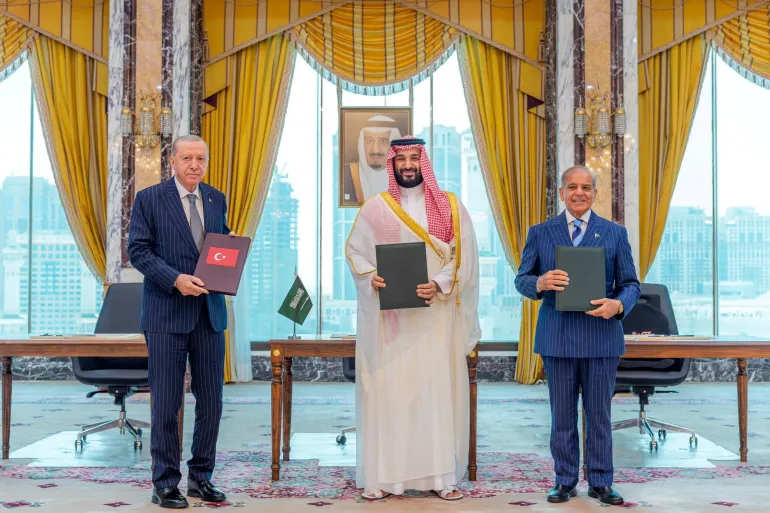
On 7 August 2026, Turkish President Recep Tayyip Erdoğan, Saudi Crown Prince Mohammed bin Salman, and Pakistani Prime Minister Shehbaz Sharif signed the Mutual Defence Agreement in Mecca.
On 31 August, the first Strategic Political and Defence Committee convened in Istanbul. At an extraordinary meeting in Riyadh on 5 October, retired Pakistani Lieutenant General Nauman Mahmood was appointed secretary-general for a three-year term. Türkiye and Pakistan also pledged the rapid deployment to Saudi Arabia of the agreed military forces and capabilities.
Fidan’s statement that “we have reached the final stages of institutionalisation” came after these decisions. In mid-October, the submission of a bill to the Turkish Grand National Assembly to approve the agreement demonstrated that this commitment to institutionalisation was also being translated into domestic law. The alliance is young. Nor is it entirely a paper construct.
The significance of this pace becomes clearer when examined through three questions.
First, has the alliance been established outside the global system?
No. Türkiye is a NATO member, Saudi Arabia’s security architecture has been built around its relationship with the United States for decades, and Pakistan maintains balanced relations with both Washington and Beijing. It is unrealistic to assume that the three capitals could join a bloc that completely conflicts with the priorities of London and Washington.
It would also be wrong to claim that “no step can be taken without their approval,” as this would erase the agency of the founding states. The more accurate formulation is this: the alliance will have room to manoeuvre to the extent that the interests of the three countries align with Atlantic priorities.
Statements made so far suggest that Washington and London are, at the very least, not opposed to the initiative. If this alignment breaks down, caution will increase. As long as it holds, institutionalisation will accelerate.
Second, what would change if the alliance takes root?
Pakistan’s nuclear deterrence and combat experience, Saudi Arabia’s financial depth and Islamic legitimacy, and Türkiye’s defence industry and operational reach complement one another, compensating for each other’s shortcomings.
If these three capabilities are combined through joint exercises, intelligence sharing, and co-production, the security arrangements of the Middle East will be reshaped. Global powers will adjust their positions accordingly. The caution displayed by the founding states stems from their awareness of the costs that success could entail. If the cards are reshuffled, not only rivals but also partners will have to recalculate their positions.
Third, can the parties be taken lightly?
They should not be. What we are witnessing is the convergence at a single table of the accumulated legacies of two imperial geographies—the Ottoman and Mughal empires—and a crown prince who reads regional equations with a cool head. This is not a blind move but a calculated opening. Yet the fact that it is calculated does not mean it will escape scrutiny.
The early years of Islam’s Meccan period were also a test not of intention but of endurance.
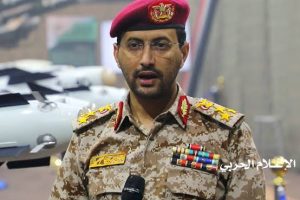
The first test came from Yemen. We anticipated this in our previous article. Houthi attacks targeting Saudi energy facilities and areas surrounding the holy cities forced the alliance to convene an extraordinary meeting in its second month. Here, a distinction is critically important.
Technical assistance in defending Saudi territory, air defence support, and intelligence sharing are consistent with the wording of the agreement and constitute a manageable test. Joining a Yemeni ground operation, assuming responsibility for the war being fought by forces loyal to the legitimate government, or becoming locked into a direct confrontation with Iran are entirely different matters.
The first makes deterrence tangible. The second drags the alliance prematurely into a decade-long crisis it cannot resolve. Fidan’s emphasis that “we will not carry out attacks on the territory of another country,” together with the requirement that military support options in Türkiye be subject to parliamentary approval and constitutional procedures, indicates an awareness of this distinction. Pakistan’s emphasis that collective deterrence is “in effect” reinforces the same approach.
If this distinction is maintained, the Houthi test can be overcome. If it is not, the “paper tiger” criticism will return—and this time, rightly so.
Iran initially interpreted this picture as working against its interests. It was expected to choose between remaining outside a regional defence umbrella and risking isolation, or bringing potentially explosive issues to the negotiating table before they erupted.
In mid-October, Iranian President Masoud Pezeshkian described the alliance as “a step forward” and said, “We are ready to join.” This indicated that the door had not been completely closed. The choice still belongs to Iran, and the details remain uncertain. The alliance’s task is not to win Iran’s internal political struggle but to make violations of Saudi Arabia’s borders costly.
A front built around sectarian divisions would be a burden none of the three countries could bear. An arrangement built around a common threat and territorial integrity, by contrast, is sustainable. The rhythm of the mehter march applies here, too.
The real danger does not lie in Yemen. It lies in the possibility that the political will that made the alliance possible may not endure. At present, that will is evident in all three capitals.
Sustaining the founders’ political will accelerates the alliance’s institutionalisation; losing it leaves the protocol on paper. In Türkiye, political ownership of the decision and the parliamentary process must be maintained. In Saudi Arabia, the clarity of crown-prince-centred leadership matters. In Pakistan, the balance between civilian and military authority must converge around the same table. These processes operate at different rhythms.
If the agreement becomes dependent on this political will while the institutions fail to carry it forward, that will may eventually be interrupted.
The fate of the D-8 in the field of security illustrates the same problem: signing is easy, building institutions is difficult, and standing by an agreement during a crisis is harder still. The appointment of a secretary-general for a three-year term, the establishment of the headquarters in Mecca, the drafting of a rapid-deployment protocol, and the submission of the agreement to parliament are all intended to transform this strong political will from a personal commitment into a lasting institutional framework. If the institution outlives the person who signed the agreement, the alliance will endure.
History offers generous examples on this point. For years after the Washington Treaty of 1949, NATO was dismissed as a mere piece of paper. Article 5 was not invoked until 2001. By contrast, the Baghdad Pact of 1955 collapsed when the founding political will fragmented and popular legitimacy could not be established.
For states and alliances in the Middle East that have accumulated power but have not yet achieved global weight, the most realistic pace is that of the mehter march: two steps forward, one step back. The steps may be heavy and slow, and setbacks may be inevitable. Nevertheless, the direction remains forward.
The Mecca Alliance must proceed in this manner until it reaches its ideal level of capability. The rapid-deployment decision in Riyadh and the commencement of the parliamentary process constitute a step forward; avoiding entanglement in a Yemeni ground operation is a deliberate step back. Both are part of the same march.
The path ahead for the Mecca Alliance lies between these two approaches.
Rapid institutionalisation is, for now, reducing the risk that the alliance will remain merely symbolic. Gradually building capabilities through the defence industry, military exercises, and intelligence cooperation is the trajectory established by the Riyadh decisions. A genuine collective defence reflex, however, does not yet exist. Whether it emerges will depend on the alliance’s actual conduct during the next crisis.
That crisis will not end in Yemen. The second and more serious test will come through Pakistan, in the form of a confrontation with India. In a conflict approaching the nuclear threshold, the statement that “an attack on one is an attack on all” carries costs far beyond diplomatic solidarity. Unless the alliance specifies the threshold at which this commitment will be activated, the instruments through which it will be implemented, and the limits of its application, the Indian test will be more destructive than the Yemeni one.
Egypt’s absence from the alliance is also part of this calculation. Cairo’s participation is no longer merely a possibility; it is an option being seriously considered. The process may be delayed, or it may advance. The authority of the founding trio to set the standards is a safety valve designed to manage this uncertainty.
Power cannot be acquired overnight. Alongside military inventories, political legitimacy, financial sustainability, and societal endurance must also be accumulated. The three countries understand this. Their awareness, however, does not eliminate the traps ahead. Failure to transfer political will to institutions, being drawn prematurely into a war by external forces, and postponing written commitments when a crisis strikes are the three classic ways in which an alliance can die.
The Meccan period was a threshold at which unity had been proclaimed but not yet consolidated, a time of intense hardship and testing. Difficulties did not invalidate the declaration of monotheism; they became the price of realising it. Applied with due restraint, the lesson is this: fragmented power becomes established as a unified deterrent not through intention alone, but by refusing to retreat when tested.
The Mecca Alliance stands at the modern equivalent of that threshold. Its first months will show whether they herald the birth pangs of a lasting institution or its premature disintegration.
The steps taken in Riyadh and the parliamentary process point more towards the former. The final verdict will depend on whether the protocol is actually implemented when the next attack occurs.
*Fahri Şahin is a Turkish political analyst whose articles were published at prominent international media outlets like Al Jazeera.