
Introduction: the end of dependency
Although the program’s name gives a hint of what to expect (Çakan means “the one who strikes” or “the one who flashes lightning”), it’s actually a name I’ve taken the liberty of using, as there isn’t currently a Turkish program with that name. With that clarified, let’s continue:
For decades, the club of flat-deck, catapult-launched aircraft carriers has been an extremely exclusive circle, limited to nations with astronomical budgets and decades of naval tradition. However, the geopolitical landscape is undergoing a tectonic shift. Turkey, forced to reassess its defense strategy by external pressures, has decided not only to participate in the game but to change the rules.
What began as a dream of an amphibious assault ship has transformed into Project MUGEM ( Milli Uçak Gemisi ): Turkey’s first purely domestically developed aircraft carrier. But the true heart of this steel behemoth is not its size, but its aircraft propulsion system. In Ankara’s laboratories, the development of its own electromagnetic launch system ( EMALS ) promises to position the Turkish Navy in a league where only the United States and China currently compete. It is a bid for total sovereignty: to dominate the skies from a sea controlled by its own technology.
What is the EMALS system?
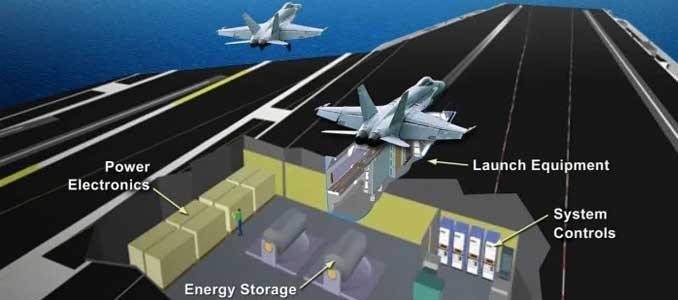
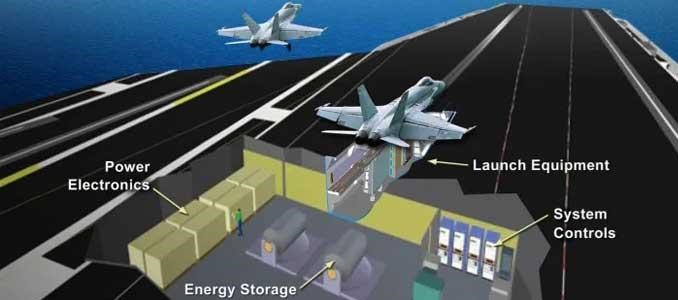
Unlike traditional steam catapults (which use pistons and built-up pressure), EMALS uses electromagnetic fields to accelerate aircraft along the aircraft carrier deck.
Its main advantages are:
-Gradual acceleration: being controlled by software, the initial jerk is less violent, which reduces structural wear on the aircraft.
-Versatility: It can launch anything from light drones to heavy fighter jets by adjusting the power.
-Maintenance: requires less fresh water (cooling) and less personnel than steam systems.
Currently, only two countries have developed EMALS systems , and these are:
-United States (General Atomics): It is the only country with a real operating system on the aircraft carrier USS Gerald R. Ford. They have had many “growing pains” and technical failures, but it is the world benchmark.
-China: The new Fujian (Type 003) aircraft carrier has surprised the world by skipping the steam and installing electromagnetic catapults directly, competing head-to-head with US technology.
Turkey is now developing electromagnetic technology for its future national aircraft carrier (initially planned to be based on the TCG Anadolu ), so the project is often referred to as the railgun program or launch systems for the Bayraktar Kızılelma combat drone (originally planned to be launched from the TCG Anadolu , although this was later discarded).
Who is developing the Turkish “EMALS”?
The development of the system does not depend on a single company, but on an ecosystem that already dominates electromagnetic energy:
The heritage of the “Railgun” (TÜBİTAK SAGE and ASELSAN)
Turkey is one of the few countries that has successfully tested electromagnetic railguns (such as the SAPAN and TUFAN systems). This facilitates technology transfer, as the physics required to fire a projectile at hypersonic speeds using magnets is the same as that needed to accelerate a 30-ton aircraft. TÜBİTAK SAGE is adapting the capacitors and linear motors from its weapons to create the catapult.
Energy Management (ASELSAN)
The biggest challenge for an EMALS system isn’t the rail itself, but energy storage. You need to release gigawatts in seconds without plunging the rest of the ship into darkness. ASELSAN is working on flywheel energy storage , which allows energy to be stored and released suddenly. They are also developing the software control systems to make this burst of power adjustable (launching a lightweight 500 kg drone or a heavy fighter jet weighing 20 or 30 tons with the same system).
Hook design (Baykar Tech)
Although they are drone manufacturers (such as the Kızılelma and the TB3), they are collaborating on the design of the hooks and the compatibility of their aircraft (and the rest as well) with the assisted launch system.
Why is it so important for Türkiye?
Turkey was expelled from the F-35 program , leaving them without the F-35B fighter jet (STOVL, short takeoff and vertical landing), which they had planned to incorporate into their aircraft carrier TCG Anadolu . This forced them to innovate, as they need to launch heavy, armed drones ( ANKA III and Kızılelma ), as well as light and heavy fighters ( Hürjet-D and KAAN ), which require higher speeds than a simple launch ramp can provide. Similarly, they are seeking complete technological independence to avoid relying on US catapults (which are proprietary technology).
What aircraft will it launch?
The Turkish EMALS system is being specifically designed for various platforms that define its new naval doctrine. This table shows the diversity of sizes and weights that the national EMALS system will have to manage, from light reconnaissance drones to fifth-generation heavy fighter jets.
| Aircraft | Platform type | Operational role | Project status (2026) |
|---|---|---|---|
| TF-X KAAN (Naval) | Heavy Fighter (5th gen) | Air supremacy and strategic attack. | In the design phase for navalization and structural reinforcement. |
| ANKA III | UCAV (flying wing) | Deep strike, stealth, and electronic warfare. | Prototype undergoing integration testing with naval systems. |
| Bayraktar Kızılelma | unmanned fighter jet | Supersonic interception and fighter escort. | Take-off and landing tests on land-based surfaces. |
| Hürjet-D / Twin-engine | Light fighter/trainer | Naval training, patrol and light interception. | Naval version confirmed; twin-engine proposal under technical study. |
| Bayraktar TB3 | UCAV MALE | Persistent surveillance and precision attack. | Operational and optimized for aircraft carrier decks. |
As can be seen in the quadrant, the weight range is enormous: from the TB3’s 1.5 tons to the KAAN ‘s nearly 30 tons fully loaded. This explains why the Turkish electromagnetic system is such a critical piece of engineering; it must be sensitive enough not to damage the drone and powerful enough to catapult the KAAN .
Interview on Turkish radio and television TRTAber with our analyst, Roberto Escámez, about the KAAN
The MUGEM aircraft carrier: the destination platform
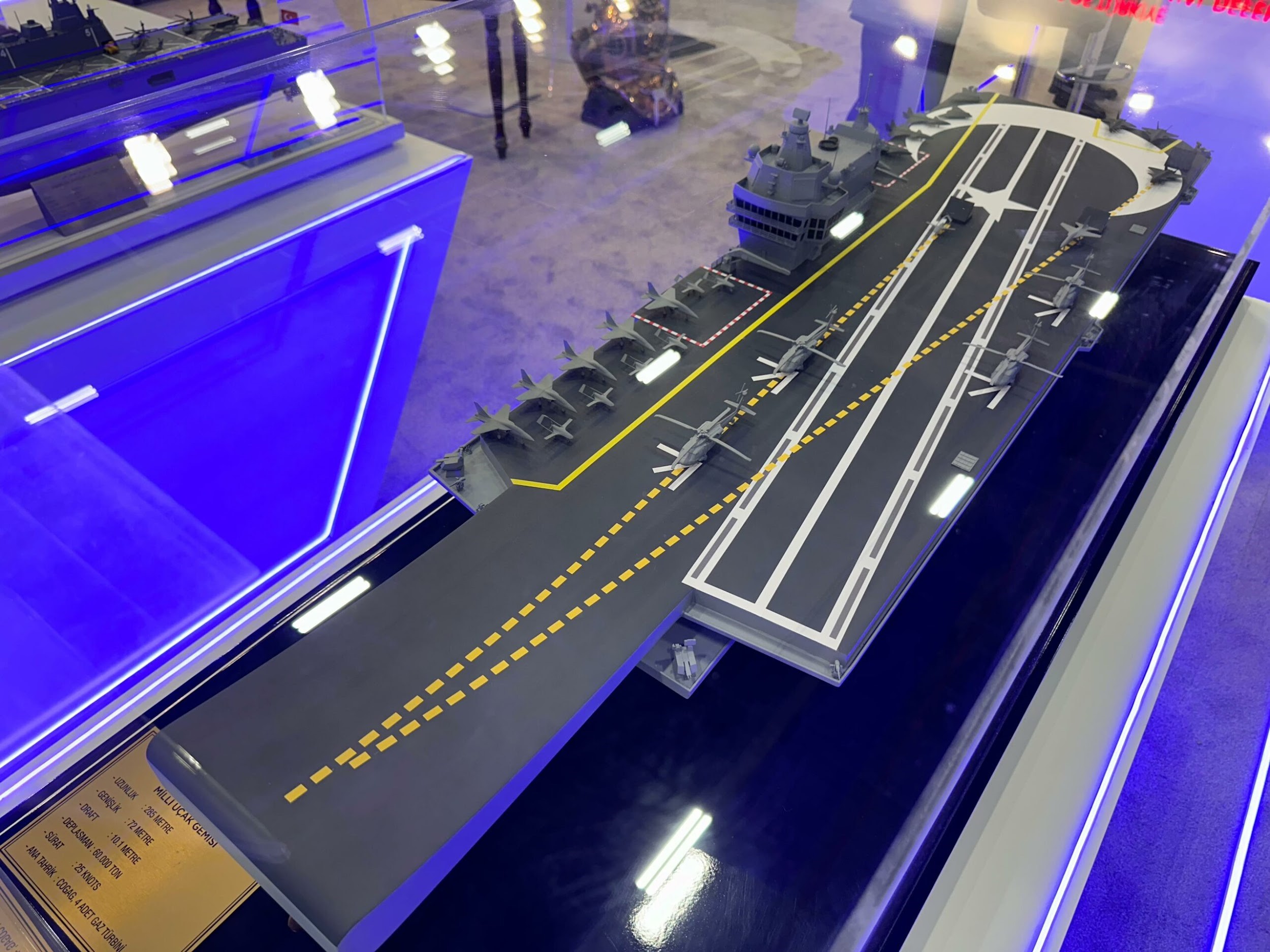
Model of the MUGEM aircraft carrier (credits to the author)
The MUGEM project ( Milli Uçak Gemisi ) is the first aircraft carrier designed and built entirely in Turkey (unlike the TCG Anadolu , which was based on the Spanish design of the Juan Carlos I).
-Evolutionary design: Initially presented with a ski-jump ramp, the final design revealed in 2025/2026 is modular. This allows the ramp section to be removed to install the electromagnetic catapults as soon as the national system is ready.
-Capacity: It is designed to displace about 66,000 tons and operate a mix of manned aircraft (such as the Hürjet or KAAN ) and combat drones ( UCAV ).
Electrical demand and strain: the grid’s “heart attack”
Energy is the Achilles’ heel of any non-nuclear aircraft carrier. Without nuclear reactors to provide endless steam or electricity, Turkey has to rely on pulsed power management.
The main difficulty with an EMALS system is that it doesn’t consume energy constantly, but rather in massive spikes. We see this here:
-Peak power consumption: Launching a 30-ton naval KAAN requires a release of megawatts in just 2 or 3 seconds. If you connected the catapult directly to the ship’s generators, the voltage drop would shut down the ship’s radars, lights, and defense systems (a critical “blackout” in combat).
-Recharge cycle: After a launch, the system needs to quickly recover that energy for the next aircraft. In high-intensity operations, the MUGEM must be able to launch an aircraft every 45-60 seconds.
-Heat dissipation: The electrical resistance in the catapult rails generates immense heat. Without efficient cooling, the system expands and loses accuracy or jams.
The solutions: ASELSAN’s electrical “brain”
To solve this without having a nuclear reactor, Türkiye is betting on an intermediate energy storage system:
1. Flywheels
Instead of drawing energy from batteries, the MUGEM will use large, high-mass rotors that spin at extremely high revolutions.
How it works: The ship’s engines constantly spin these flywheels. When it’s time for takeoff, the flywheel’s kinetic energy is converted into a massive electrical pulse in seconds. It’s like a “mechanical battery” that doesn’t wear out like chemical ones.
2. Supercapacitor banks
For drones like the TB3 or the ANKA III , which require less energy but high precision, supercapacitors are used . These can release their charge much faster than a conventional battery and withstand thousands of charge and discharge cycles without losing efficiency.
3. IFEP Propulsion (Integrated Full Electric Propulsion)
The MUGEM is expected to use an integrated electric propulsion system . This means that the gas turbine engines generate electricity that is intelligently distributed: if the ship is not sailing at full speed, all that extra power is automatically diverted to recharging the catapults.
4. The «Çakan» control system (management software)
This is where ASELSAN ‘s artificial intelligence comes in . The software must calculate exactly how much energy each aircraft needs based on its weight and wind speed.
If you launch the KAAN with the energy of a TB3, it falls into the sea; if you launch a TB3 with the energy of a KAAN , you tear off the drone’s landing gear.
Why the name “Çakan” makes sense (despite not existing as such in the project)
In Turkish, Çakan means “the one who strikes” or “the one who flashes.” It is very common for TÜBİTAK projects to have names of this kind (such as Sapan – slingshot, or Tufan – deluge). Although the official name of the national EMALS is still maintained under internal code names or simply as “National Catapult Project,” I found it interesting to look for a linguistic association with Turkish defense terminology.
What is the current status?
As of April 2026, Turkey had already begun construction of the first block of the MUGEM at the Istanbul shipyard. Reports indicate that prototypes of the linear induction motors for the catapult were undergoing land-based testing before being installed on the vessel toward the end of the decade or the beginning of the next.
Cutting-edge engineering and hybrid doctrine
Here we will see in a somewhat summarized way the important points of everything involved in the development of MUGEM , from the EMALS to its aircraft.
1. MUGEM
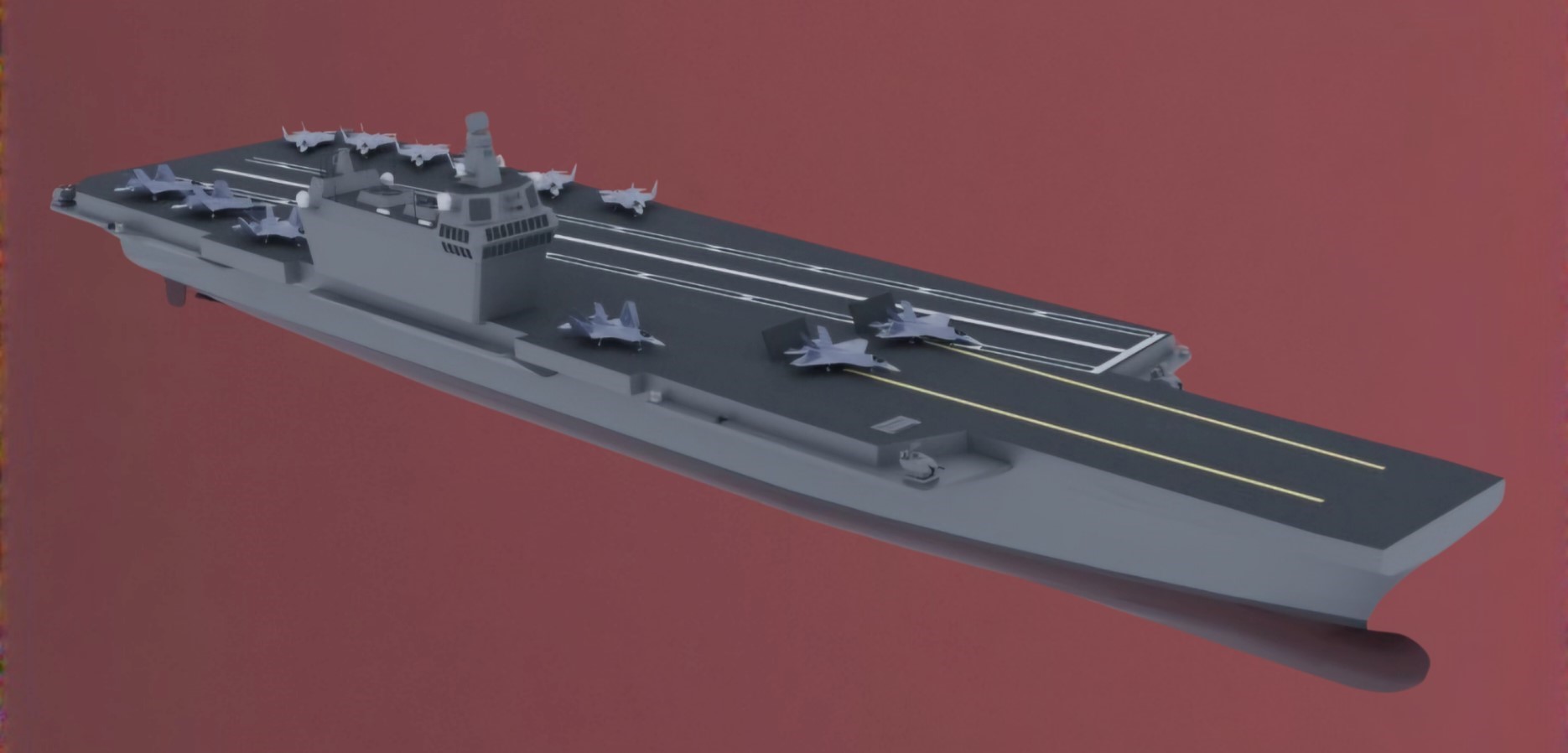
Image of the MUGEM CATOBAR design carrying KAAN fighters in naval version on deck (Infographic; Kaan Azman)
The design of Turkey’s national aircraft carrier has evolved dramatically. With a projected displacement of approximately 66,000 tons and a length of 290 meters, the MUGEM far surpasses the capabilities of the current TCG Anadolu . Its most disruptive feature is its modular architecture.
The vessel is designed for a technological transition: initially, it will be able to operate with a ski-jump ramp for drones, similar to the Bayraktar TB3 , but its internal structure already reserves critical spaces for the installation of electromagnetic rails. This flexibility ensures that the vessel enters service quickly while catapult technology reaches operational maturity.
2. Electromagnetism: Beyond Steam
The Turkish EMALS system represents the pinnacle of national engineering. Unlike steam catapults, which are heavy and difficult to maintain, the electromagnetic system uses linear induction motors to accelerate aircraft.
-Digital control: the management software allows you to adjust the output energy with surgical precision, allowing you to launch anything from a light reconnaissance drone to the heavy and stealthy KAAN .
-The ASELSAN/TÜBİTAK factor: Taking advantage of the success in developing railguns like the SAPAN, Turkish engineers are adapting supercapacitor and flywheel technology to manage the massive electrical discharges needed for a successful launch.
3. In the near future: the naval KAAN
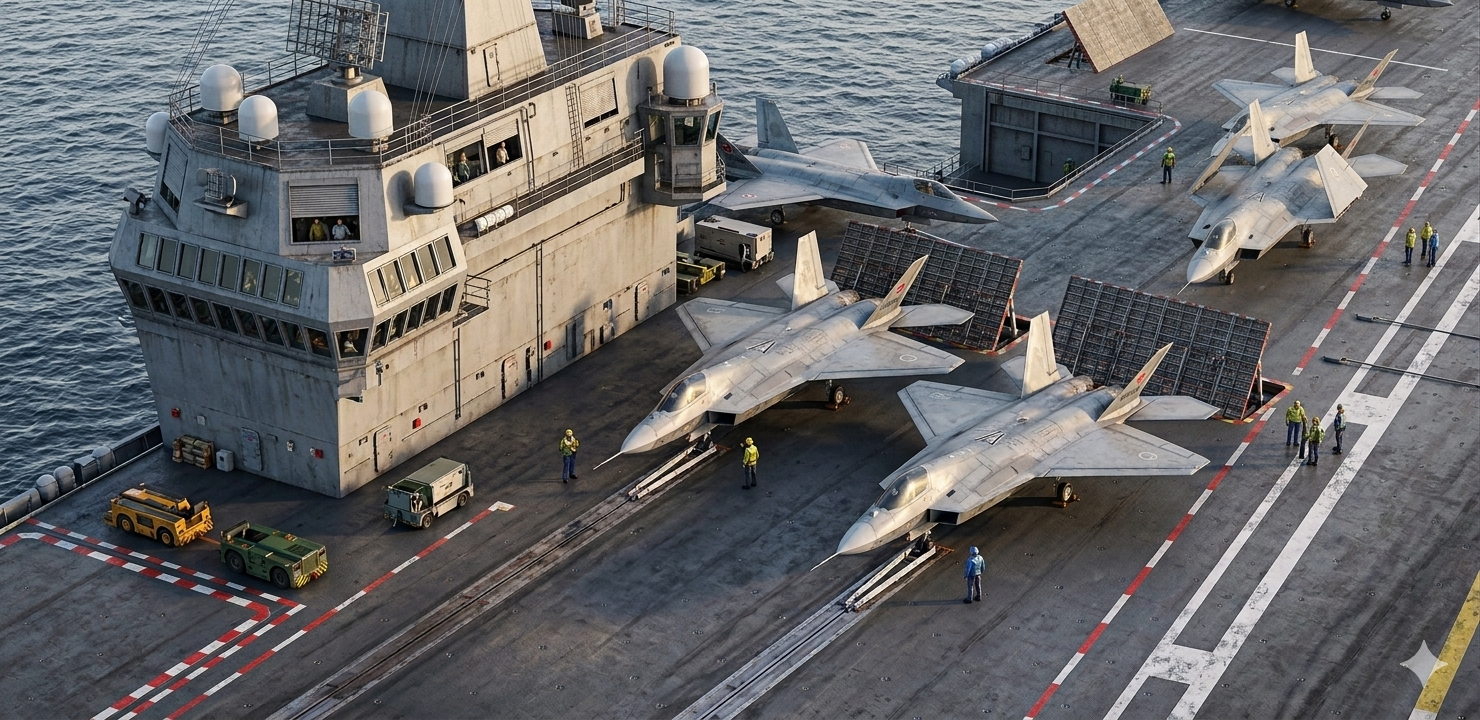
Rendering of what the KAAN would look like in naval version on the deck of the MUGEM (AI generated image)
The biggest challenge for Turkey’s national EMALS program is undoubtedly the naval version of the TF-X KAAN . This fifth-generation fighter, weighing around 30 tons, demands a launch infrastructure capable of delivering immense raw power in just a few seconds. Adapting the KAAN for aircraft carriers involves a profound structural redesign: reinforced landing gear to withstand the impact of cable braking and folding wings to maximize hangar space. Integrating this fighter with the national launch system would make Turkey the third nation in the world to deploy a native fifth-generation fighter from an aircraft carrier with a catapult.
4. The Hürjet-D: the operational link and the naval twin-engine design
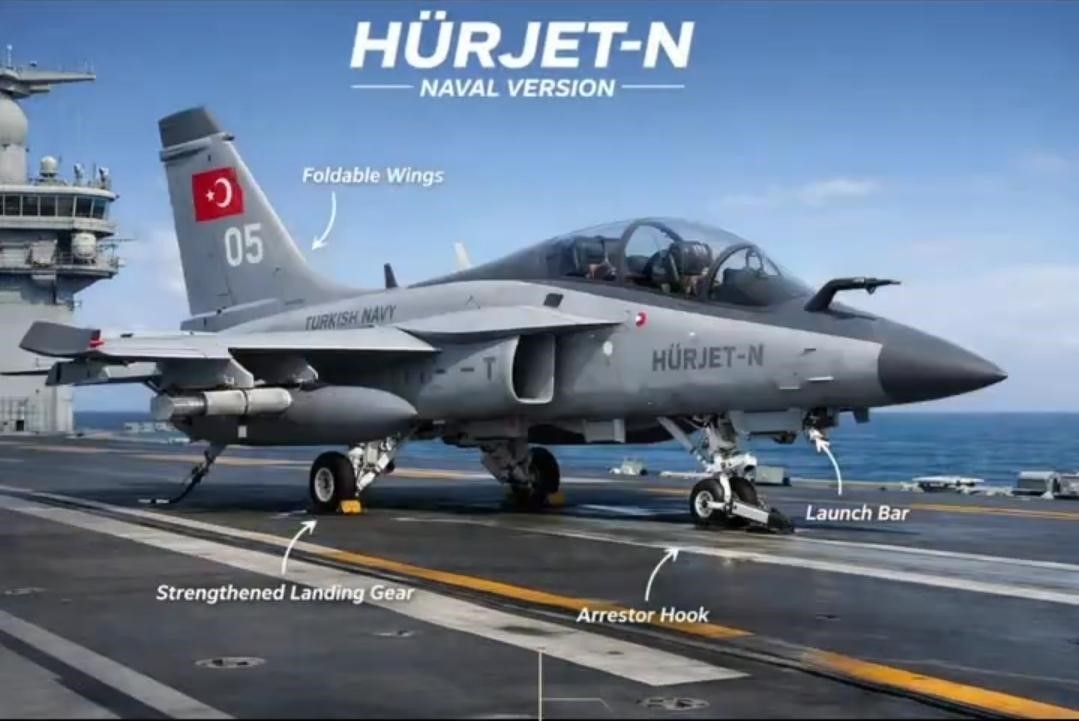
The Hürjet-D or Hürjet-N, as shown in the image, is the initial proposal for having manned fighters in the MUGEM (Image IA)
While the KAAN is positioned as the superior asset, the Hürjet-D acts as the practical pillar of the MUGEM . Its naval version is designed to fulfill a dual mission: serving as an advanced trainer for the new generation of naval pilots and acting as a lightweight attack fighter. Its light weight is key to testing the accuracy of the EMALS system at medium power levels.
However, the most ambitious project in this segment is the proposed twin-engine Hürjet. This evolution aims to equip the aircraft with greater safety in high-seas operations and a superior payload capacity for domestically produced anti-ship missiles. With this development, Turkey seeks not only a trainer, but also a versatile naval interceptor that fills the operational gap between drones and the KAAN heavy fighter , thus completing a balanced and lethal carrier-based air force.
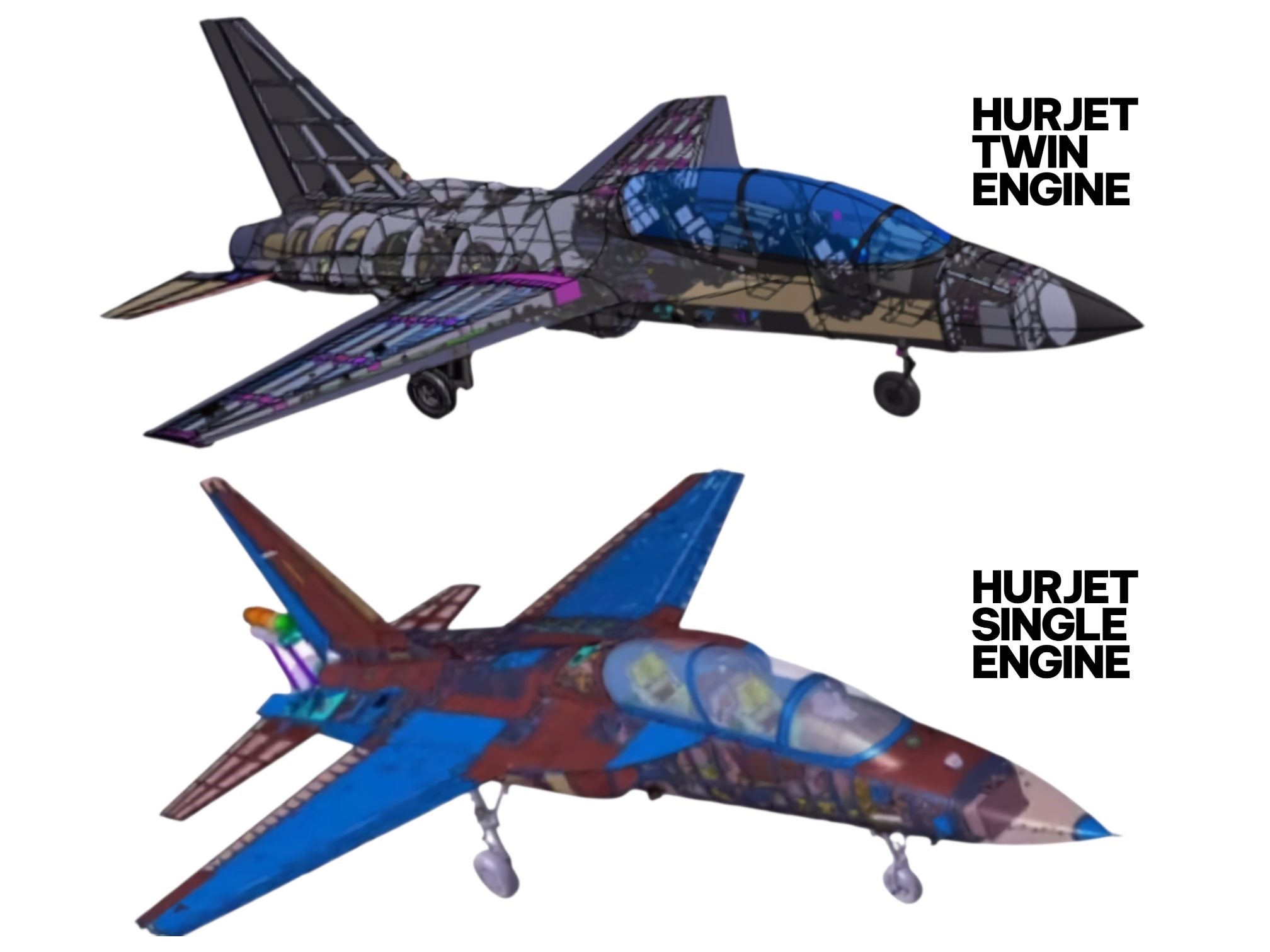
Rumors are growing stronger about a twin-engine version of the Hürjet to be used in the MUGEM , which is already being called the Super Hürjet (Image of X)
5. Unmanned embarked wing: Kizilelma, ANKA III and TB3
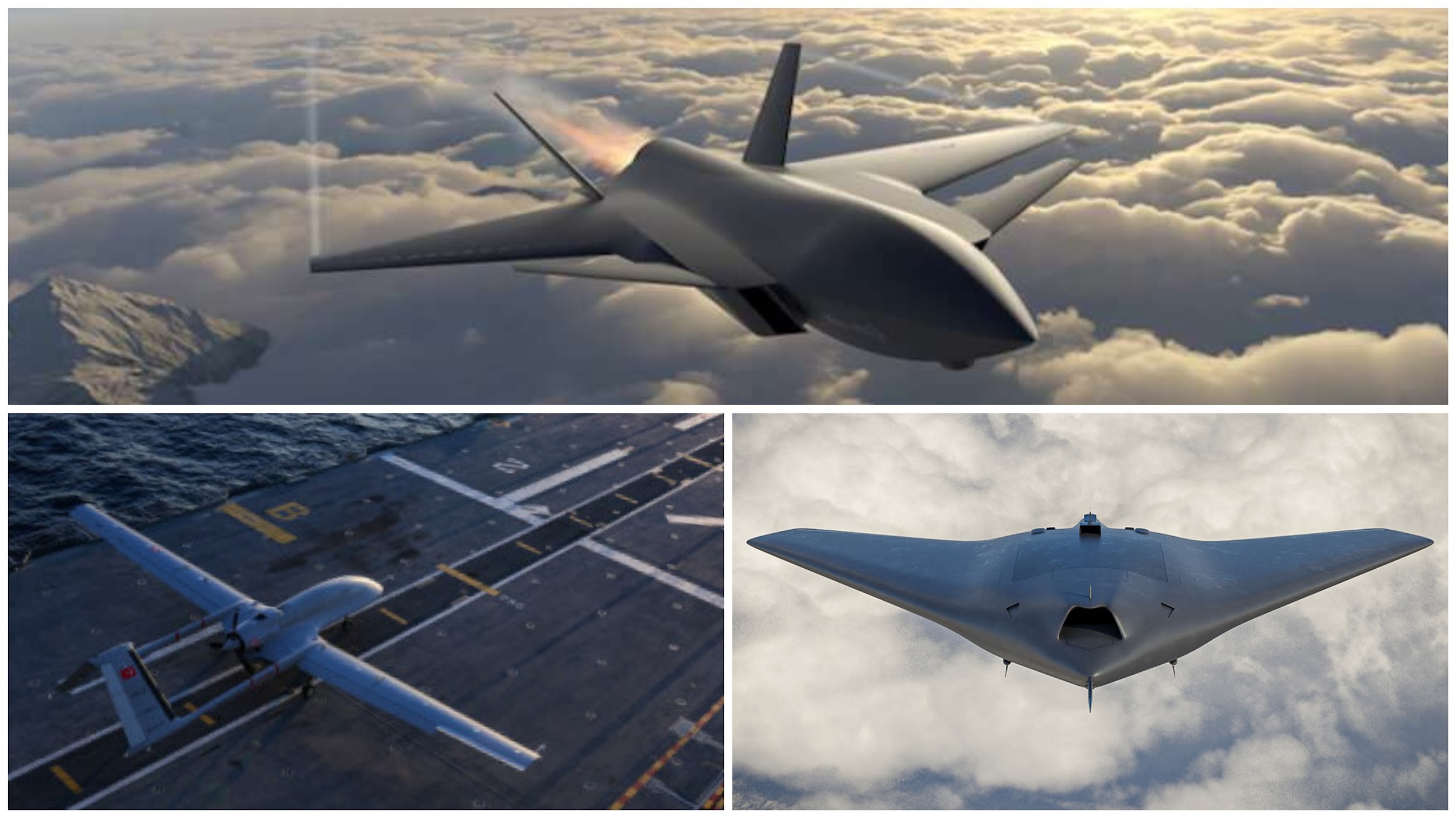
The Bayraktar Kızılelma , ANKA III and Bayraktar TB3 unmanned aircraft will be the spearhead in unmanned missions, where they will act as ISR platforms and probably AEW and ASW (TB3) or as CCA or autonomous combat fighters ( Kızılelma and ANKA III ) (Images Baykar Tech and TAI, collage by the author)
What truly sets the Turkish aircraft carrier apart is its native focus on UCAVs (unmanned combat aerial vehicles). This force is divided into three pillars: the Bayraktar TB3 , optimized for surveillance and precision strike; the Kızılelma , a supersonic fighter designed for air-to-air combat; and the ANKA III , an imposing stealth “flying wing” intended for strategic bombing and suppression of air defenses.
The EMALS system is the catalyst for this fleet, enabling the launch of aircraft like the ANKA III with their maximum weapons load in internal bays—something impossible from a conventional launch pad. By operating these swarm assets alongside the KAAN , the MUGEM becomes the world’s first aircraft carrier whose operational backbone does not depend exclusively on human pilots, defining the standard for 21st-century naval warfare.
A hybrid fleet: drones and fighter jets
Turkey’s doctrine for the MUGEM is unique. It does not seek to be a clone of the US Navy, but rather a hybrid force. The flight deck is being optimized to operate swarms of UCAVs like the Kızılelma , which will act as force multipliers for manned fighters. This ecosystem requires the launch system to be capable of rapid and varied firing cycles, alternating weights and speeds in a matter of minutes.
Electromagnetic engineering for proprietary technologies
Turkey’s transition from a user of foreign technology to an architect of naval sovereignty is not merely a change in technical manuals; it represents a paradigm shift in the balance of power in the Mediterranean and beyond. What began as an urgent need following its exclusion from the F-35 program has become the catalyst for one of the most ambitious engineering undertakings of the 21st century: the creation of a national electromagnetic launch system ( EMALS ) and the development of an aircraft carrier, the MUGEM , designed to break the established rules.
Unlike traditional powers that have taken decades to perfect assisted launching, Turkey is employing a “leapfrogging” strategy. Observing the missteps of pioneers like the United States with the Gerald R. Ford class, engineers at ASELSAN and TÜBİTAK are designing a system that seeks not only raw power but also unprecedented digital granularity. This system—which in speculative circles has been referred to by highly symbolic names—represents the maturity of an industry that has already mastered electromagnetic acceleration in its railguns and is now seeking to scale that physics to catapult the 30 tons of a naval KAAN .
6. An aircraft carrier in constant evolution
The modular design of the MUGEM is perhaps the most ingenious aspect of this program. By opting for a structure that can start with a ski-jump ramp for drones and evolve into a flat CATOBAR flight deck , Turkey ensures that its flagship vessel is not a white elephant waiting for unattainable technology. It is a “living” design that will grow as domestically produced linear induction motors reach their optimal reliability. It is the pragmatic response to a world where drone warfare and fifth-generation fighters must coexist on the same flight deck.
However, the path to full sovereignty is fraught with relentless physical challenges. Heat management, massive energy storage in milliseconds, and the structural integrity of stealth aircraft under the stress of an electromagnetic launch are frontiers that leave no room for error. Turkey is in a race against time and against itself, moving at a pace of development matched only by the Chinese giant.
Conclusion: Beyond the names and the steel
Ultimately, whether the system is formally named as a research project or whether collective memory assigns it evocative names is secondary. What is truly significant is the message Turkey is sending to the world: the sea of the future belongs not only to those with the largest budgets, but to those with the audacity to master the lightning. When the first KAAN glides down the runway at the MUGEM , propelled by an invisible force generated in Ankara’s laboratories, it will not only be an aircraft that has taken off; it will be the dawn of a new era in naval geopolitics, where technological autonomy is the only safe harbor.
Source: https://defensayseguridad.es/turquia-portaaviones-mugem-y-emals/