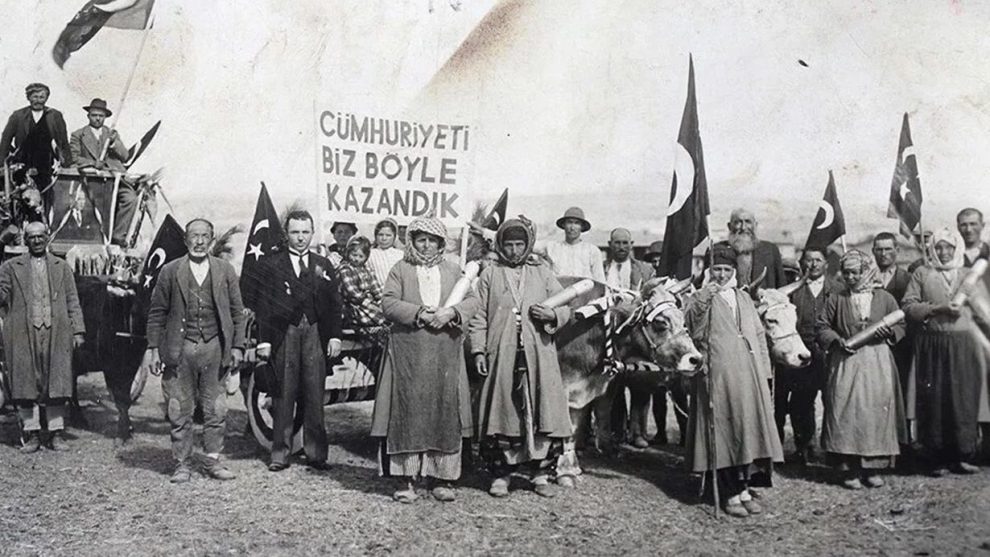

The Republic of Türkiye, proclaimed on October 29, 1923, marks its 102nd anniversary this year, a milestone that continues to spark debates about its founding principles and legacy. A common accusation leveled by secularists against conservatives is that they harbor an anti-republic stance, viewing the modern Turkish state as an illegitimate break from tradition.
However, this characterization oversimplifies the conservative position. Far from rejecting the republic itself, many conservatives direct their criticism toward the Republican elite—particularly the early Kemalist cadre—who orchestrated a radical, top-down revolution that sought to erase the Ottoman Empire from national consciousness.At the heart of this grievance is the Republicans’ deliberate denial of the Ottoman heritage. Founders of modern Türkiye framed the empire as a decayed, backward entity responsible for Turkey’s near-collapse after World War I, justifying a complete overhaul of society. Laws banned the fez, Arabic script, and religious orders; the caliphate was abolished in 1924; and education, law, and culture were secularized overnight.
Conservatives argue that this was not mere modernization but an ideological purge, imposing Western models on a population deeply rooted in Islamic and Ottoman traditions. They see the republic not as the problem, but as a vessel hijacked by revolutionaries who vilified six centuries of imperial history to legitimize their power.This top-down approach alienated segments of society, creating a rift that persists today. The Republicans’ reforms were enforced through state coercion—suppressing dissent, closing madrasas, and promoting a narrative that portrayed Ottoman sultans as tyrants rather than unifiers of a vast multicultural realm.
Conservatives, often drawing from thinkers like Necip Fazıl Kısakürek or modern figures in the AK Party tradition, contend that true republicanism should honor continuity with the past, integrating Ottoman achievements in governance, arts, and tolerance into the national identity. They celebrate the republic’s endurance and sovereignty but lament how its founders’ anti-Ottoman zeal fostered division, rather than building on the empire’s strengths to forge a synthesis of old and new.In essence, the conservative critique is pro-Turkish continuity, not anti-republic. By distinguishing between the republic as a enduring institution and the Republicans’ revolutionary excesses, conservatives advocate for a more inclusive nationalism—one that acknowledges the Ottoman Empire’s role in shaping Turkish identity without romanticizing its flaws. As Türkiye navigates its second century, reconciling these perspectives could heal old wounds, allowing the nation to embrace a fuller historical narrative that unites rather than divides.