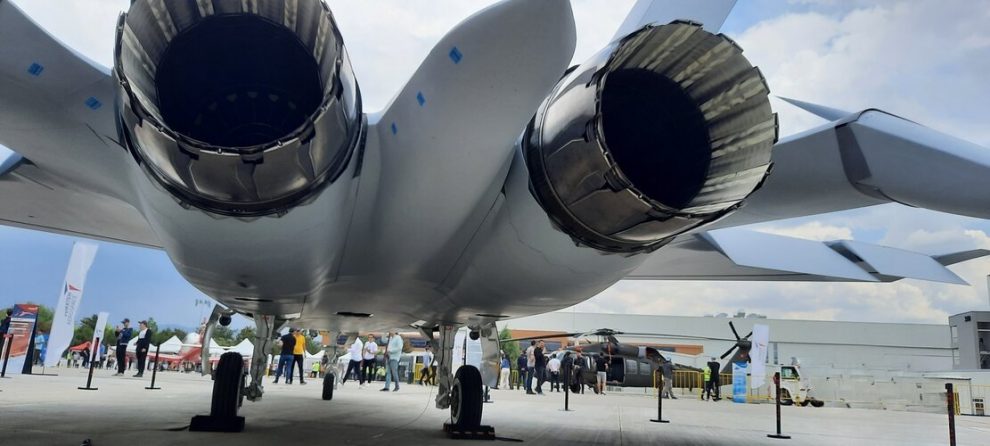

WASHINGTON / ANKARA — The United States has formally cleared the path for the sale of General Electric F110 jet engines to Türkiye for use in the indigenous KAAN fifth-generation fighter jet after Congress failed to block the deal during a mandatory review period.
The U.S. State Department notified Congress of the proposed sale in late June 2026. The 15-day congressional review window for NATO allies expired without successful opposition, allowing the process to move forward. Turkish Aerospace (TAI) CEO Mehmet Demiroğlu confirmed at the Farnborough Airshow that export licenses are now in hand and that the company is coordinating with GE Aerospace on delivery timelines for serial production.
Türkiye is seeking approximately 80 F110 engines (primarily F110-GE-129 variants) to power twin-engine KAAN aircraft for the Turkish Air Force. The package, valued at more than $700 million, covers engines along with related integration, testing, and technical support. Türkiye already holds a smaller number of the engines for prototype and early testing work. Serial production deliveries are not expected for at least two and a half years.
The approval marks a notable step in U.S.-Türkiye defense ties under the Trump administration, which had signaled support for the transfer ahead of a NATO summit. It comes despite lingering tensions stemming from earlier disputes, including Türkiye’s acquisition of the Russian S-400 system and its removal from the F-35 program.
Yet some defense observers and commentators in Ankara are striking a note of caution. They argue that Türkiye should treat the clearance as provisional and move to finalize and accelerate the full 80-unit order without delay. “Past experience shows that U.S. arms decisions can shift with political winds in Washington,” one Turkish defense analyst noted in recent commentary. “Whether under President Trump or a future administration, priorities or congressional attitudes can change. Securing firm contracts and early deliveries reduces exposure to any reversal.”
Critics of over-reliance on American suppliers point to previous episodes in which approved or expected transfers faced delays, conditions, or cancellations. They recommend that Turkish authorities press for rapid contracting, payment schedules, and delivery milestones while simultaneously advancing indigenous engine development programs as a longer-term hedge.
Turkish officials have not publicly framed the situation in those terms, emphasizing instead the practical benefits for the KAAN program and ongoing cooperation with GE. Production of the fighter remains years away from full-rate status, giving time for engine deliveries if the commercial and logistical steps proceed smoothly.
The deal does not restore access to F-35 aircraft, though separate reviews of related restrictions have been reported. For now, the F110 pathway provides an interim powerplant solution that allows the KAAN project to progress while Türkiye continues work on its own advanced engine capabilities.
As the formal sale process advances from congressional clearance into contracting and production phases, the coming months will test whether the engines arrive on the timelines needed for Türkiye’s ambitious fighter schedule—or whether political shifts once again intervene.