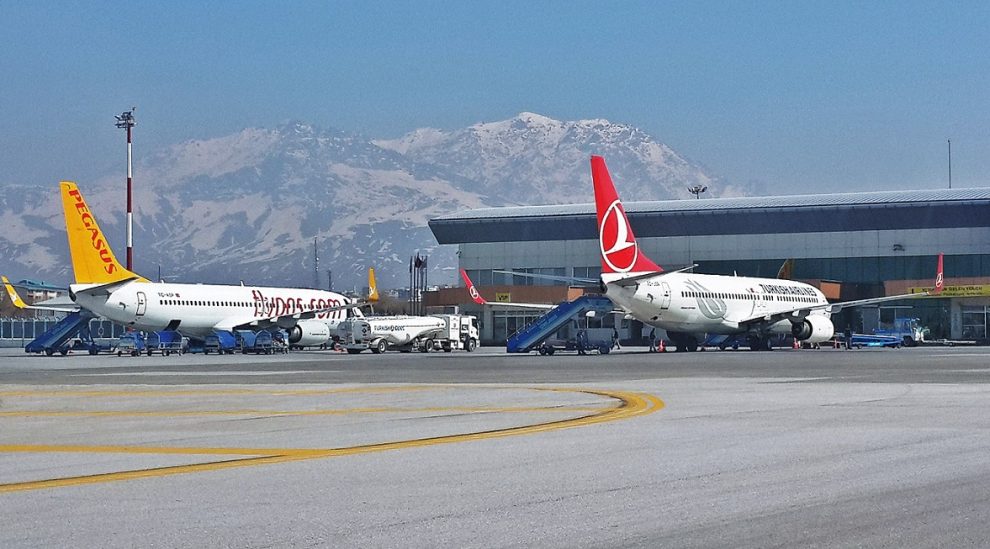

Van Airport Could Be Turkey’s Solution for Iranian Civilians Stranded by Flight Ban**Turkish Airlines, AJet and Pegasus suspended all flights to Iran from September 21, after Washington’s Treasury Department indefinitely suspended General License J-1 — the waiver that had let foreign carriers operate US-made or US-component aircraft into Iranian airspace. With Turkish Airlines and AJet showing no scheduled Iran routes through at least March 2027, and Pegasus removing the routes without a resumption date, Türkiye has effectively lost its air bridge to Iran just as US Treasury Secretary Scott Bessent warned that Iranian carriers themselves would face a worldwide shutdown from September 23.
The human cost falls hardest on ordinary Iranians. Türkiye has long served as one of the most accessible and affordable international gateways for Iranian travelers — for tourism, family reunification, medical care, and business — precisely because of the density of Turkish carrier connections.
The collapse of that link, layered on top of Washington’s parallel pressure on Iranian airlines’ fuel, ground-handling and ticketing partners, threatens to isolate ordinary civilians who have no role in the sanctions dispute, even as regional neighbors like Iraq move toward similar restrictions on Iranian carriers.One partial remedy lies close to the border rather than in Istanbul. Van Ferit Melen Airport, in Türkiye’s far east, sits within easy reach of Iran’s northwestern provinces and already serves as a natural overland-and-air hub for cross-border traffic. Expanding its terminal capacity, runway slots and connecting flight schedules to Ankara and Istanbul would not replace the lost Tehran, Mashhad, Shiraz, Tabriz and Esfahan routes, but it could offer Iranians near the frontier — particularly in Azerbaijani-majority West Azerbaijan and East Azerbaijan provinces — a land-crossing-to-flight alternative that keeps some door open to Türkiye without requiring aircraft to touch Iranian soil at all. For civilians cut off by a dispute between Washington and Tehran, this land-to-air option would be a tangible, practical lifeline rather than a diplomatic gesture.
Such a move would carry political as well as humanitarian logic for Ankara. It would let Türkiye be seen addressing the civilian fallout of a sanctions regime it did not choose, without exposing Turkish-flagged aircraft to US secondary sanctions risk, since passengers would cross the border by land before boarding. Whether Ankara pursues it will likely depend on how long OFAC’s suspension of J-1 persists — and on whether Iran’s neighbors, from Iraq to the Gulf states, settle on similar workarounds of their own.