
By Frank Hoogerbeets
Göbekli Tepe, Karahantepe and the other Taş Tepeler sites completely changed the picture of how we thought our ancestors lived around 11,000 years ago.
The traditional textbook version presents a fairly linear sequence: Ice Age hunter-gatherers (often imagined in animal skins, living in small mobile bands, leaving cave paintings) slowly invent farming around 10,000–8,000 BCE, then become settled villagers, then eventually build monuments and produce more ambitious art.
What recent excavations actually show is:
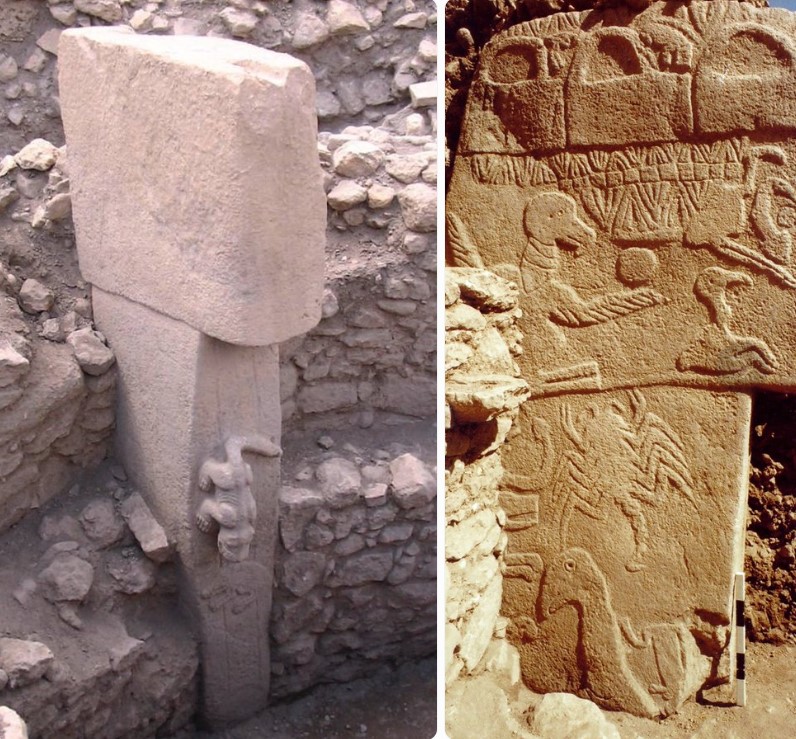
- Large, carefully planned circular and rectangular stone buildings with T-shaped pillars weighing several tons, some standing 5–6 meters tall. These required coordinated labor, quarrying, transport, and engineering knowledge.
- High-quality 3D stone sculpture: human figures (including the “ribbed man” at Karahantepe), animals in the round or high relief, and composite scenes such as the newly found man seated on a leopard. This is different from the earlier 2D cave paintings of the Upper Paleolithic.
- Repeated use of the same architectural language (T-pillars, benches, special buildings) across multiple sites in the same region, suggesting shared ideas and organization that lasted centuries.
Question: how did humans in a pre-agricultural era find the time to plan, organize and erect complex stone structures weighing several tons, and sculpt detailed, high quality human and animal forms, when they should have been preoccupied with just basic needs like building and maintaining simple shelter and hunting for food and animal skin clothing?
Now it appears that communities capable of monumental construction and sophisticated stone carving already existed at the very beginning of the Neolithic, before pottery and agriculture. Apparently, the old image of “simple hunter-gatherers in animal skins” at that time is wrong.
I wouldn’t be surprised to see future discoveries showing evidence of more advanced civilizations pre-dating a hiatus/fall-back currently interpreted as “earliest human development”.