As I started writing this article, the weight of thoughts accumulated in my mind made it difficult to construct the first sentence. Because the issue is not just the story of a leader, but the story of a nation that has been struggling for existence for two centuries, rising again. Therefore, the question needs to be asked correctly from the beginning: If a leader who emerged from a long historical resistance against the Western colonial order were born in the West, how would he be described? If a leader of this scale emerged in England, Germany, or America, how would academics position him, and what concepts would they use to build him? And more strikingly, if this leader came from the leftist tradition, how many articles, how many books would be written about him in the world’s literature today?
At this point, Recep Tayyip Erdoğan and Turkey’s transformation have become a model in many geographies. We are talking about a leadership that is talked about more, attracts more attention, and has become a concrete example of hope, development, and independence for oppressed nations beyond the borders of Misak-ı Milli. However, paradoxically, this scale of transformation has not been subject to in-depth academic analysis in its own country. One of the main reasons for this is that the Western-oriented and ideological circles that shaped cultural power in Turkey for many years preferred to exclude this type of leadership rather than understand it. On the other hand, a significant part of conservative intellectual circles has not shown the courage to conceptualize this great transformation.
However, what happened in Turkey in the last quarter century is not an ordinary political success story. This process is a holistic story of rebuilding state capacity, strengthening economic infrastructure, gaining independence in strategic areas, especially defense industry, and transitioning from passivity to being a subject in foreign policy. This broad transformation, ranging from infrastructure investments to technology ecosystems, energy policies to security strategies, is the product of a systematic process built step by step by rational leadership.
Erdoğan’s leadership becomes unique at this point. He has emerged as a different model by going beyond the classical bureaucratic politics understanding, establishing a strong bond with the public directly, having charismatic leadership capacity, and the ability to make quick decisions. This model has found a strong response, especially in countries experiencing political fragility, limited institutional capacity, or open to external interventions. Because this type of leadership involves not only managing but also giving direction, taking risks in times of crisis, and opening new paths when necessary.
In this context, Turkey’s foreign policy has also gained a new character. Turkey has rejected a passive position within the Western-centered international system and has transformed into a “middle power that can draw its own path” by taking independent and original positions from time to time. This situation has found a strong echo, especially in post-colonial societies such as Africa, Asia, and the Middle East. Erdoğan’s criticisms of imperialism and emphasis on national sovereignty have coincided with the historical memory of these societies; thus, Turkey has become effective not only as a state but also as an idea.
Another dimension of this effect emerges in leader diplomacy. Direct relations established with powerful leaders globally have taken Turkey beyond classical diplomatic molds; it has become an actor that produces mutual respect, competes when necessary, but also negotiates. This situation has turned Turkey into a strategic power that establishes balances in a multipolar world order.
Erdoğan’s perception in the Islamic world is a separate topic. He has been perceived by many Muslim societies as a leader who can carry his religious identity without radicalizing it and making it politically visible as a “figure that produces representation.” This situation has found a strong response, especially in societies experiencing identity crises.
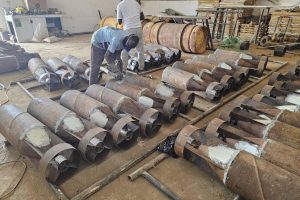
Crisis management and risk-taking capacity are also defining elements of Erdoğan’s leadership. Turkey’s intervention capacity in a wide geography ranging from Syria to Karabakh, from Libya to the Eastern Mediterranean has taken the country from being a regional power to a game-changing actor. The defense industry developed in this process has become not only a military power but also one of the main pillars of political independence.
However, Turkey’s humanitarian diplomacy capacity cannot be ignored. Education, health, and development projects carried out through institutions such as TIKA, Yunus Emre Institute, and Maarif Foundation have created a concrete Turkish effect in hundreds of countries. This effect has further strengthened Erdoğan’s global perception as an area where state capacity and leadership vision overlap.
The perception formed in different geographies is striking. In Far Eastern Asia, Erdoğan is seen as a political symbol of independent development; in the Middle East, he stands out as a figure who combines Islamic representation and national sovereignty. In the Caucasus, he is a strategic actor who establishes balances; in Africa, he is the concrete counterpart of the anti-imperial discourse; in the Balkans, he is a trust element strengthened by historical ties; and in Latin America, he is seen as a symbol of Western non-resistance.
As a result, Erdoğan’s perception as a strong leader in different geographies cannot be reduced to a single reason. This situation is a multi-layered effect that arises from the combination of charismatic leadership, independent foreign policy, anti-imperial discourse, strategic capacity, humanitarian diplomacy, and the ability to establish balances in a multipolar world order.
These assessments should be done more often. Erdoğan’s two statements about the Israel/US-Iran war prompted me to write this article:
- This war was started by Israel, and 8 billion people are suffering.
- Isn’t the economy of our region, which is losing blood in this meaningless war, with infrastructure destroyed by missiles, drones, and bombs, also the resources of our brothers? Don’t the blood flowing in our geography belong to all of us, even if our sects and origins are different?
The first of these statements resonated globally, and the second resonated in the Islamic world. This is the vision and imagination of an empire.
Understanding Erdoğan is actually understanding a bigger truth: History is not just a text written by great powers. Sometimes, a nation that has been kept on the side for a long time rewrites that text. Turkey’s march over the last quarter century is exactly that.
And the name of political wisdom in this march is Recep Tayyip Erdoğan.