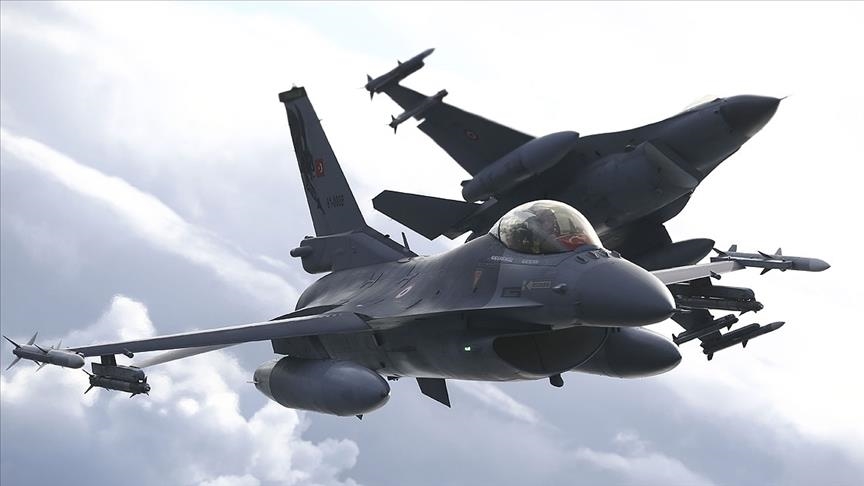

Recent statements from Israeli political figures and media commentators suggest that Türkiye is increasingly being framed as a potential target in Israel’s evolving regional strategy, particularly in the aftermath of tensions with Iran. While the emergence of other regional crises could delay such a focus, the broader pattern indicates that Israel’s list of perceived threats is expanding. Indeed, proposals such as Yair Lapid’s suggestion to designate Qatar as an enemy state reflect a political climate in which new adversaries can be identified and legitimized with relative ease.
Within this framework, it is plausible to argue that Türkiye may eventually be subjected to direct Israeli targeting. Importantly, this is not because Ankara seeks confrontation or pursues policies aimed at eliminating Israel. Rather, Türkiye’s position has largely consisted of vocal criticism of Israeli military actions and regional policies. From Ankara’s perspective, such criticism is both morally grounded and politically justified. However, Israeli discourse increasingly equates criticism with hostility, effectively redefining rhetorical opposition as a security threat. In doing so, Israel lowers the threshold at which it may justify coercive or even military action.
This dynamic is critical. When a state openly labels another as an “enemy”—even in rhetorical terms—it contributes to the construction of a justification framework for future action. Israeli strategic behavior in past conflicts demonstrates that such framing is rarely incidental. Instead, it is often accompanied by a broader process of narrative building in which the target is portrayed as dangerous, expansionist, or imminently threatening. This process typically involves political statements, media amplification, and the mobilization of supportive networks to shape international perception.
At the operational level, Israel has repeatedly demonstrated a preference for preemptive or preventive strikes. These actions are designed to neutralize perceived threats before they fully materialize, thereby allowing Israel to maintain strategic initiative. The role of Mossad in enabling such operations is widely acknowledged, particularly in cases involving covert infiltration, targeted assassinations, and the preparation of operational environments. Past incidents—ranging from sabotage operations to targeted killings—highlight the extent to which intelligence-driven preemption forms a cornerstone of Israeli military doctrine.
For potential targets, this doctrine creates a profound strategic dilemma. Waiting for an attack may result in severe losses, particularly if the first strike is designed to cripple leadership structures, military infrastructure, or critical assets. The experience of other regional actors illustrates this risk. Failure to anticipate and respond to evolving threats can lead to significant strategic setbacks, including the loss of key personnel and command capabilities.
Conversely, international law and strategic logic both recognize that under certain conditions, preemptive action may be considered legitimate. If a state can demonstrate credible evidence that an attack is imminent, anticipatory self-defense may be justified. In this sense, Israel’s own reliance on preemptive strikes contributes to a normative environment in which similar actions by other states can be argued as legitimate. Put differently, a doctrine consistently employed by one actor may, over time, be invoked by others facing comparable threat perceptions.
In the case of Türkiye, this issue becomes particularly salient. Israeli leaders, including former Prime Minister Naftali Bennett and current Prime Minister Benjamin Netanyahu, have at times identified Türkiye as a potential future target. Parallel narratives in pro-Israeli media further reinforce this perception by portraying Türkiye as a destabilizing force or a latent threat. Such discourse not only shapes public opinion but may also serve as a preparatory stage for policy escalation.
If this pattern continues, Türkiye may interpret these signals not merely as rhetoric but as indicators of intent. In such a scenario, the combination of explicit labeling as an enemy and the demonstrated Israeli practice of preemptive warfare could be seen as creating a legitimate basis for anticipatory action. That is, if a state is both designated as a target and faces a credible risk of sudden attack, it may argue that waiting passively would constitute a strategic error.
Moreover, Israeli practice suggests that military action is often preceded by intensified information campaigns. These may include allegations that the target supports terrorism, pursues destabilizing policies, or seeks advanced weapons capabilities. Similar narratives regarding Türkiye have already begun to appear with greater frequency. Should this trend intensify, it may further reinforce Ankara’s perception that it is being positioned as a future target.
Ultimately, the question is not whether conflict is inevitable, but how strategic perceptions evolve in an environment of mutual distrust. If Türkiye concludes that an Israeli strike is not only possible but imminent, it may consider preemptive options as part of its strategic calculus. Such a decision would not be taken lightly, given the immense risks involved. However, it would be shaped by a combination of factors: Israel’s rhetorical positioning, its established military doctrine, and the broader regional security environment.
In this context, Israel’s own approach to preemptive warfare may have unintended consequences. By normalizing anticipatory strikes as a legitimate tool of statecraft, it implicitly provides other actors with a framework through which similar actions can be justified. Thus, the very doctrine that underpins Israeli security strategy could, under certain conditions, be invoked by Türkiye to legitimize a preemptive response.
Absent meaningful efforts to de-escalate tensions and clarify intentions, the risk of miscalculation remains significant. In a region already marked by volatility, the convergence of adversarial rhetoric and preemptive doctrines could pave the way for a dangerous cycle of action and reaction—one in which the line between defense and offense becomes increasingly blurred.