
Straturka Editorial
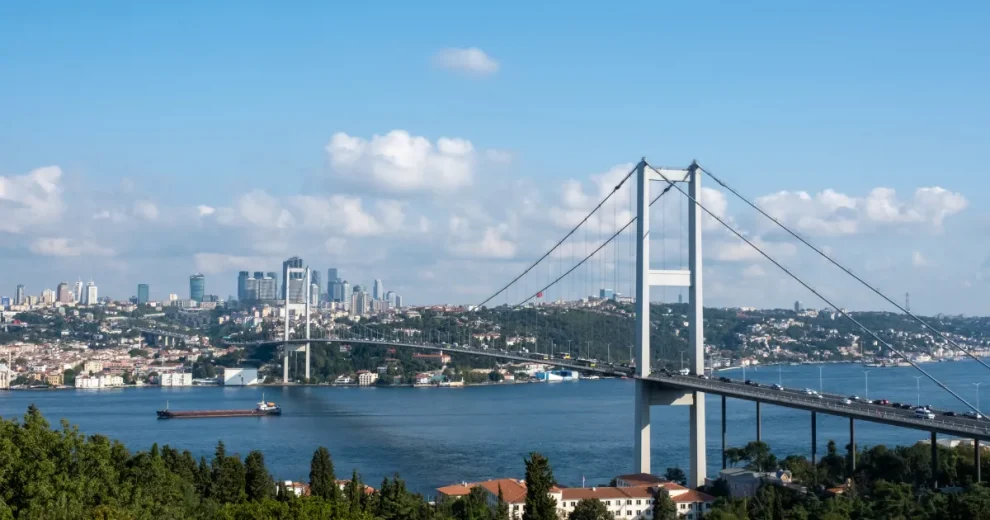
Ankara is once again weighing the sale of two of Istanbul’s most iconic assets, the 15 July Martyrs Bridge and the Fatih Sultan Mehmet Bridge, along with a package of highways, as the Treasury searches for new revenue to close a budget deficit projected to approach 3.6 percent of GDP this year. It is a familiar script. A similar attempt in 2012 produced a winning bid of 5.7 billion dollars from a consortium built around Koc Holding, Gozde Girisim, and Malaysia’s UEM Group, only for then Prime Minister Recep Tayyip Erdogan to reject it as insultingly low, warning that anything under 7 billion dollars would amount to treason against the nation’s assets. The tender collapsed. More than a decade later, the same bridges are back on the table, and the same underlying question has never been answered: what is the right way to sell a state asset without the public concluding, rightly or wrongly, that a handful of well-connected holding groups just got richer at its expense.
There is a mechanism sitting in plain sight that Turkish officials themselves floated after the 2012 collapse and then quietly shelved: selling these assets to the public directly, through Borsa Istanbul, rather than to a closed consortium through a sealed tender.
Why the tender model breeds suspicion
The problem with negotiated, closed-bid privatizations is not necessarily that they are corrupt. It is that they are structurally opaque, and opacity invites suspicion whether or not it is deserved. A single number, agreed upon by a handful of bidders and a privatization board, is easy to dispute and impossible to fully verify from the outside. When that number is rejected as too low, as it was in 2013, the public hears confirmation of what it already suspected, that state wealth is being funneled toward a small circle of businessmen with the right relationships. When a deal instead goes through, the public has no real way of knowing whether the winning bid reflected the asset’s true value or simply reflected which conglomerate had the inside track.
A public share offering solves this differently. Instead of one negotiated price, the market sets a continuously updated one, visible to everyone, informed by thousands of buyers rather than three or four bidding consortiums. Book-building, listing, and ongoing trading on Borsa Istanbul replace a single opaque number with a transparent, contestable one. This does not eliminate the possibility that large domestic holding groups end up owning a significant share over time. It does mean that whatever they pay, they pay it in full view, at a price set by public demand rather than private negotiation.
A savings vehicle, not just a sale
There is a second argument that matters as much as transparency, and it is one Straturka readers watching Mehmet Simsek’s disinflation program will recognize immediately: Turkey badly needs deeper capital markets and better savings instruments for its own citizens. Toll bridges and airports are close to ideal vehicles for this. They generate steady, largely inflation-linked cash flows from tolls and landing fees, the kind of predictable income stream that ordinary investors value as a hedge against lira depreciation, and that a mature equity culture is built on. Selling a stake in the Bosphorus bridges through BIST rather than through a single strategic buyer does not just change who owns the asset. It gives Turkish citizens, not just the balance sheets of a few large groups, a direct claim on infrastructure they cross every day.
This is not a novel idea globally. Britain’s privatizations of British Telecom and British Gas in the 1980s were built explicitly around mass public share offerings rather than trade sales, precisely to broaden ownership and blunt the political charge that privatization enriches insiders. Turkey has its own partial version of this already, in the minority stakes floated for Turkcell, Halkbank, and Turk Telekom. What has never been tried at scale is applying that model to the crown jewels, the bridges, airports, and toll roads that the state currently prefers to sell whole, to one buyer, in one negotiated transaction.
Beyond bridges: airports and the state’s hidden equity book
Bridges are the easiest case to make, but they are only the starting point. Istanbul Airport itself, one of the busiest hubs in Europe, generates landing fees, retail concessions, and duty-free revenue on a scale that would make it one of the largest listings in BIST history if even a minority stake were floated publicly. The same logic applies to regional airports still under state control, and to the government’s holdings in energy distribution and transport companies more broadly. These are not abstract assets. They are cash-generating businesses that Turkish citizens already fund through taxes and already use every day, and there is no principled reason their upside should flow only to whichever consortium wins a closed tender.
The same model extends naturally to a category that gets far less attention: government minority stakes and licensing structures in newer, fast-growing sectors. Türkiye’s ride-hailing and app-based transport space, the local answer to Uber that has grown alongside the taxi sector reform debate this publication has covered closely, is exactly the kind of high-growth, high-visibility business where public listing would do more than raise money. It would let ordinary citizens own a piece of the platforms reshaping how they move around their own cities, rather than watching that value accrue entirely to private operators or, in a state-backed scenario, to insiders close to the licensing process. Imagine a Turkish citizen who crosses the Bosphorus Bridge on the way to the airport, then hails a ride home through an app, holding a modest stake in all three through Borsa Istanbul. That is not a fantasy of financial engineering. It is a genuinely inspiring model of a citizen economy, one where national growth is something people participate in and profit from directly, rather than watch happen to them from the outside. It reframes privatization from a transaction the state does to its infrastructure into a mechanism the state uses to hand a piece of that infrastructure to its people.
The honest objections
A fair version of this argument has to acknowledge its limits. First, minority public offerings do not by themselves prevent large domestic conglomerates from eventually absorbing the free float through ordinary market purchases. Diffuse initial ownership is not the same as permanent diffuse ownership. Second, a staggered public sale raises money more slowly than a single lump-sum concession deal, and a Treasury facing near-term deficit pressure has an obvious incentive to prefer the faster, larger check that a consortium sale provides. Third, distributing shares does not automatically solve the governance question of who sets tolls and landing fees afterward. A natural monopoly asset needs a regulatory framework regardless of how ownership is structured at the point of sale.
None of these objections defeat the core case, but they do sharpen it. The strongest version of this proposal is not “float everything on BIST instead of selling it,” but a hybrid: public offerings for meaningful minority stakes to establish transparent, market-set pricing and give citizens a stake in national infrastructure, paired with ownership caps or golden-share protections that prevent the free float from quietly re-concentrating into the same small set of holding groups that dominate closed tenders today. That combination addresses the transparency problem the 2012 tender exposed, without pretending that share distribution alone resolves questions of control and regulation.
As Ankara revives the bridge sale once again, it has a chance to choose a different mechanism than the one that collapsed in scandal and recrimination in 2013. Selling Türkiye’s infrastructure to its own citizens, at a price the market sets in daylight, is a more defensible answer to the enrichment charge than another closed-door tender ever will be.