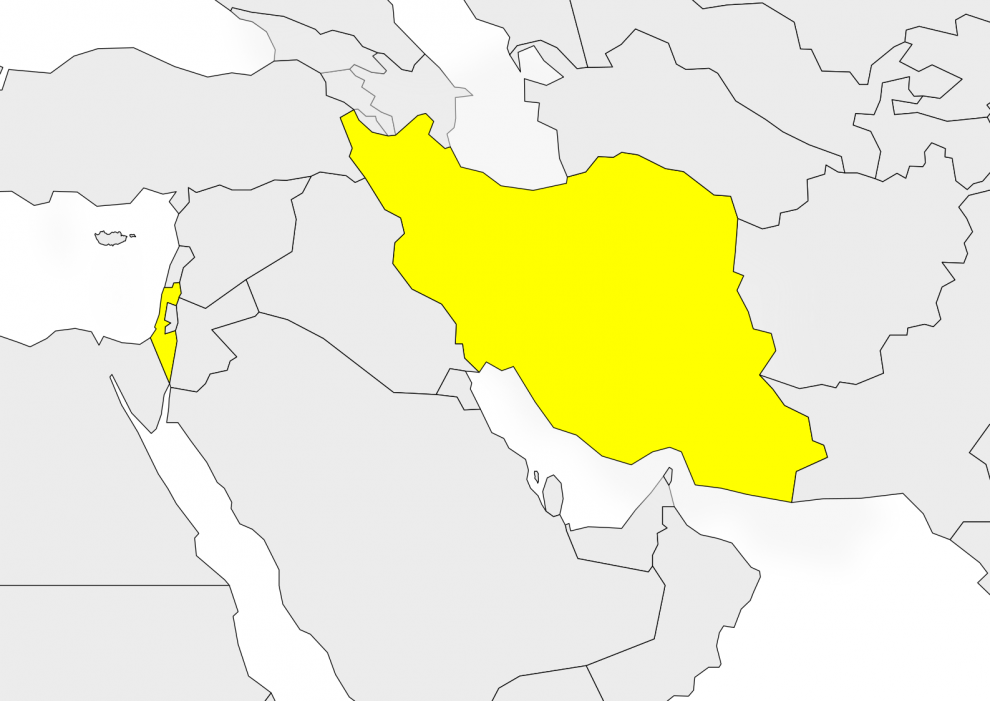

Ankara, Türkiye – A comprehensive report published today by the Turkish Academy of Sciences (TÜBA) paints a stark picture of a region scarred by a devastating 40-day war in early 2026. The study, titled “U.S. and Israeli Military Attacks Against Iran: Regional and Global Consequences,” analyzes the direct military confrontation that erupted on February 28, 2026, and its profound aftermath, concluding that the conflict has ushered in a “lost decade” of instability, economic hardship, and a shattered regional security architecture.
According to the report authored by Assoc. Prof. Bayram Sinkaya, the war began with coordinated US and Israeli strikes codenamed “Epic Fury” and “Roaring Lion,” targeting Iran’s political leadership, nuclear facilities, and military command. The initial attack, which resulted in nearly 1,700 civilian deaths—including 168 schoolgirls on the first day—marked a catastrophic escalation of a hostility rooted in the 1979 Islamic Revolution.
From Failed Diplomacy to “The Twelve-Day War”
The TÜBA report meticulously traces the path to war, identifying the failure of nuclear negotiations and the rise of hawkish leadership in all three countries as primary catalysts. After the US unilaterally withdrew from the Joint Comprehensive Plan of Action (JCPOA) in 2018 and Iran accelerated its nuclear program, a series of direct strikes and assassinations culminated in the “Twelve-Day War” in June 2025. That conflict, though limited, failed to resolve core issues, setting the stage for the larger, more destructive war in February 2026.
“Iran’s rise as a regional power, its development of precision-guided missiles and drones, and the perception in Washington and Tel Aviv that Tehran was on the brink of a nuclear weapon made a direct confrontation almost inevitable,” the report states. “The failure of last-ditch mediation efforts in Oman in February 2026 was the final trigger.”
The Conflict: Global Oil Shock and a Fragile Ceasefire
The war was not limited to the skies over Iran. In response to the US-Israeli offensive, Iran launched “Operation True Promise IV,” striking American bases in Gulf states and effectively closing the Strait of Hormuz, a chokepoint for nearly one-fifth of the world’s oil supply. The resulting price shock—oil prices nearly doubled—sent shockwaves through the global economy.
The report details the extensive human and material toll: dozens of senior military officials, including key commanders, were killed. Iran’s nuclear, energy, and industrial infrastructure suffered massive damage. The conflict raged for 40 days until a ceasefire, brokered primarily by Türkiye, Egypt, and Pakistan, was declared on April 8, 2026.
“Türkiye, from the very beginning, opposed the war and used its unique position to maintain diplomatic channels with both sides,” the report notes, highlighting Ankara’s crucial role as a mediator.
A Devastating Aftermath and Uncertain Future
The TÜBA report is most sobering in its assessment of the post-conflict landscape. While the active fighting has stopped, the fundamental issues remain unresolved. The status of the Strait of Hormuz, Iran’s nuclear program, and the broader regional power struggle have been left for a future, perhaps even more unstable, date.
The consequences have been catastrophic for Iran, facing political, military, and economic collapse. Yet the report warns that the war has no real winners. It predicts a future defined by:
· A More Militarized Iran: The Islamic Revolutionary Guard Corps (IRGC) has emerged with significantly enhanced political power, its authority cemented by the war.
· A Nuclear Precipice: With Iran having suspended cooperation with the IAEA and accelerated its enrichment program after the attacks, the report warns that a nuclear-armed Iran or another preventive war is a very real, existential threat.
· A Legitimacy Crisis: The structural legitimacy problems of the Islamic Republic, exacerbated by the war’s devastation and the regime’s failures, continue to cast a long shadow over Iran’s future stability.
· A Fractured Region: The conflict has deepened sectarian and political divides, destroyed trust, and created a security vacuum that non-state actors are already moving to fill.
In its foreword, TÜBA President Prof. Dr. Muzaffer Şeker issued a stark warning, stating that “wars have no winners.” He emphasized the duty of scientists not just to analyze events, but to contribute to a foundation for peace, adding, “While wars may be easy to start, ending them is exceedingly difficult.”
The TÜBA report serves as an urgent call to the international community, arguing that the fragile 2026 ceasefire is not a solution but a pause, and without a renewed, massive, and credible diplomatic effort, the Middle East is condemned to relive this nightmare.
Reach full report; https://www.tuba.gov.tr/files/yayinlar/raporlar/TUBA.978-625-6110-82-3.pdf