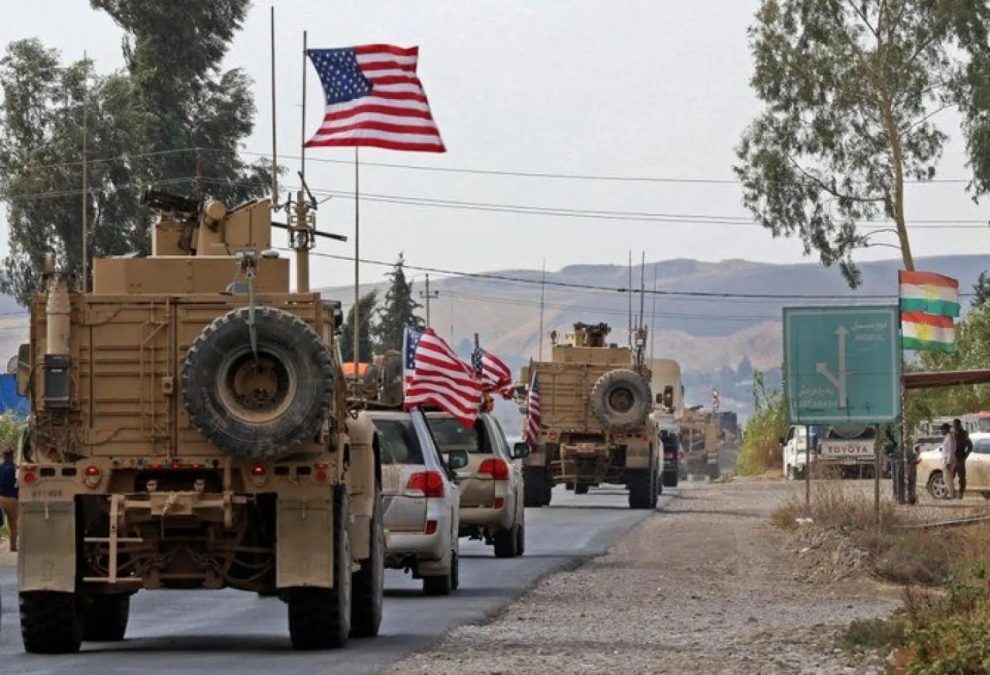

Türkiye should treat the completed U.S. withdrawal from Iraq — including the last remaining presence in the Kurdistan Region — as a strategic alarm, not a distant development.
For years the Kurdistan Regional Government lived under an implicit American security umbrella. That umbrella is now gone. The last coalition forces and air-defense systems have left Erbil. The Peshmerga and the KRG now face Baghdad’s centralizing pressure, Iran-aligned Shiite armed groups that have not been disarmed, Iranian missile and drone attacks, and residual militant networks. A polity that built its autonomy in the shadow of U.S. protection suddenly looks exposed.
Vulnerable actors look for new patrons. Israel has long cultivated quiet ties with Iraqi Kurds — energy contacts, intelligence links, political sympathy — and has publicly spoken of “natural alliances” with regional minorities. If Erbil concludes that neither Washington nor Ankara will reliably shield it, the incentive to deepen that relationship grows. An Israeli security, intelligence, or even limited military footprint in northern Iraq would not stay abstract. It would sit on Türkiye’s southeastern approaches, complicate Iraq’s internal balance, and give Tehran and Damascus another reason to treat the KRG as a hostile platform. Türkiye would then discover that it had acquired a new and hostile neighbor not through invasion, but through neglect.
That outcome is not inevitable. Iraqi Kurds, particularly the dominant currents in Erbil, have already distanced themselves from the PKK and have shown they can do business with Ankara on trade, energy, and security. They have an interest in a stable relationship with Türkiye because geography, markets, and the fight against common militant threats point that way. What they need now is a credible alternative to isolation: political engagement, economic depth, and a security understanding that does not leave them to bargain with whoever offers protection first.Turning away from that opening would be a self-inflicted wound. Ignoring the KRG does not freeze the status quo; it creates a vacuum. Vacuums in this region are filled by Iran, by militias, or by Israel. The last of those options would place a durable strategic problem on Türkiye’s border and poison relations with Baghdad and Tehran at the same time.
The prudent course is therefore the opposite of indifference: treat the Iraqi Kurds as a partner worth protecting from both internal overreach and external predation, lock in their alignment with Ankara, and close the door on any scenario in which Israel becomes a neighbor from the southeast. The window is open now, immediately after the American departure. It will not stay open indefinitely.