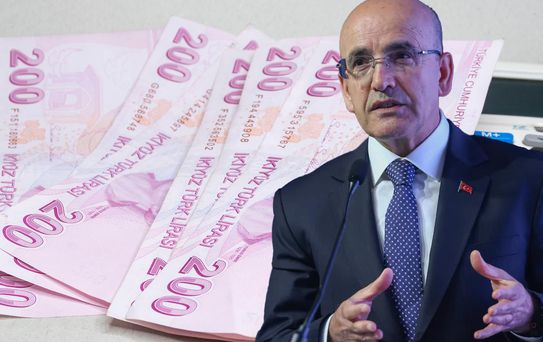

Ankara’s stated priority is disinflation. Its fee schedule tells a different story.
Annual inflation eased to 31.75% in July, the lowest reading since March, as Treasury and Finance Minister Mehmet Şimşek’s tight-money program continues to grind price growth down from the crisis levels of 2022-2024. Yet over the same period, the state has repeatedly raised the cost of its own services well above, or roughly in line with, that same inflation rate — a pattern critics argue works against the disinflation effort it is supposed to serve.
The Fee Increases
Highway and bridge tolls rose 25.49% on January 1, 2026, tied to the government’s official revaluation rate rather than the lower realized inflation figure. A further round of toll increases took effect on July 1. Passport, driver’s license, and other “valuable paper” fees rose 19% on January 1 — a figure Ankara advertised as coming in below the full revaluation rate, though still a substantial jump for citizens renewing routine documents. The passport exit fee, separate from the passport itself, is set for a roughly 25% increase in 2026.
The Contradiction
Each of these hikes is formally justified by reference to the revaluation rate, a mechanism pegged to prior-year inflation and used to index public fees automatically. Officials frame this as neutral, formula-based housekeeping rather than a policy choice. But the revaluation rate is calculated off backward-looking inflation data, meaning it tends to run ahead of the current, declining inflation trend Şimşek is trying to establish. The result is that state fees are rising faster than the prices the government is actively trying to bring down, adding a fresh cost-push impulse to categories like transport just as TÜİK data shows transport inflation easing.
Tax policy compounds the problem. Indirect taxes and administrative charges have been adjusted upward at rates that outpace disinflation, meaning households absorb a state-driven cost increase on top of whatever relief the disinflation program delivers elsewhere. For a program whose credibility rests on visible, felt improvement in household purchasing power, this is self-undermining.
Why It Matters for the Program
Şimşek’s disinflation strategy depends on anchoring expectations: convincing households and businesses that price growth is genuinely slowing, so that wage demands, pricing behavior, and inflation expectations adjust downward in turn. Public fee hikes that run at or above the headline rate work against that signal. They give households a lived experience of rising costs precisely when the government wants them to believe the opposite, and they hand skeptics a concrete data point to argue that disinflation is a monetary-policy talking point rather than a household reality.
There is also a narrower fiscal logic behind the hikes: with the central bank holding its policy rate high and public borrowing costs elevated, fee and toll revenue is one of the few levers Ankara can pull without touching the benchmark rate. But leaning on that lever undercuts the rate policy’s own goal, creating exactly the dilemma his own program is designed to resolve.
The Reminder
Disinflation is not achieved by having the central bank fight prices with one hand while the Treasury raises them with the other. If Şimşek wants credit for the progress reflected in July’s 31.75% reading, the fee and toll schedule needs to stop working against it.