
By Öznur Küçüker Sirene
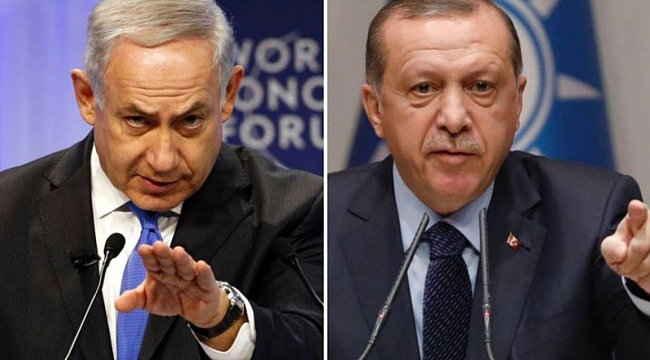
Benyamin Netanyahu is once again preparing to approach the elections under the image of “Mr. Security”, as he is nicknamed in Israel. This time, he has placed Turkey alongside Iran at the heart of his election campaign.
The tensions between Turkey and Israel are obviously not an artificial narrative fabricated by Netanyahu. Since the war in Gaza, the reaction to Israel has spread to a much wider part of Turkish society. Ankara’s hardening of rhetoric, the diplomatic rift and the divergence of regional interests have also widened the gap between the two countries.
Netanyahu, however, is seeking to turn this situation into a political instrument rather than appease it.
After Donald Trump raised the possibility of selling F-35s to Turkey again, Netanyahu appeared on several US channels to argue that such a move would upset the balance of power in the Middle East. In reality, the balance he speaks of refers above all to the maintenance of Israel’s air superiority in the region.
The development of Turkey’s defense industry, Turkey’s military presence from Syria to Somalia, and its regional influence are causing real concern in Israel. In Israeli security circles, the assumption that Turkey could become an even more powerful player in the vacuum left by Iran’s weakening is increasingly debated.
Netanyahu, however, places a strategic rivalry at the center of his election campaign.
Israel’s recognition of the events of 1915 as a “genocide”, the deepening of military cooperation with Greece and the Greek Cypriot administration, the desire to unite anti-Turkish circles in Washington around the same line and the opening of a new front in the Horn of Africa through Somaliland are part of a broader policy aimed at reducing Ankara’s room for manoeuvre.
In these initiatives, Netanyahu’s domestic political calculation matters as much as their foreign policy dimension.
Israel is approaching elections. Netanyahu will present himself to voters as a leader who failed to prevent the October 7 attacks, end the war in Gaza, bring back hostages or prevent the country’s growing isolation. As his security record is severely challenged, he once again needs to convey the message: “Only I can protect Israel.”
This is precisely the point made by Haaretz: by presenting Turkey as Israel’s new strategic adversary, Netanyahu is trying to reposition himself as an indispensable security leader. Foreign Policy also points out that concerns about Turkey are not entirely unfounded, but that the threat is deliberately amplified for electoral purposes.
The question is therefore not whether there are differences between Turkey and Israel. These differences are real, mutual distrust runs deep, and regional rivalry is becoming increasingly severe.
The real issue lies in Netanyahu’s choice to stoke this tension to preserve his power, rather than seek to manage it.
For Netanyahu, Turkey is no longer just a strategic rival. It has also become a powerful source of fear that can be exploited during the election campaign. This strategy can bring votes in the short term. But any threat amplified for domestic political purposes risks producing, in the diplomatic field, consequences that are increasingly difficult to control.
Source: Why did Netanyahu put Turkey in his sights? – Öznur Küçüker Sirene