
Turkey’s National Intelligence Academy (Millî İstihbarat Akademisi) has published a report ahead of the NATO Leaders’ Summit set for July 7-8 in Ankara, arguing that the Alliance is entering a new transformative phase referred to as “NATO 3.0,” in which Turkey occupies a central position.
The July 2026 report divides NATO’s history into three analytical periods: NATO 1.0, based on the clear threat perception of the Cold War; NATO 2.0, shaped by post-Cold War crisis management and out-of-area operations; and today’s NATO 3.0. According to the report, the new period is being defined by the Russia-Ukraine war, China’s rise, a reshaping of US-Europe burden division, and the spread of hybrid threats.
The report’s central argument is that the Alliance is shifting from “burden sharing” toward “burden shifting.” Under this framework, the US is expected to concentrate on nuclear deterrence, strategic intelligence and global power projection, while conventional defense responsibility is increasingly transferred to European allies.
Turkey’s position
The report presents Turkey as a concrete example of the ally profile NATO 3.0 requires. Among the points highlighted is Turkey’s position as one of the few allies able to read the security agendas of both NATO’s eastern and southern flanks simultaneously — contributing to the eastern flank through Black Sea security and the Russia-Ukraine balance, and to the southern flank through risks stemming from Syria, Iraq, Libya and the wider Middle East.
According to figures cited in the report, Turkey’s defense budget rose from $12.97 billion in 2021 to a projected $32.6 billion in 2025. Turkey has NATO’s second-largest land army after the United States, and is one of seven allies that has continuously met the target of allocating over 20% of its defense budget to equipment since 2014.
Turkey hosts NATO’s Land Command (LANDCOM) in Izmir and has twice held command of the KFOR peacekeeping mission in Kosovo. The early-warning radar at Malatya/Kürecik is cited as a critical component of the Alliance’s ballistic missile defense architect.
Defense industry and embargoes
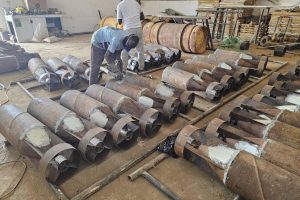
The report notes that Turkey’s defense and aerospace exports surpassed $10 billion in 2025, with a domestic production ratio reaching 82%. Its production capacity in unmanned aerial vehicles, munitions, electronic warfare and radar systems is described as aligning with NATO’s agenda of closing critical production gaps in munitions and air defense systems.
At the same time, the report references the United States’ removal of Turkey from the F-35 program in 2019 over its acquisition of the S-400 system, along with the resulting CAATSA sanctions. These restrictions are assessed as having caused short-term costs and delays, while accelerating Turkey’s domestic localization efforts in engines, radar and munitions over the longer term.
Expectations for the summit
The report anticipates that the Ankara Summit’s agenda will center on defense spending, burden sharing, the balance between the eastern and southern flanks, defense-industrial production capacity, and hybrid threats. It assesses that the summit’s lasting significance will hinge on whether NATO can produce alignment among allies on these issues. The report emphasizes that, for Turkey, the summit’s importance goes beyond hosting duties, representing an opportunity to help shape the conceptual framework of the Alliance’s new security doctrine.