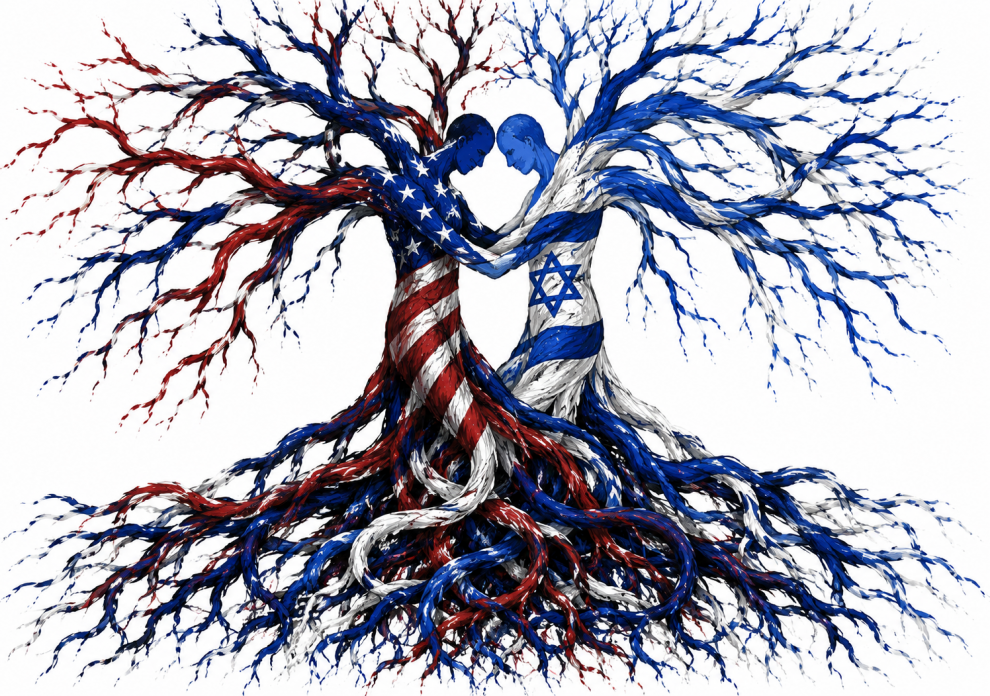

Despite periodic political tensions and critical rhetoric, U.S. institutional actions indicate that Washington continues to preserve its long-standing strategic commitment to protecting Israel’s international position.
Recent political tensions and critical rhetoric between Washington and Jerusalem have fueled speculation that the U.S.-Israel strategic partnership is weakening. However, a closer examination of American policy suggests that these disputes are largely tactical rather than structural. While political leaders may publicly criticize one another, U.S. institutions continue to take concrete steps that limit international legal and diplomatic pressure on Israel, including actions affecting bodies such as the International Criminal Court and UNRWA. This pattern reflects the enduring influence of America’s broader foreign policy establishment, whose strategic priorities often transcend individual administrations and political personalities. Consequently, the continuity of institutional behavior suggests that the foundations of U.S. support for Israel remain largely intact despite temporary political frictions.
Recent commentary has increasingly portrayed tensions between Washington and Jerusalem as evidence of a fundamental rupture in the U.S.-Israel relationship. Public disagreements over Gaza, disputes between President Donald Trump and Prime Minister Benjamin Netanyahu, and occasional criticism voiced by senior Republican figures have encouraged speculation that the traditional strategic partnership is weakening.
Such conclusions, however, confuse political rhetoric with strategic policy.
The defining characteristic of American foreign policy has never been the temporary disagreements between political leaders. Rather, it has been the remarkable continuity of its institutional commitments. Administrations change. Personal relationships deteriorate. Tactical priorities evolve. Yet the underlying architecture of U.S. grand strategy often survives these fluctuations with surprising resilience.
The current debate surrounding Israel provides another illustration of this reality.
While media attention has focused on political disagreements inside the Republican Party or on increasingly critical statements directed at Netanyahu, Washington has simultaneously continued to shield Israel from growing international legal and diplomatic pressure. This distinction is crucial because states ultimately reveal their strategic priorities not through speeches but through policy instruments.
One of the clearest examples has been the U.S. campaign against institutions perceived as facilitating legal or political pressure on Israel. The International Criminal Court became an early target through sanctions, diplomatic pressure, and efforts to delegitimize its jurisdiction over Israeli officials. More recently, the United Nations Relief and Works Agency (UNRWA) has increasingly become the focus of American political pressure following Israeli allegations regarding the agency’s neutrality and alleged security concerns. Whether justified or not, the cumulative effect has been to weaken one of the principal international organizations operating in the Palestinian arena.
Viewed together, these actions reveal a consistent strategic pattern. Washington appears less concerned with isolated diplomatic controversies than with preserving Israel’s long-term freedom of strategic maneuver. Institutions capable of generating legal accountability, diplomatic isolation, or political costs for Israel increasingly become subjects of pressure, funding restrictions, or institutional delegitimization.
This continuity reflects the nature of the American state itself.
Foreign policy in the United States is not designed exclusively by the President. It emerges from an extensive network of institutions, including Congress, the national security bureaucracy, intelligence agencies, the Department of Defense, influential think tanks, lobbying organizations, and a deeply rooted bipartisan strategic culture. These actors often possess interests and policy preferences that extend far beyond the tenure of any individual administration.
Consequently, personal disagreements between American and Israeli leaders should not be mistaken for structural divergence.
Indeed, history repeatedly demonstrates that bilateral crises rarely translate into lasting strategic realignment. Similar predictions emerged during disagreements between previous American presidents and Israeli prime ministers over settlements, the Iranian nuclear issue, military operations in Gaza, or peace negotiations. Yet military cooperation expanded, intelligence coordination deepened, and diplomatic protection continued largely uninterrupted.
This institutional resilience explains why focusing exclusively on public statements can produce misleading analyses. Political rhetoric serves multiple audiences simultaneously. Leaders speak to domestic constituencies, coalition partners, international allies, and electoral bases. Such rhetoric often reflects tactical positioning rather than strategic transformation.
Actual policy, by contrast, is measured through resource allocation, diplomatic initiatives, security cooperation, intelligence sharing, sanctions policy, arms transfers, and voting behavior within international organizations.
Measured against these indicators, the fundamental trajectory has exhibited far greater continuity than change.
The broader geopolitical context further reinforces this assessment. Israel continues to occupy a central position within American regional strategy. It serves as a technologically advanced military partner, an intelligence hub, a deterrent against regional adversaries, and a critical component of Washington’s broader security architecture in the Eastern Mediterranean and the Middle East. Regardless of changing administrations, these structural considerations continue to shape American decision-making.
This does not imply the absence of disagreements. Tactical disputes over military operations, humanitarian access, domestic Israeli politics, or regional diplomacy are genuine and sometimes severe. Nor does it suggest that every American institution or policymaker shares identical views regarding Israel. Rather, it suggests that such disagreements have thus far remained contained within a broader framework of enduring strategic alignment.
Consequently, observers should exercise caution before interpreting temporary political friction as evidence of strategic separation. The more meaningful question is not whether American officials occasionally criticize Israeli leaders. The more important question is whether Washington is reducing the diplomatic, military, legal, and political protections that have historically underpinned Israel’s international position.
To date, the evidence suggests otherwise.
The persistence of American efforts to constrain institutions capable of increasing international pressure on Israel indicates that the core strategic calculus has remained largely intact. Public disagreements may dominate headlines, but institutional behavior continues to reflect longstanding geopolitical priorities.
Ultimately, international politics is shaped less by personalities than by structures. Leaders come and go. Governments rise and fall. Headlines change by the day. Yet the strategic logic embedded within powerful states often endures for decades.
For that reason, analysts should resist the temptation to interpret every diplomatic dispute between Washington and Jerusalem as a sign of historic transformation. The real measure of policy lies not in rhetoric but in institutional conduct. Judged by that standard, the foundations of the U.S.-Israel strategic partnership remain considerably more durable than current political discourse would suggest.