Türkiye’s growing edge in defense spending and domestic weapons production is pulling further ahead of Greece, even as Ankara continues to signal that it prefers negotiation over confrontation to resolve the two countries’ longstanding disputes.
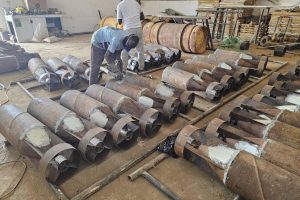
Türkiye’s defense budget stood at roughly 31 billion dollars in the most recent comparison, more than four times Greece’s approximately 7 to 8 billion dollars. Türkiye’s active military personnel also outnumber Greece’s by more than three to one. The gap is widening in a second respect as well: Türkiye has increasingly shifted toward domestic production, with funding for its national defense industry base rising sharply and now accounting for more than a fifth of total military expenditure. Programs like the KAAN fighter jet and expanding naval and drone production reflect a long-term push to reduce reliance on foreign suppliers.
Greece has taken the opposite path, financing its military buildup mainly through purchases abroad, including Rafale fighters from France and missile defense systems developed with Israel under its planned “Achilles Shield” program. Analysts note that despite Greece ranking among NATO’s highest spenders relative to GDP, much of that spending flows outward rather than building indigenous capacity, leaving gaps in equipment age, training and logistical readiness across its island garrisons.
Turkish officials have repeatedly characterized Athens’ buildup as disproportionate and unsustainable given the underlying military and economic balance between the two countries. The Turkish Defense Ministry has stated that the region does not need an arms race or steps that escalate tensions, while affirming that Turkish forces remain prepared to protect national interests and those of Turkish Cypriots.
Ankara has consistently framed its approach to outstanding disputes with Athens, from Aegean airspace and continental shelf claims to the status of demilitarized islands, as one that favors dialogue and negotiated settlement. Turkish officials argue that continued Greek military expansion, rather than deterring Ankara, primarily burdens the Greek economy without altering the fundamental strategic balance.
With Türkiye’s domestic defense-industrial base continuing to expand and Greece constrained by the high cost of imported weapons systems, the trajectory of the rivalry appears increasingly lopsided. Athens’ path forward, officials in Ankara suggest, lies not in matching Türkiye’s military growth but in bringing its disputes with Türkiye to the negotiating table, where a settlement could be reached without the mounting cost of a competition Greece is not positioned to win.