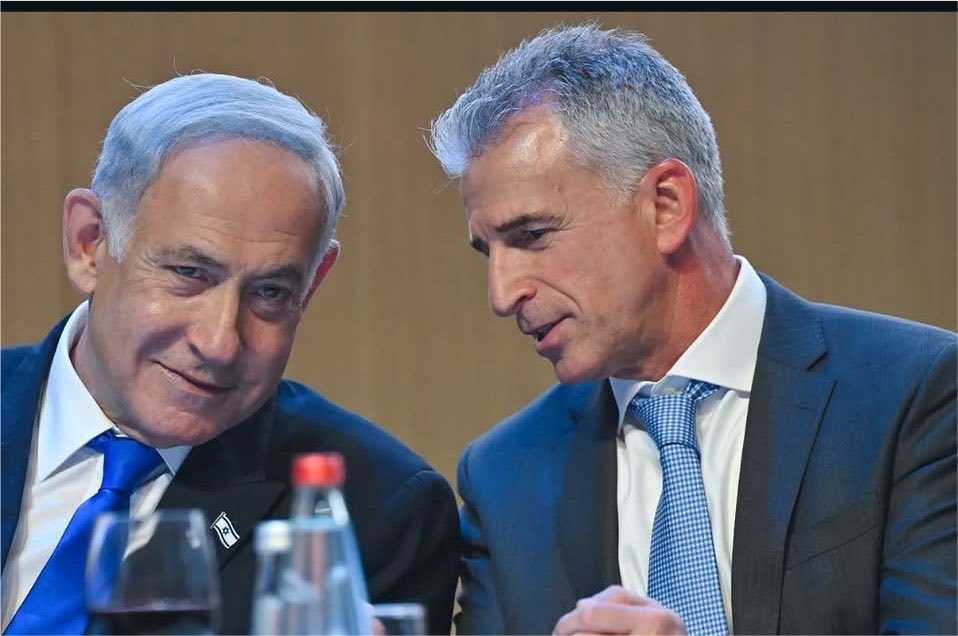

David Barnea, who served as director of Israel’s Mossad from June 2021 until the end of his term on June 2, 2026, was appointed Global President and Chairman of Ondas Defense Ltd. on August 3, 2026. Ondas Defense is the defense division of Nasdaq-listed Ondas Inc., a U.S. company focused on autonomous systems, drones, counter-unmanned aerial systems (counter-UAS), robotics, and AI-enabled multi-domain defense platforms.
Barnea succeeded Yossi Cohen and was replaced by Maj. Gen. Roman Gofman. During his tenure, Mossad operated amid the October 7, 2023, Hamas attacks, subsequent conflicts involving Hamas and Hezbollah, and operations related to Iran. Before leading the agency, Barnea spent decades in Mossad roles after earlier service in the IDF’s Sayeret Matkal and private-sector work in investment banking. He holds degrees from the New York Institute of Technology and Pace University.
Ondas announced that Barnea will support global expansion, strategic technology development, government and defense relationships, and integration of the company’s portfolio. His focus includes the Middle East, Europe, and Asia, regions with rising investment in autonomous defense, intelligence, surveillance, reconnaissance, resilient communications, precision-strike systems, and ground robotics. Company statements emphasize that the role is private-sector and separate from his prior government service, with no use or disclosure of classified information, and that Ondas has no direct relationship with the Mossad. The appointment followed Ondas’s acquisitions of various drone, intelligence, and autonomous systems firms.
The move has drawn commentary highlighting a perceived paradox in U.S. national security discourse. Officials and analysts in Washington routinely warn about intelligence and influence activities by China and Russia, citing risks of technology transfer, espionage, and strategic competition. Critics of the relative silence surrounding Barnea’s appointment argue that a former head of a foreign intelligence service—regardless of the country—joining a U.S. firm developing sensitive autonomous and AI defense technologies raises legitimate questions about access, networks, and potential influence. They contend that alliance status should not exempt scrutiny of revolving-door appointments involving top intelligence figures.
Supporters of the appointment and of the U.S.-Israel relationship counter that Israel is a close strategic partner with extensive intelligence-sharing ties, unlike adversarial powers. They note that former senior U.S. intelligence and defense officials frequently take roles in private industry, that Israeli technology has long contributed to U.S. defense capabilities, and that formal cooling-off and legal review processes apply. Ondas and related reporting have stressed compliance with relevant restrictions.
The episode underscores broader debates about double standards in how the United States evaluates risks from different foreign actors in the defense-tech sector. While Chinese and Russian activities are framed primarily through a lens of systemic rivalry and potential hostility, appointments involving Israeli officials are more often viewed through the prism of alliance cooperation and shared security interests. No public U.S. government statements have labeled the Barnea appointment itself a national security threat, in contrast to frequent high-level warnings about Beijing and Moscow.
As autonomous systems and AI-enabled platforms become central to modern warfare, appointments like this are likely to continue fueling discussion about consistency in risk assessment, transparency, and the boundaries between allied intelligence expertise and commercial defense work.