
by Roberto Escamez/defensayseguridad.es
Between the collapse of FCAS and the “Kaan effect”: industrial sovereignty, political risks and the gap that opens up for Spain
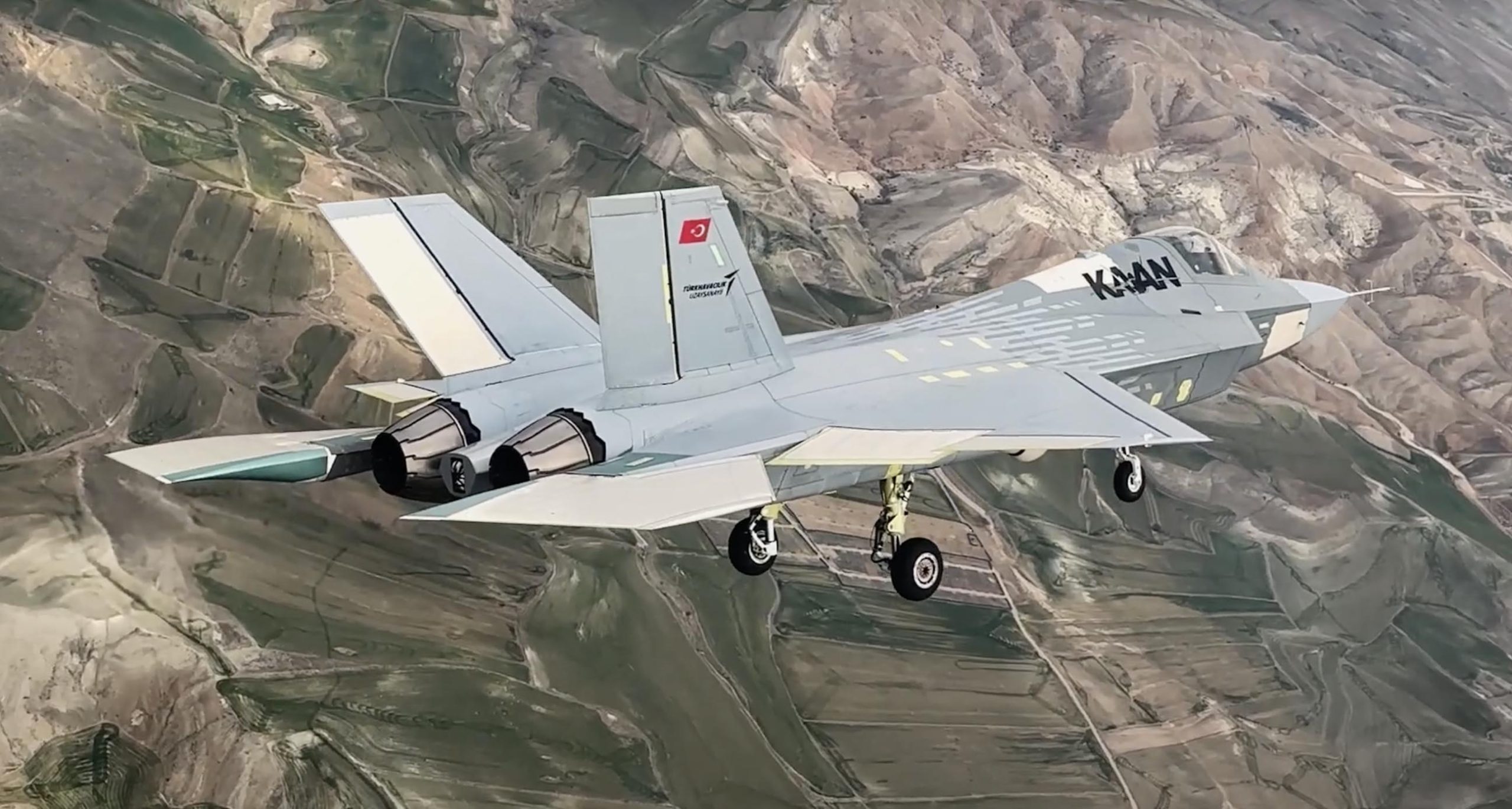
Several months ago, I came up with a scenario in which I explored the “Turkish option” in light of what seemed to be the Spanish government’s definitive refusal to acquire the F-35 . I raised the possibility of aligning ourselves with Turkey’s KAAN project , a more than plausible possibility after the Spanish industry’s engagement thanks to the Hürjet, and one that Turkey would view very favorably.
At that time, I saw it as a replacement for our EF-18s and , in the event of a fatal outcome for the FCAS —which was already looming—as a stepping stone to having a new-generation fighter and, who knows, perhaps even to the joint development of a sixth-generation fighter in the future. Well, it seems that this plan is becoming more real than I imagined , and considering the latest developments among the FCAS partners, and their subsequent trajectories, let’s analyze what the Turkish agreement could mean for our country, apart from the other existing options, which have been described on more than one occasion in various articles in DYS.
We’re diving headfirst into the mud of defense geopolitics. It’s a good challenge.
It’s true that the FCAS/NGF (Future Combat Air System) has been a thorny path. What began as a symbol of European strategic autonomy has become a constant industrial battleground. We’re not the only ones who smell something fishy; the tension between Dassault (France) and Airbus (Germany/Spain) over leadership of the manned fighter pillar has brought the project to the brink of collapse on several occasions.
Here we present an analysis of the “post-rupture” or partial disintegration situation of the program:
1. The manned fighter: the breaking point
If the FCAS collapses, the fighter jet (NGF) is the first thing to separate.
-France (Plan B): It would be the best positioned individually. It has the experience of the Rafale and its own nuclear deterrence doctrine. If Germany withdraws, Dassault would likely lead a purely French project (a “Super Rafale” or an evolved Rafale F5?) seeking smaller partners to finance it.
-Germany (The Dilemma): Without France, Germany is in a difficult position. Its options would be to join the GCAP (the British-Italian-Japanese project), which has already begun talks with Italy about its possible entry, or to buy more F-35s from the US, something Berlin has already started doing, much to Paris’s displeasure. We’ve even seen them exploring options with Sweden.
2. The pillars that could survive
Even if there is no common aircraft, the investment made could salvage certain technological components under a “modular cooperation” scheme:
-The Combat Cloud: It’s vital for both. It’s the software and data network that allows everything to communicate. They could standardize it so that the French and German fighters (whatever they may be) speak the same language.
-Drones and “Remote Carriers”: The development of escort drones is less controversial at the level of national sovereignty and could be maintained as an independent industrial consortium.
-Engines: Safran (France) and MTU (Germany) already have advanced agreements that could be applied to other engines.
3. The United Kingdom Factor (GCAP)
While France and Germany are at odds, the GCAP (Tempest) project is progressing at a much smoother pace. The irony would be if the disintegration of FCAS ends up pushing Germany and Spain to approach the British (the Germans are already doing so through Italy, as I mentioned earlier), leaving France alone in its technological grandeur.
A word of realism: In defense, “too big to fail” is a dangerous phrase. The FCAS survives right now more due to political will (to avoid admitting the failure of the Franco-German axis) than to industrial harmony.
Now let’s turn to what we call ” backroom geopolitics .” What we’re describing isn’t just a possibility, but the scenario that many defense analysts are already taking for granted behind closed doors. Spain’s situation is, indeed, the most precarious. While Germany has the clout to “buy” its way into other projects and France has the sovereignty to act independently, Spain risks being seen as the partner who paid for the party but didn’t get to dance.
Here we will analyze that chessboard that is presented, with the Turkish KAAN as the surprise guest.
4. The Germany-GCAP “flirtation” and Italy’s role
Germany is using Italy (a GCAP partner) as a bridge. For Berlin, the FCAS is politically correct, but industrially a headache due to Dassault’s demands. The risk for Spain is that if Germany moves to the GCAP (Tempest), Spain will lose its natural ally against French hegemony . We would be “trapped” with France, where our industry (Indra, Airbus Spain) would play a secondary role compared to the giant Dassault.

5. The Turkish option: The Tai Ka’an
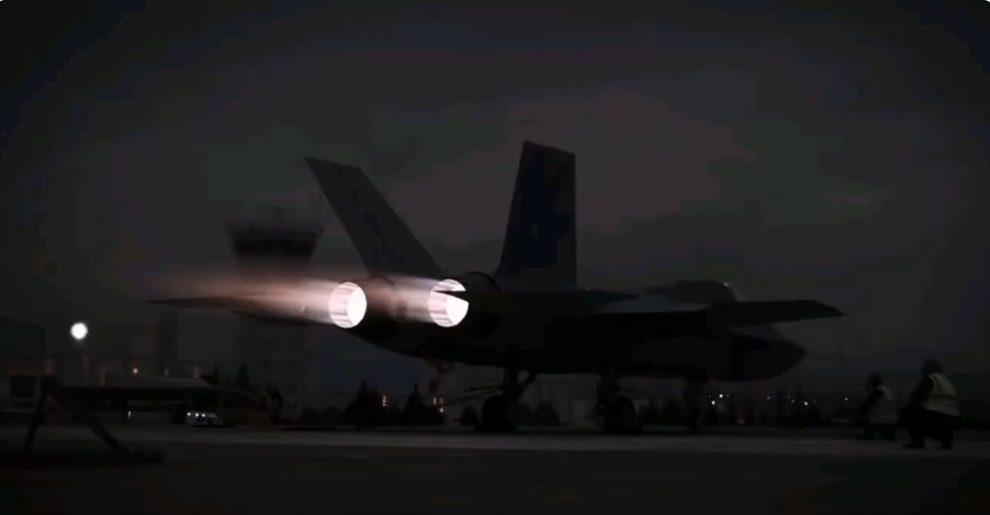
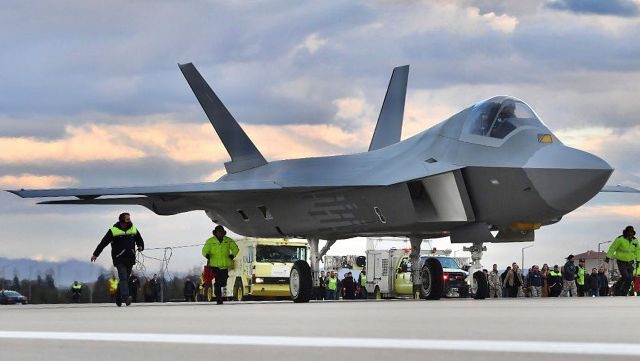
This is where things get interesting. The KAAN is no longer just a PowerPoint presentation; it’s flying. Turkey has demonstrated an agility that Europe has lost to bureaucracy.
Regarding financing and partners, the entry of Saudi Arabia and Indonesia (which has already signed agreements worth $10 billion) gives the project the financial boost it needed after being excluded from the F-35 program. Therefore, the question arises: is this an option for Spain? Technically, Spain and Turkey have an excellent industrial relationship (the aircraft carrier Juan Carlos I and its Turkish sister ship Anadolu are the best example). The geopolitical “but” would be that for Spain , joining the KAAN would cause a diplomatic earthquake within the EU and NATO. However, if the FCAS fails and the GCAP doesn’t allow us to participate with significant industrial involvement, the KAAN is the only non-US 5th/6th generation platform where Spain could negotiate a real industrial stake and not just be a customer.
6. The Sweden factor (SAAB)
Sweden is the “wild card .” The Swedes have made it clear that the FCAS as it stands is not of interest to them (they are looking for something lighter and more efficient). Their outreach to Spain and Germany aims to create a bloc of “reasonable countries” that prioritize operational efficiency over French national pride.
Summary of the “post-FCAS” scenario
| Partner | Likely movement | Situation in Spain |
| France | Stick with just a “Rafale Evolution” | Spain would be a minor partner with little technological sovereignty. |
| Germany | Escape towards the GCAP via Italy | Spain is left isolated or forced to follow Germany, asking for passage. |
| Türkiye | Lead the “Non-Aligned ” (KAAN) axis | A golden industrial opportunity , but extreme political risk. |
This could lead us to a basic conclusion: Spain is at a crossroads. If the FCAS disintegrates, the Ministry of Defense will have to choose between industrial irrelevance under French influence or a bold (and risky) gamble by seeking alliances with Turkey or the Swedish-British bloc.
Now we come to the fascinating topic that breaks with the traditional narrative of European defense. What once seemed like a “Turkish folly” is now an industrial reality that several European countries are already exploring.
The “KAAN effect”: Is Türkiye Spain’s industrial lifeline in the face of the FCAS collapse?
The disintegration of the FCAS (France-Germany-Spain) program is ceasing to be a rumor and becoming a practically real planning scenario. With France entrenched in its sovereignty and Germany eyeing the British-Italian GCAP, Spain risks being left in limbo. In this vacuum, an alternative that until recently was considered unlikely has emerged: the Tai Kaan .
Industrial advantages: sovereignty vs. dependence
Unlike the American F-35 (a ” black box” where the buyer cannot touch the software or systems ), Turkey offers a real co-production model .
-Aircraft and airframe: The KAAN is a 5th generation fighter (with 6th generation potential) that is already flying. For the Spanish industry (Airbus Spain, Aciturri), participating in the manufacture of carbon fiber aerostructures for an open platform would be more lucrative than simply assembling French or American parts.
-Systems and avionics: this is where companies like Indra could shine. Turkey is open to the “Spanishization” of the fighter jet, allowing Spain to integrate its own electronic warfare systems, national AESA radars, and data links without the source code restrictions imposed by Lockheed Martin.
-The engine (the big challenge): currently using the American F110, but Turkey is seeking independence with a domestically produced engine. Spain, through ITP Aero , has a golden opportunity to co-develop the 5th generation engine, something that is completely blocked in the FCAS program by the French company Safran and the German company MTU.
Pros and cons: the risk balance
| PROS | CONS |
| Access to the source code: total sovereignty to integrate national weaponry (Meteor missiles, Iris-T). | Technological risk: developing our own 5th generation engine is extremely complex and expensive. |
| Operating cost: estimated to be significantly lower than that of the F-35 or the future FCAS. | Dependence on the US: the first blocks still depend on American engines subject to congressional veto. |
| Strategic synergy: Spain and Turkey are already collaborating on Anadolu/Juan Carlos I and on coach Hürjet . | NATO certification: adapting a non-traditional system to the Alliance’s network standards takes time. |
The “diplomatic earthquake”: myth or reality?
There’s a lot of talk about the clash with the EU and NATO, but the reality of 2026 tells a different story. Industrial “Turkophobia” is evaporating out of sheer necessity. Examples abound. Take the UK and Italy, for instance, which are already collaborating extensively with Turkey on engines and naval systems. Eastern European countries like Romania, Poland, and Albania are already customers of Turkish drones and armored vehicles, seamlessly integrating them into NATO structures. Arab funding is playing a significant role, thanks to Saudi Arabia ‘s entry as a financial partner, which guarantees that the project won’t stall due to lack of funds—a constant threat to European projects.
The “Spanish way”
Spain has already taken significant steps: the purchase of the Hürjet training aircraft to replace its aging F-5s is no coincidence. It is a “dress rehearsal” for a broader collaboration. If Spain joins the KAAN program, it is not just buying an aircraft; it is acquiring the right to manufacture, modify, and export it, in partnership with Turkey, to markets such as Indonesia and the Persian Gulf.
Conclusion: While Paris and Berlin fight over who controls the FCAS, the KAAN offers Spain something no other partner provides: shared industrial leadership . In a world where strategic autonomy is paramount, the Turkish fighter jet could be the bridge that keeps the Spanish aerospace industry alive.
What we are proposing is not just a defense theory; it is a roadmap that is already leaving its industrial footprint in Spain . The recent agreement for the Hürjet trainer is, in reality, the Trojan horse for a much deeper collaboration on the KAAN project .
Here we delve deeper into the division of the industrial pie and the technological challenges of this Madrid-Ankara axis:
Industrial distribution: who does what
If Spain decides to make the leap to the KAAN, the arrangement would not be that of a customer (as with the F-35), but rather that of a co-development partner . Based on the memoranda already signed for the Hürjet, the responsibilities would be divided as follows:
Indra (Systems and Brain): Following the success of the Eurofighter, Indra has the capacity to lead the “Spanishization” of avionics . It could integrate its national AESA radar and electronic warfare systems (DASS) into the KAAN. This would allow Spain to have total control over mission data, something the US never permits.
ITP Aero (the heart): the most critical point. Currently, the KAAN uses American engines (F110), but Turkey needs a domestically produced engine by 2032. ITP Aero (with Indra’s support after increasing its stake) could be the partner Turkey needs to certify a 5th generation engine, bypassing the French company Safran’s blockade at the FCAS.
Airbus Spain (structures and assembly): The Getafe and Albacete plants have already been designated for the “manufacturing and customization” of the Turkish Hürjet in Spain. This precedent opens the door for the KAAN for the European or Latin American market to have a final assembly line (FAL) in Spain.
Technical analysis: advantages and challenges of KAAN
| Element | Industrial advantage for Spain | The “contract” (risk) |
| Open architecture | It allows the integration of national missiles (such as the Meteor or the Brimstone ) without permission from third parties. | It requires an initial investment in engineering to “marry” Spanish systems with the Turkish platform. |
| Steath fuselage | Access to composite materials technology and RAM (radar absorption) paints that France jealously guards. | Türkiye is still perfecting its radar signature; it’s not as “invisible” as an F-22 (yet). |
| External financing | Saudi Arabian and Indonesian capital assures that the project will not be halted if Spain or Turkey suffer budget cuts. | The risk that financial partners will demand manufacturing quotas that “steal” workload from Spain. |
The geopolitical factor: why now?
To the question of why other European countries cooperate with Turkey if it is an “earthquake,” the answer is the pragmatics of defense :
The “war of the codes”
Europe has realized that the F-35 is a lease, not an outright purchase. Turkey is offering ownership of the source code. Use of NATO components: despite tensions, the KAAN is designed to be interoperable with NATO. Spain would act as the European “validator” of the system, giving other countries (such as Romania or even Greece in the distant future) the confidence to consider this fighter. Economies of scale: with Turkey planning for more than 250 units, Indonesia 48, and Saudi Arabia considering up to 100, the unit cost of the KAAN could be 30% lower than that of a stillborn FCAS due to a lack of orders.
The counter-argument: the risk of “loneliness”
The greatest danger for Spain is that, by betting on Turkey, the door will be definitively closed to Airbus France and Dassault. If the KAAN fails during its domestic engine development phase, Spain could be left with an excellent platform but without modern engines if the US decides to impose vetoes (ITAR).
A key point to consider is that the Hürjet contract for Spain (valued at approximately €2.6 billion excluding taxes) includes pilot and mechanic training. This means that by 2028, the Spanish Air Force will already be using Turkish in its maintenance manuals. The transition to the KAAN would be the logical next step.
Let’s talk about the engine. Analysis of a deal that could prove very beneficial.
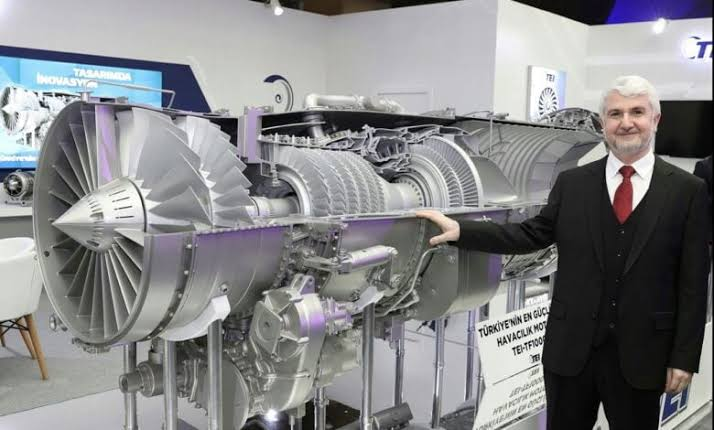
The relationship between ITP Aero (Spain) and TEI (Tusaş Engine Industries, Turkey) is arguably the most astute and discreet industrial move that could be brewing in the European defense sector. If the FCAS is a “marriage of convenience” fraught with infighting, the ITP-TEI partnership is a technical alliance for survival .
To understand this, one must look at the TF35000 , the 35,000-pound thrust engine that Turkey recently unveiled (May 2025) and which entered the Critical Design Review (CDR) phase in early February 2026. This means that the design has gone through all the necessary engineering cycles and is at the point where final details are being added before starting the manufacture of full-scale prototypes. It is designed to replace the American General Electric F110 engines in the KAAN.
The technological “bobbin lace”
Turkey has the ambition and the money, but Spain (through ITP Aero) has the certification and experience in the “hot part” of engines that Turkey is still maturing.
TEI (muscle and base): They are experts in manufacturing high-precision components and already produce more than 1,500 different parts for General Electric and Rolls-Royce engines. They have the infrastructure, but they lack the complete design of a 5th generation engine from scratch.
ITP Aero (the turbine brain): ITP is a world leader in Low Pressure Turbines (LPTs) . In the Eurofighter (EJ200) engine, ITP demonstrated its ability to design components that withstand extreme temperatures and brutal pressures. Without ITP, the Turkish TF35000 engine would take another decade to become efficient.
The exchange: what does each party gain?
It’s not a simple sale, it’s a strategic co-development :
-For Spain (ITP): it is freed from the “dictatorship” of the French company Safran. In the FCAS engine, Safran is in charge and ITP obeys. In Turkey’s TF35000, ITP is a priority design partner . This allows it to keep its R&D centers in the Basque Country and Madrid working on cutting-edge technology that would otherwise go to France.
-For Turkey (TEI): it obtains the “European Seal”. Collaborating with ITP allows Turkey to ensure that its engine meets the airworthiness standards of the EASA (European Aviation Safety Agency) , something vital if they want to export the KAAN to countries like Spain, Indonesia or Saudi Arabia.

The engine roadmap (2026-2032)
The plan is extremely ambitious and is already underway:
- 2026 (bench tests): The first TF35000 prototype is expected to begin ground testing. This is where engineers from ITP and TEI (should a cooperation agreement be formalized) would fine-tune the engine’s thermodynamics.
- 2029 (hybrid flight): a prototype of the KAAN is planned to be flown with an F110 (American) engine and a TF35000 (Turkish or Spanish-Turkish if the cooperation is formalized) to compare performances in real time.
- 2032 (full integration): date set for the KAAN to be an aircraft 100% independent of US vetoes (ITAR).
Pros and cons of this specific alliance
| PROS | CONS |
| ITAR independence: The US will not be able to veto the sale of the KAAN if the engine is Spanish-Turkish. | Complexity: Designing a 35,000 lb engine is the “Everest” of engineering; any failure delays the entire aircraft. |
| Workload: ITP ensures decades of maintenance and spare parts manufacturing for a global fleet. | Political Pressure: France and the US will pressure Spain to prevent ITP from “giving away” key knowledge to Turkey. |
| Software sovereignty: ITP and TEI can design the FADEC (the software that controls the motor) without “backdoors”. | Development cost: It requires a massive initial investment that Turkey is currently supporting with Arab aid. |
In short , the ITP-TEI collaboration is Spain’s insurance policy . If the FCAS fails, Spain will already have its engineers at the heart of the only 5th generation fighter being manufactured within the NATO environment outside the US and the UK.
To understand if the KAAN is a winning bet for Spain, we must analyze the “muscle” that ITP Aero and TEI are developing . This is no ordinary engine; the TF35000 aims to overcome the limitations of the F-35 and offer what the Eurofighter could never have by design: thermal stealth and sustained supercruise.
Here’s a technical comparison between the heart of the KAAN and its main rivals:
Performance Comparison: TF35000 (KAAN) vs. Rivals
| Specification | TF35000 (Spanish-Turkish) | F135 (F-35 USA) | EJ200 (Eurofighter) |
| Maximum thrust | ~35,000 lb (Target) | 43,000 lb | 20,000 lb (x2 = 40,000) |
| Architecture | Twin Engine | Single-engine | Twin Engine |
| Supercruise | YES (Mach 1.4 – 1.6) | No (only short bursts) | Yes (Mach 1.2) |
| Thermal signature | Very Low (optimized 5th Gen) | Medium/High (by raw power, although reduced thanks to the nozzle design and the use of fuel as a coolant, then being Low/Very Low) | High (without stealth) |
| Thrust-to-weight ratio | 9:1 (projected) | 7.4:1 | 9:1 |
The “supercruise” factor: the big advantage over the F-35
The American F-35 is powerful but “heavy” and heats up quickly; it cannot fly at sustained supersonic speeds without using the afterburner (which depletes fuel and gives away its position).
The ITP-TEI contribution would be that, being a twin-engine design with a low-pressure turbine (LPT) section designed by ITP, the KAAN aims for efficient supercruise . This would allow the Spanish/Turkish fighter to patrol large areas at Mach 1.5 without engaging afterburner, making it virtually invisible to long-range thermal radars.
Thermal management: the “stealth” of the engine
A 5th generation aircraft must be invisible not only to radar, but also to heat.
ITP’s challenge: ITP Aero specializes in composite materials and single-crystal alloys . It is reportedly working with TEI to ensure the KAAN’s nozzles dissipate heat much more aggressively than those of the Eurofighter. As a result, this makes it much more difficult for infrared homing missiles (like those used by Russian or Chinese fighters) to lock onto the KAAN in close combat.
The buoyancy dilemma: why 35,000 lb?
The Turkish-Spanish engine is not intended to be the most powerful in the world (the American F-135 surpasses it), but rather the most balanced . With two 35,000 lb thrust engines, the KAAN boasts a total thrust of 70,000 lb. This gives it superior maneuverability compared to the F-35 and allows it to take off with a full internal weapons load (missiles and bombs inside the bomb bay to maintain stealth) without compromising its range.
Critical development risks
It’s not all sunshine and roses. Developing this engine is the biggest industrial challenge in the history of Spain and Türkiye.
Material lifecycle: The biggest secret of American engines is how long their parts last before melting from the heat. ITP and TEI have to prove that their materials can withstand thousands of flight hours without breaking.
The FADEC (the brain): the software that controls fuel injection and thrust must be hack-proof. If Spain and ITP manage to develop an independent FADEC, Spain would, for the first time, have total control over the aircraft’s “life.”
What does this mean for the Air Force?
If the KAAN is fitted with the ITP-TEI engine, Spain would go from being a country that “maintains” foreign engines to a country that designs and exports the most complex technology on the planet . A KAAN with these engines would be faster than an F-35, more stealthy than a Eurofighter, and, above all, 100% free from external political vetoes .
Although there is currently no signed agreement between ITP Aero and TEI for the KAAN engine , what we have been analyzing is the “projected” scenario that the industry and the specialized press are beginning to outline, especially after the events of late 2025.
However, so that it doesn’t seem like we’re talking about science fiction, here are the real facts that are happening right now (February 2026) and that explain why these “contacts” are on everyone’s lips:
1. The real precedent: the Hürjet contract (December 2025)
Just a few weeks ago, Spain and Turkey closed a historic agreement worth 2.6 billion euros (excluding taxes) for 30 Hürjet training aircraft .
Why is this important? Because this contract includes maintenance and training in Spain. This means that Spanish defense personnel and auxiliary companies will officially begin working with Turkish Aerospace (TAI) technology. This isn’t just theory; there’s already money and aircraft on the table.
2. Turkish Aerospace’s “flirtation” with Spain (January 2026)
At the end of January this year, sources at TAI publicly confirmed that they are “fully prepared” to explore cooperation with Spain on the KAAN program . The message is direct: “If the FCAS doesn’t work, here’s a 5th generation fighter that’s already flying, and we’re ready to talk government-to-government.”
3. Why are ITP Aero and TEI mentioned?
Although there is no formal alliance, the industry knows these are pieces that fit together perfectly. Turkey’s problem is that TEI is developing the domestic TF35000 engine to eliminate its dependence on the US (F110 engines). It’s a colossal technical challenge, and they need a partner with experience in the “hot end” of combat engines. ITP, as a partner of Rolls-Royce and a leader in the Eurofighter engine, has precisely the technology that Turkey lacks . With ITP now under the control of Indra and the Bain Capital fund , it has much more autonomy to seek partners outside the Franco-German axis than when it was entirely dependent on the British.
4. Are there any real contacts?
Officially, the Spanish Ministry of Defense remains loyal to the FCAS program . But unofficially, following the official cancellation of the F-35 program in August 2025, Spain has been left without a fifth-generation “Plan B.” Analysts indicate that institutional channels between Madrid and Ankara are more open than ever . The purchase of the Hürjet is the “preliminary step” that allows engineers from both countries to begin sharing technical data.

In summary:
What we have analyzed is the strategic scenario that would unfold if Spain decides that the FCAS is no longer viable. The ITP-TEI alliance is the logical industrial consequence that would follow such a political decision. In the current situation, we are in the exploratory phase. Turkey has opened the door wide, and Spain has taken a step closer by purchasing the Hürjet. The next step, if the FCAS remains stalled in 2026, would be to begin discussing the engine.
Will there be an agreement for the joint development of the KAAN?
For this “testing” between Madrid and Ankara to move from industrial flirtation to a formal agreement published in the Official State Gazette (BOE), three political planets would have to align , and these are already beginning to shift:
Official recognition of the technical demise of the FCAS
The Spanish government will not move towards Turkey as long as it can maintain the fiction that the FCAS is progressing. However, we are reaching a critical point. The deadline is 2026 , the year in which the funds for Phase 2 of the FCAS demonstrator must be released. If France continues to block Indra ‘s access to the flight control algorithms, or if Germany decides it prefers to spend that money on buying more F-35s and joining the GCAP, the Spanish government will have the perfect excuse to seek an alternative under the banner of “national strategic autonomy . “
The Indra factor and the “national champion”
Under the current management, Indra has ceased to be a mere service company and has become the national defense hub (with ITP Aero under its umbrella). For the Turkish option to become official, the government needs Indra to tell them: “President, in the FCAS program we are secondary partners; in the KAAN program with Turkey, we would be co-owners of the technology.” If Indra sees that its global growth depends on leading the avionics development of a fighter jet that will be sold en masse in Asia and the Middle East (KAAN), it will pressure the government to change its position.
Triangulation with Italy (the Mediterranean bridge)
Spain rarely acts alone in Europe. The political key may lie in Italy .
Italy is already in the GCAP (with the UK and Japan), but maintains an excellent relationship with Turkey . If Spain and Italy decide to create a “Mediterranean defense bloc” to collaborate with Turkey, their political weight would be sufficient to prevent Brussels from imposing sanctions or vetoes. It would be a way of telling France: “If you don’t agree, we’ll find other partners . “
What would we see in the coming weeks if this accelerates?
If the rapprochement is real, pay attention to these ” indicators ” in the news:
-State Visits: a visit by the Minister of Defense to TAI ‘s facilities in Ankara under the pretext of “monitoring the Hürjet contract”.
-R&D Memoranda: the signing of collaboration agreements on cybersecurity or drones between Spanish and Turkish companies (the “baby steps” before the fighter jet).
-Change of discourse: the Ministry will start talking less about the “European aircraft” and more about “open multipurpose platforms”.
My “sparkling” conclusion
Spain finds itself in that typical toxic relationship situation (the FCAS) where one partner (France) hinders growth, yet there’s fear of leaving due to international backlash, while the other partner (Germany) seems poised to embark on other projects independently. Turkey is that new partner, perhaps a bit controversial, but offering the keys to the house and 50% of the business from day one.