
by Prof. Oğuzhan Bilgin
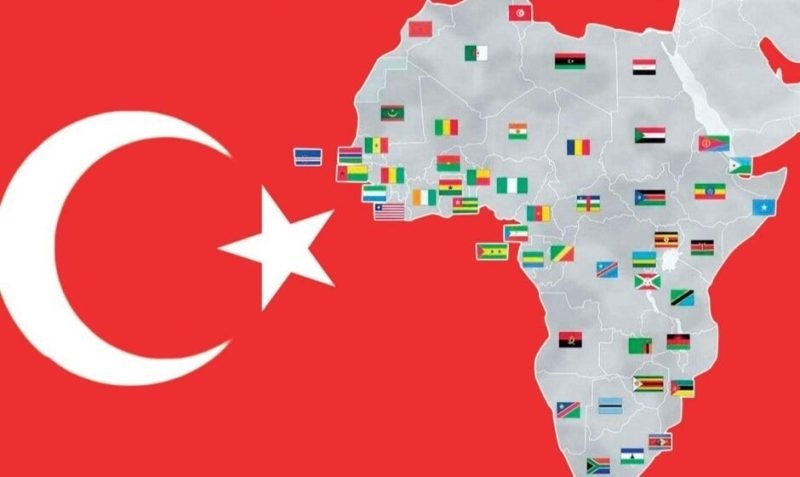
One of the most striking geopolitical and historical-political power shifts in recent years has been Turkey’s strong and renewed presence in Africa, after a century-long absence. This has been achieved through a multi-layered strategic move, with increasing diplomatic representation, growing trade volume, and security, energy, and political collaborations.
Libya is one of the countries at the forefront of this development. Turkey’s steps in Libya after 2019 not only changed the course of the civil war but also created a new balance in Eastern Mediterranean geopolitics. With the maritime jurisdiction agreement, Turkey rendered invalid the energy and security alliances of seven countries aiming to exclude it in the Eastern Mediterranean and became one of the central actors in the regional equation. This move went down in history as a significant military success and a strategic game-changer that reshaped energy geopolitics.
In the Horn of Africa, Turkey has entered a different strategic phase: providing security, determining politics, and establishing stability. The maritime security and defense cooperation agreements signed with Somalia not only strengthen the security of Somali waters but also create new opportunities for Turkey in terms of protecting and operating energy resources. In the face of Israel’s project to divide Somalia by recognizing Somaliland as a state and trying to gain power in the Red Sea-Indian Ocean geopolitics, Turkey is implementing a Red Sea-Indian Ocean strategy that both blocks Israeli plans and provides significant opportunities in regional energy geopolitics.
Turkey’s policy during the crisis in Sudan is also noteworthy. While Ankara works to prevent Israel and the UAE’s genocide through humanitarian aid and diplomatic initiatives, it also actively participates in international efforts to prevent the spread of instability in the region.
The diplomatic contacts carried out in the Ethiopia-Tigray crisis and the Somalia-Ethiopia tension reinforce Turkey’s identity as a “mediating power.” Being one of the rare actors that can talk to all parties simultaneously puts Turkey in a position of a stabilizing center in the region. This role provides Turkey with a significant strategic advantage in the Horn of Africa, where new power balances are being formed.
During this process, Turkey’s increasing number of embassies across Africa, rapidly growing trade volume, and defense industry exports strengthen the institutional infrastructure of its geopolitical effectiveness on the ground. Defense industry technologies, infrastructure projects, and energy collaborations turn Turkey’s presence on the continent into a permanent strategic network rather than a temporary one.
Turkey’s return to Africa can be explained by the concept of “history-politics,” which I try to incorporate into my literature: This refers to the process of rebuilding historical connections that were broken after the empire, with modern geopolitical tools. This concept expresses not only remembering historical heritage but also functionally reusing the geographically historically influential areas with current geopolitical tools.
Today, Turkey is not only a country that intervenes in regional crises from Libya to Somalia, Sudan to Ethiopia, and SAHEL countries but also the center of a new strategic axis connecting the Eastern Mediterranean, the Red Sea, and the Indian Ocean. Turkey positions itself as a security provider, economic partner, and diplomatic mediator on this axis, and it becomes one of the actors that have a say in Africa’s future in a period where global power competition is hardening.
Source: https://m.aksam.com.tr/yazarlar/oguzhan-bilgin/turkiyenin-afrikaya-donusu/haber-1643629