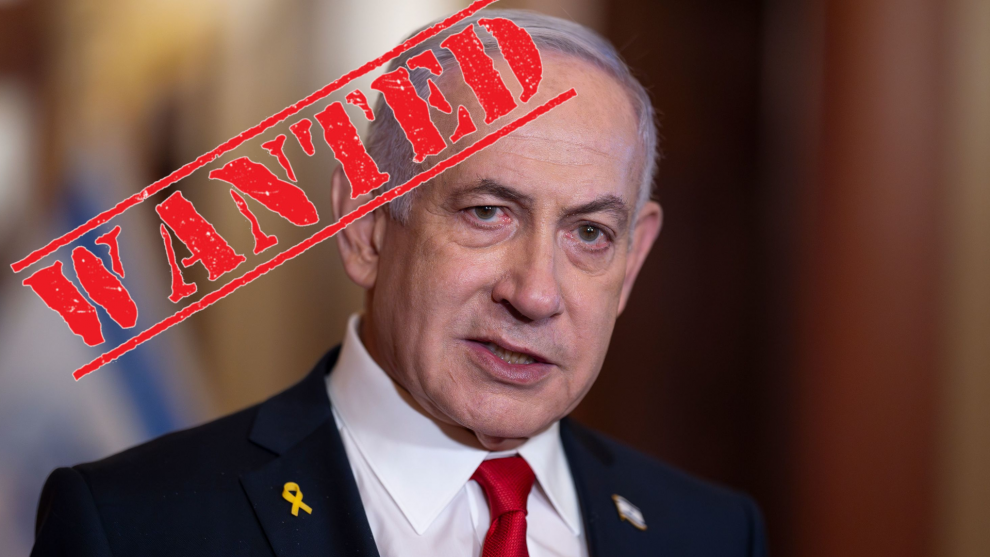

Türkiye’s issuance of an arrest warrant for Israeli Prime Minister Benjamin Netanyahu and 36 others on genocide charges marks a bold geopolitical shift, signaling Ankara’s transition toward an assertive justice-based foreign policy challenging Western dominance.
The Istanbul Chief Public Prosecutor’s Office has issued arrest warrants for Israeli Prime Minister Benjamin Netanyahu and 36 other Israeli officials on charges of genocide and crimes against humanity in Gaza. This unprecedented move not only positions Türkiye as the first state to judicially confront Israel’s wartime conduct but also represents a paradigm shift in its geopolitical strategy—from transactional diplomacy to a justice-centered foreign policy framework. By leveraging universal jurisdiction, Türkiye asserts moral leadership in the Global South and challenges the selective application of international law by Western powers. The decision is expected to reshape Ankara’s regional influence, aligning it more closely with humanitarian and multipolar world narratives.
In November 2025, the Istanbul Chief Public Prosecutor’s Office issued arrest warrants for Israeli Prime Minister Benjamin Netanyahu and 36 other Israeli political and military figures on charges of genocide. This unprecedented move in the history of the Republic of Türkiye signifies not only a legal action but also the projection of sovereign legal authority into the realm of international politics. This paper interprets the decision as a signal of Türkiye’s partial departure from the Western-centered security axis, and as the emergence of a new geopolitical paradigm rooted in what can be termed “moral realism.”
Ankara is no longer relying solely on diplomatic condemnation but is now pursuing a strategy of national judicial activism to assert moral and legal authority in global affairs.
In international legal history, a state initiating judicial action against the leader of another sovereign country on charges of genocide marks an expanded conception of sovereignty.
Türkiye’s move in 2025 crosses that line.
The arrest warrants issued by the Istanbul Chief Prosecutor’s Office constitute not merely a legal proceeding but a symbolic challenge to the balance of global power.
Through this act, Ankara seeks to develop an “Ankara-centered justice paradigm” as an alternative to the selective justice mechanisms of Western jurisprudence.
Universal jurisdiction allows states to prosecute international crimes—such as genocide, crimes against humanity, and war crimes—regardless of where they were committed or the nationality of the perpetrator.
Article 13 of the Turkish Penal Code grants domestic courts the authority to try such offenses irrespective of the locus delicti or the perpetrator’s nationality.
Accordingly, the Prosecutor’s action is legally permissible under Turkish law, though politically audacious in the international context.
While the International Criminal Court (ICC) has not yet issued an arrest warrant for Netanyahu, Türkiye has acted unilaterally to fill this gap.
In doing so, Ankara demonstrates a form of legal activism that seeks to compensate for the inertia or selectivity of Western-centered legal institutions.
This decision is unprecedented for a NATO member state to take judicial action against the head of government of one of the United States’ closest allies.
It signals a transition in Ankara’s foreign policy—from classical “balancing diplomacy” toward what may be described as geopolitical autonomy.
Several dynamics underpin this shift:
- The post-2016 crisis of confidence between Türkiye and the Western alliance,
- Growing domestic outrage over civilian casualties in Gaza, and
- Ankara’s aspiration to strengthen its moral and political leadership in the Middle East.
By doing so, Türkiye is challenging Western hypocrisy in the administration of justice and positioning itself as an alternative source of moral legitimacy for the Global South.
Türkiye’s new approach represents a synthesis of power politics and moral responsibility, evolving into a distinctive model of foreign policy—Moral Realism.
This paradigm can be understood through three interrelated principles:
- Legal Sovereignty: Utilizing domestic judicial mechanisms as tools of international influence.
- Normative Power: Recasting Türkiye as a producer of moral and legal norms, not merely a consumer of Western norms.
- Ethical Multipolarity: Advocating a new world order grounded not in Western-defined institutions but in the pursuit of “just global governance.”
Through this lens, Türkiye emerges as a regional conscience state, seeking to fill the moral vacuum left by Western legal institutions.
Public sentiment in Türkiye has long been highly sensitive to the Palestinian issue.
Domestically, the decision yields several effects:
- It strengthens the government’s moral legitimacy and its image as the “guardian of justice.”
- It generates broad societal consensus, even among opposition circles.
- Yet, it carries economic risks, given Türkiye’s continued dependence on Western markets and capital flows.
Thus, the sustainability of this new paradigm depends on whether moral motivation can be supported by economic autonomy.
In the short term, strong diplomatic backlash from Israel and the United States is expected.
However, as European public opinion grows increasingly critical of Israel’s actions in Gaza, Türkiye’s decision may become the catalyst for a renewed global justice discourse.
The case will likely reopen academic and political debates on the capacity of national jurisdictions to demand accountability in international law.
The arrest warrants issued by the Istanbul Chief Prosecutor’s Office represent a turning point in Türkiye’s geopolitical self-assertion.
This is not simply a legal decision but a strategic declaration of normative sovereignty.
If sustained, it may redefine Türkiye’s place in 21st-century geopolitics as follows:
“Türkiye: a state born as a realist actor, redefined as a moral power.”
References
- TRT World. (2025, November 6). Türkiye issues arrest warrant for Israeli PM Netanyahu, others over Gaza genocide charges.
- Daily Sabah. (2025, November 6). Türkiye issues arrest warrants for Netanyahu, 36 others over genocide.
- Associated Press. (2024–2025). ICC weighs evidence on Gaza war crimes allegations.
- Al Jazeera. (2025). ICC prosecutor seeks arrest warrants for Israeli and Hamas leaders.
- Anadolu Agency. (2025). Türkiye’s response to ICC and Gaza investigations.
- The Guardian. (2025). Israel faces international legal scrutiny over Gaza conduct.
- The New Arab. (2025, November). Regional reactions to Türkiye’s arrest warrants.
- Rome Statute of the International Criminal Court (1998), Articles 6–13.
- Turkish Penal Code, Article 13 — Universal Jurisdiction and International Crimes.
- International Court of Justice. (2024–2025). South Africa v. Israel (Provisional Measures).