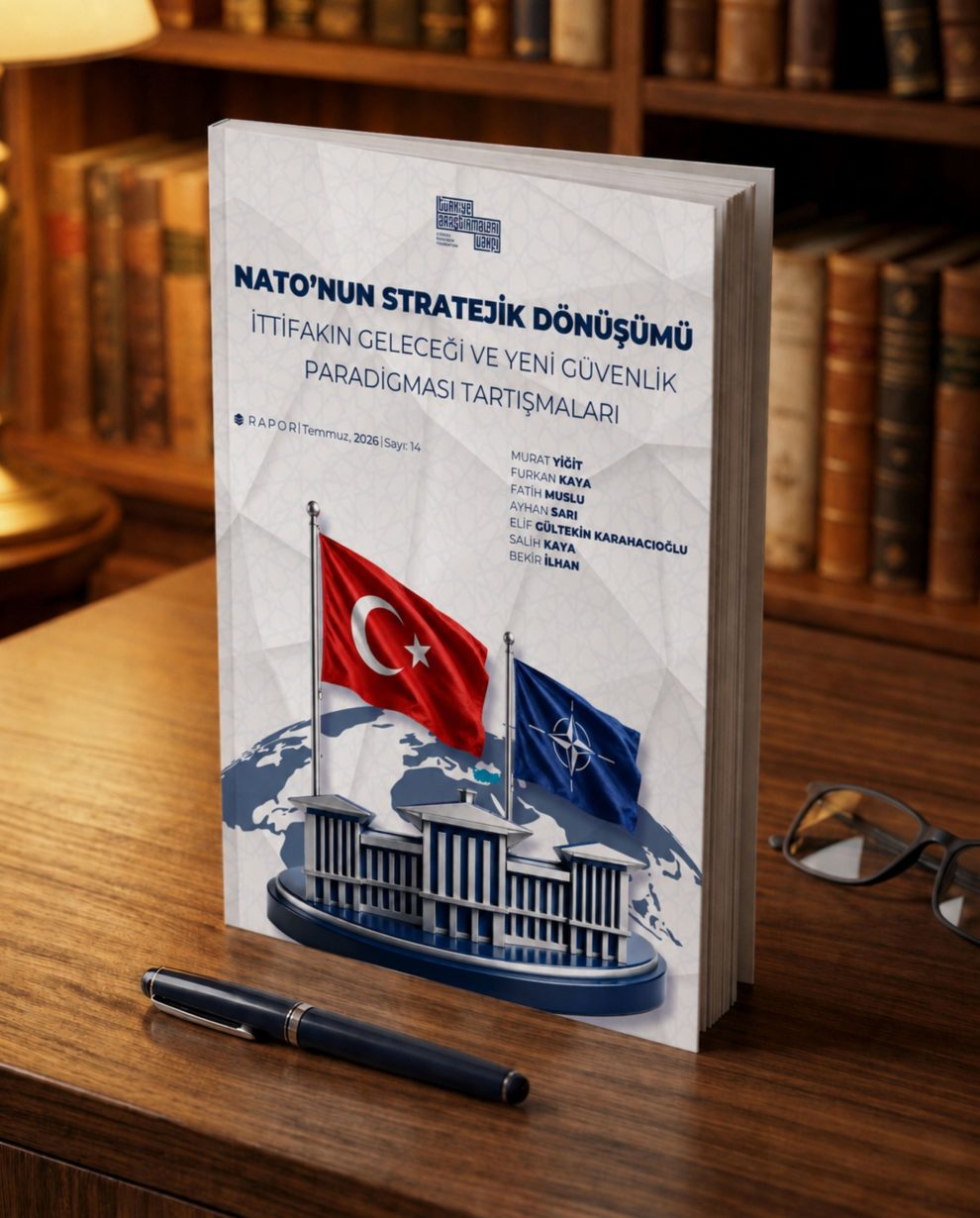

A new report from Turkey’s National Intelligence Academy (MİA) argues that the NATO Leaders’ Summit opening in Ankara on July 7 will mark a strategic turning point for the alliance, framing the gathering as far more consequential than a routine review of ongoing crises.
The report, titled “Ankara Summit, NATO 3.0 Debates, and Turkey,” contends that the international security paradigm has moved decisively away from the relatively predictable post-Cold War order into a multi-axis, hybrid environment marked by high uncertainty. It points to intensifying great-power competition, China’s technological and economic rise, and the military and geopolitical shocks from the Russia-Ukraine war and the US/Israel-Iran conflict as forces that have fundamentally reshaped how security is understood. The central conclusion is that security can no longer be defined through military capacity and border defense alone.
The authors trace this evolution through what they call three phases of the alliance’s development, culminating in an emerging “NATO 3.0” era. Where the Cold War model rested on a clear threat perception and defined front lines, and the subsequent period centered on crisis management and out-of-area operations, the current phase treats cyberspace, outer space, the electromagnetic spectrum, and even the cognitive domain as integral parts of modern security architecture. Collective deterrence and resilience, the report says, now span defense industry capacity, cybersecurity, air and missile defense, critical infrastructure, artificial intelligence, and societal resilience as a single integrated framework.
Strategic autonomy emerges as the central fault line in these NATO 3.0 debates. The report argues that the alliance’s future effectiveness depends on how well it can fold allies’ pursuit of strategic autonomy into NATO’s collective deterrence, resilience, and defense capacity, rather than treating it as a threat to unity. A related theme is a shift long discussed within NATO from “burden sharing” toward what the report calls “burden shifting.”
On Turkey specifically, the report describes Ankara as an exceptional example of the ally profile NATO 3.0 requires: a country capable of producing its own security, building competence in critical technologies, countering hybrid threats, and converting strategic autonomy into alliance capacity. It cites Turkey’s position as home to NATO’s second-largest army, its hosting of NATO’s Land Command, the Kürecik early-warning radar, and its geopolitical location straddling both the alliance’s eastern and southern flanks. Through the Black Sea security balance, the Russia-Ukraine dynamic, and the Montreux regime, Turkey engages the eastern flank, the report notes, while risks from Syria, Iraq, Libya, the Eastern Mediterranean, and the Gulf connect it to the southern flank simultaneously — what the authors describe as a concrete expression of NATO’s 360-degree security concept.
In a foreword to the report, MİA President Talha Köse said the Ankara Summit constitutes a strategic platform that will reveal what kind of alliance NATO wants to be in this new security era, adding that NATO 3.0’s success hinges on managing strategic autonomy as a factor that reinforces, rather than undermines, collective deterrence.
The report identifies defense spending, production capacity, the US-European division of labor, security of the eastern and southern flanks, artificial intelligence, cybersecurity, space security, and next-generation defense technologies as the core topics expected to shape the NATO 3.0 discussions in Ankara.