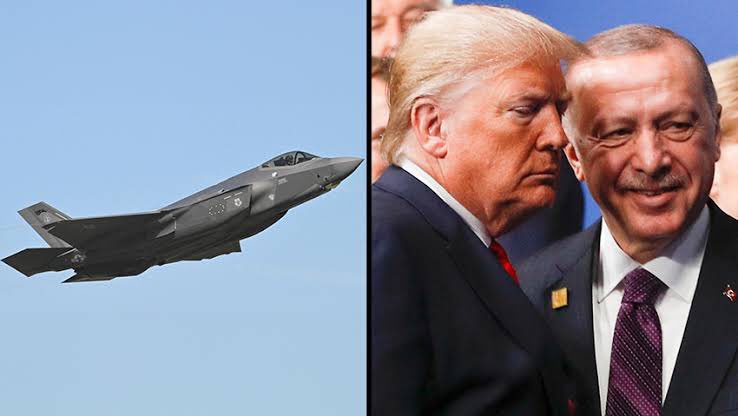

ANKARA — Türkiye secured a string of strategic and commercial victories on the opening day of the NATO Leaders’ Summit in Ankara, as President Donald Trump announced the United States would lift sanctions imposed over Ankara’s purchase of Russian S-400 air defense systems and signaled openness to restoring Turkey’s place in the F-35 fighter jet program. Speaking alongside President Recep Tayyip Erdoğan at the Beştepe Presidential Complex, Trump said Washington would remove sanctions imposed under the Countering America’s Adversaries Through Sanctions Act, calling Turkey a more loyal partner than several traditional US allies. Erdoğan said he had been promised five jets and that talks on F-35 access, KAAN engines and broader defense cooperation would continue through the two-day summit. The sanctions relief follows Trump’s notification to Congress weeks earlier of a $700 million sale of General Electric F110 engines to power Turkey’s indigenous KAAN fighter, a deal advanced despite objections from lawmakers.
Turkey is also making headway on European defense cooperation independent of Washington. Erdoğan is pursuing progress with France and Italy on acquiring SAMP/T air and missile defense systems, part of a broader push to deepen defense industrial ties with European partners. Britain is already cooperating with Turkey on the KAAN program, and Ankara has built closer defense-industrial relationships with Spain, Romania, Poland and Italy in recent years. Turkish drone maker Baykar has acquired Italy’s Piaggio Aerospace and partnered with Leonardo, while Turkish Aerospace Industries has expanded its European footprint.
The summit’s Defence Industry Forum, attended by roughly 3,500 companies, gave Turkey a platform to showcase its defense sector, which Ankara’s defense procurement chief Haluk Görgün has said it wants recognized as a strategic partner rather than merely a supplier. Turkish officials continue to press for inclusion in the European Union’s 150-billion-euro Security Action for Europe program, from which Turkey remains excluded due to disputes involving Greece, Cyprus and France, even as officials in Brussels and allied capitals acknowledge the anomaly of leaving out a NATO ally with Europe’s most substantial defense manufacturing base outside the United States.
Turkey’s contributions to NATO’s broader push to rebuild collective defense capacity were also highlighted. NATO Secretary General Mark Rutte said the alliance would announce tens of billions of dollars in new defense contracts at the summit, part of an effort to scale up weapons production as the United States reduces its military footprint in Europe. Turkish officials have positioned the country’s defense industry, including drones, munitions, armored vehicles and naval systems, as central to filling emerging gaps in NATO’s supply chain. Ankara has also proposed establishing a multinational corps under Turkish command in Adana to respond to crises on NATO’s southern flank, and has set up a Maritime Component Command in Istanbul to oversee naval dimensions of prospective Black Sea security arrangements.
Trump’s warm reception in Ankara, including a state arrival ceremony with military honor guards and flypasts, underscored the extent to which Turkey has positioned itself as Washington’s preferred interlocutor within NATO amid friction between the US president and several European allies over defense spending and support during the Iran war. Not all reaction has been favorable: Israeli Prime Minister Benjamin Netanyahu publicly objected to a potential F-35 sale to Turkey, and legal hurdles remain before any reinstatement to the program could take effect regardless of the sanctions relief. The two-day summit continues Wednesday, with NATO leaders expected to address Ukraine funding commitments, defense spending targets and burden-sharing arrangements between the United States and European allies.