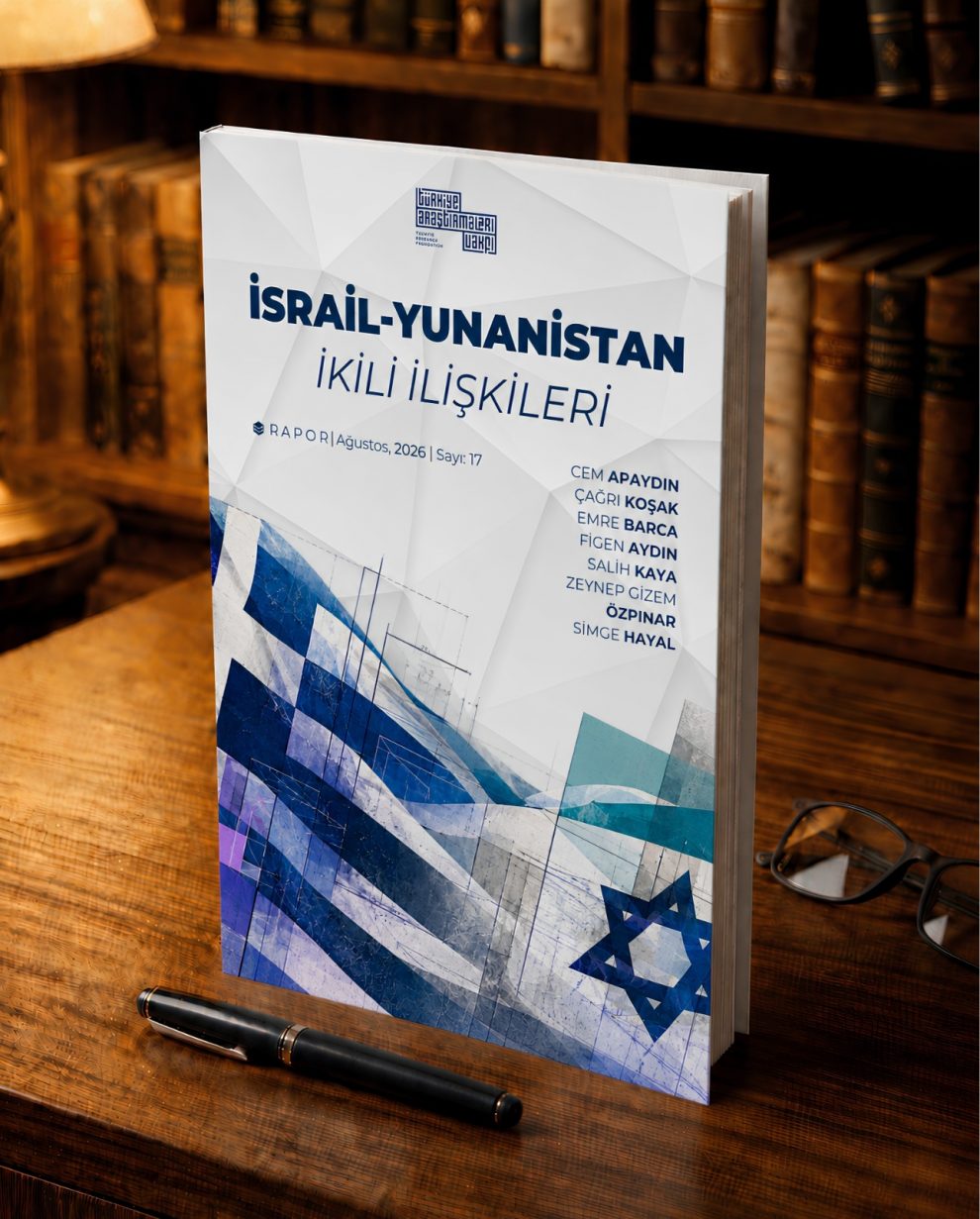

The Türkiye Araştırmaları Vakfı (TAV), an Istanbul-based foreign policy think tank, released a new report on August 21 examining the deepening strategic partnership between Israel and Greece, arguing that a relationship which remained distant for decades has evolved into an institutionalized alliance built substantially around shared threat perceptions of Türkiye.
The report, titled “İsrail-Yunanistan İkili İlişkileri” (Israel-Greece Bilateral Relations), was edited by Gürkan Demir and written by a team of seven researchers, including Dr. Cem Apaydın, Dr. Çağrı Koşak, Dr. Emre Barca, Dr. Figen Aydın, Salih Kaya, Zeynep Gizem Özpınar and Simge Hayal. It runs to more than 80 pages and covers the historical development of Israeli-Greek ties, defense industry cooperation, trade and economic relations, energy geopolitics, mutual societal perceptions, and cultural and academic diplomacy.
From Cold Distance to Strategic Partnership
The report traces the relationship’s origins to a “paradoxical coldness” that persisted for roughly four decades. Greece was the only European country with a Christian majority to vote against the 1947 UN Partition Plan for Palestine, and did not grant Israel full diplomatic recognition until 1990, making Athens the last European Community member to do so. Concerns about protecting the large Greek diaspora in Egypt and the Levant, alongside a need to preserve Arab bloc support at the UN on the Cyprus question, kept Athens at arm’s length from Tel Aviv through the Cold War, a distance that deepened further under Andreas Papandreou’s PASOK government in the 1980s.
The report identifies 2010 as the decisive turning point. The Mavi Marmara raid in May of that year, in which Israeli commandos killed ten Turkish citizens aboard a Gaza-bound aid flotilla, effectively ended the 1996 Türkiye-Israel strategic partnership and pushed Israel to seek alternative regional allies. The near-simultaneous discovery of the Tamar and Leviathan gas fields gave that reorientation a concrete economic foundation. Reciprocal visits between Greek Prime Minister Georgios Papandreou and Israeli Prime Minister Benjamin Netanyahu in 2010 formalized the shift, and a 2012 Defense Cooperation Agreement placed it on an institutional footing.
Defense Industry Integration
According to the report, defense ties have moved well beyond symbolic exercises. The “Noble Dina” naval drills, running since 2012 with US Sixth Fleet observers, anchor the military relationship. Greece has acquired Israeli-made Heron drones, and Israeli firms Elbit Systems and Rafael have supported Greek F-16 modernization. The centerpiece is a $1.65 billion, 22-year contract signed in 2021 under which Elbit Systems built an International Flight Training Center at Kalamata Air Base, giving Israel a long-term institutional presence at a Greek military facility. Athens has also signed a $370 million deal for Rafael’s Spike NLOS missiles and, under the “Achilles Shield” air defense modernization program announced in 2025, is set to acquire Spyder and Barak MX systems along with the David’s Sling long-range interceptor, in purchases the report values at roughly $3.5 billion. Israel Aerospace Industries has taken a majority stake in Greek defense electronics firm Intracom Defense, and Israel’s SK Group now fully owns Greek armored vehicle maker ELVO.
Trade, Energy and the Türkiye Factor
Bilateral trade grew from $528 million in 2010 to $1.4 billion in 2024, the report says, with Greece running a widening surplus. It attributes part of the 2024 jump to Türkiye’s trade restrictions on Israel, which opened space for Greek cement, steel and mineral fuel exports to fill gaps left by Turkish suppliers. On energy, the report frames the EastMed pipeline, the Great Sea Interconnector and the Greece-Cyprus-Israel trilateral framework, now extended to a “3+1” mechanism with US backing, as efforts to route East Mediterranean gas and electricity to Europe while bypassing Türkiye. It argues these efforts have repeatedly run up against the practical limits imposed by Türkiye’s Blue Homeland doctrine and the 2019 Türkiye-Libya maritime boundary agreement, concluding that an exclusionary regional bloc has proven difficult to fully operationalize.
A Fragile Social Foundation
The report’s chapter on mutual public perception describes a widening gap between government policy and public sentiment in Greece since October 7, 2023. It cites polling showing Greek public opinion moving toward sympathy for Palestinians even as the government maintained defense and economic cooperation with Israel, including instances of dockworkers refusing to handle Israel-bound cargo and protests blocking Israeli cruise ships from Greek ports. Israeli public opinion, by contrast, is described as continuing to view Greece as a reliable “natural ally.” The report suggests that this asymmetry represents a structural vulnerability in the partnership, alongside Greece’s chronic defense budget constraints and the volatility of Türkiye-Israel relations, which briefly warmed after a 2022 Erdoğan-Lapid phone call before cooling again.
Türkiye-Centered Conclusion
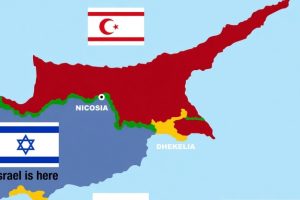
The report’s authors frame the entire study from what they describe as a Türkiye-centered perspective, arguing that the Israel-Greece-Southern Cyprus axis aims to economically, militarily and diplomatically encircle Türkiye and the Turkish Republic of Northern Cyprus. They conclude, however, that Türkiye’s geographic position, military capacity and energy transit potential make such an exclusionary architecture unsustainable over the long term, and argue that a durable Eastern Mediterranean security and energy order will ultimately require a framework that includes rather than excludes Ankara.