
Gleb Tsipursky*
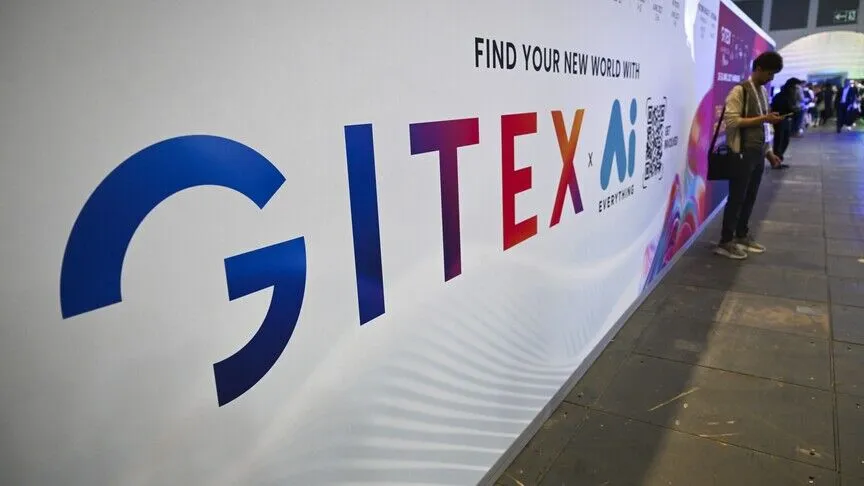
Türkiye has set ambitious targets for building an AI-ready economy. Its 2026–2030 AI Action Plan aims to train 10,000 AI specialists, 100,000 AI application professionals, and five million AI-literate people by 2028. GITEX AI Türkiye, scheduled for September 9 and 10 in Istanbul, will bring global technology companies, startups, investors, academics, and government officials together around that agenda.
Those are useful investments. Yet the hardest part of AI adoption begins after a course, workshop, or certification ends.
Knowing how to prompt a system, build an agent, or automate a task in a controlled training environment does not prove that the skill will produce reliable value inside an actual organization. Real work contains incomplete data, changing priorities, customer exceptions, security constraints, legacy systems, and managers with different tolerance for risk. Skills that look strong in a workshop can disappear when those conditions arrive.
Türkiye should therefore add a practice-to-production test to its AI talent agenda.
The test is simple. After an employee or team completes AI training, give them one bounded real workflow for 30 days. Define the business outcome before they begin. Then measure whether they can operate the workflow reliably, recognize when human judgment must take over, correct failures, transfer the process to another person, and produce a result that matters to the organization.
This changes what employers count as successful AI development.
Course completion becomes the starting point rather than the finish line. The real evidence comes from questions such as these: Did the workflow save net time after checking and correction? Did it improve a customer, revenue, quality, or operating metric? How often did people have to override the system? Could another employee reproduce the process without constant help from the original builder? Did the organization learn anything that should change its data, permissions, or process design?
That approach fits Türkiye’s broader business challenge. At the July 29 TOBB Business World Artificial Intelligence Summit, business leaders emphasized the need to turn AI into competitive advantage and pointed to the relatively small role that domestic startups still play in adoption. The next stage requires more than awareness. Companies need employees who can convert tools into repeatable operating capability.
A practice-to-production test helps in four ways.
First, it makes training accountable to business outcomes. Leaders can stop treating attendance or tool usage as evidence of value.
Second, it reveals hidden costs. A workflow that appears to save five hours may save far less once verification, corrections, exception handling, and management attention are counted.
Third, it exposes capability gaps early. If employees cannot explain why the workflow failed, identify the right escalation point, or recover when an integration changes, the organization knows what the next training cycle should address.
Fourth, it creates transferability. AI adoption becomes fragile when one enthusiastic employee builds a useful workflow that nobody else understands. Requiring another person to reproduce the process turns individual experimentation into organizational capability.
This matters especially as AI agents become more common. An employee using a chatbot remains visibly involved in each step. An agent can act across several steps before a person sees the result. That raises the value of judgment, exception handling, and process ownership. Training people to use the tool without training them to supervise the workflow leaves a serious gap.
Türkiye’s scale targets are important because AI literacy has to spread broadly. But scale alone can create a misleading picture of readiness. Five million people who have encountered AI are not the same as five million people who can use it responsibly and productively in real work.
The strongest measure of an AI talent strategy is what happens after the training ends.
For every major training initiative, employers and public programs should ask participants to prove one workflow in practice, document the exceptions, measure the net result, and show that somebody else can take it over. That evidence would give Türkiye a much clearer view of where its AI workforce is becoming genuinely capable and where more support remains necessary.
The country is right to invest in AI literacy and professional skills. The next step is to make those skills earn their way into production.
—
*Gleb Tsipursky, PhD, a behavioral scientist, CEO of Disaster Avoidance Experts, and author of The Psychology of AI Adoption at Work: From Resistance to Results (Georgetown University Press, 2026). https://disasteravoidanceexperts.com/aibook