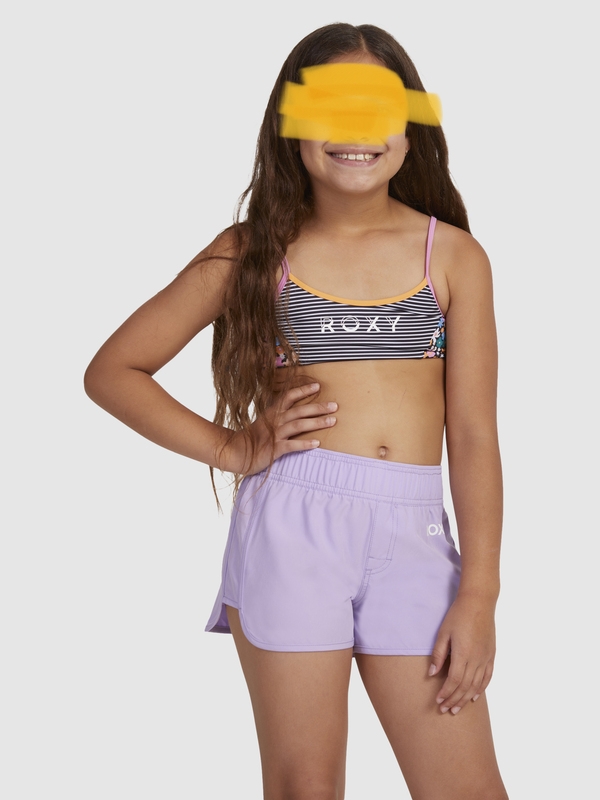

A growing number of mothers across the United States, United Kingdom, and Australia are calling out major retailers for cutting shorts, leggings, and tops marketed to young girls increasingly short and narrow, often years before those same cuts would be considered typical for teenagers.
The complaints follow a consistent pattern. A mother shops for basics, athletic shorts, summer clothes, school uniforms, and finds that girls’ sections offer little beyond snug-fitting, high-cut items, while boys’ sections in the same store carry looser, longer options in similar price ranges. Retailers including Target, Walmart, and Kmart have faced viral backlash on social media over the disparity, with some parents resorting to buying from the boys’ department just to find coverage they consider appropriate for a child.
Several reasons explain why child development specialists and parenting advocates say this trend is harmful, not merely a matter of taste.
Premature adult framing.
Clothing designed with adult silhouettes in mind, such as fitted cuts, high leg openings, or exposed midriffs, imposes a stylistic vocabulary built for grown bodies onto children who have not yet reached puberty. Developmental psychologists have long warned that dressing children in adult-coded clothing can accelerate how early they begin to see themselves through an appearance-focused lens, rather than through play, activity, or comfort.
Loss of physical function.
Many of the shorts and skirts parents have complained about are too short or tight for basic childhood movement, running, climbing, sitting on the floor, or physical education class. Comfort and freedom of movement are core physical needs at that age, and clothing that restricts them or requires constant adjustment works against a child’s ability to simply be active.
Undermining a child’s sense of modesty and choice.
Psychologists who study child self-image note that when limited, revealing options are the default on store shelves, children lose meaningful choice over how their bodies are presented, and parents lose the ability to model modesty as a value rather than an afterthought solved by shopping in another department.
Normalizing scrutiny of a child’s body.
Repeated public conversation, in stores, on social media, in comment sections, about how a young girl’s body looks in a garment puts a child’s physical appearance under a kind of evaluative attention that has nothing to do with the clothing’s practical purpose. Family counselors argue this kind of ambient scrutiny, even when well-intentioned, can plant early seeds of body self-consciousness.
Signal to children about their own value.
When girls’ sections consistently prioritize appearance-driven cuts over durability, pockets, or comfort, while boys’ sections do the opposite, the message children absorb, however unintentional, is that appearance is the primary currency expected of them from a young age.
Parents interviewed across multiple reports say they are not seeking to shame anyone’s choices, but want retailers to offer coverage-appropriate options as a default for young girls, not an exception found only by shopping in the boys’ aisle.